

Duolingo is not just that language app anymore.
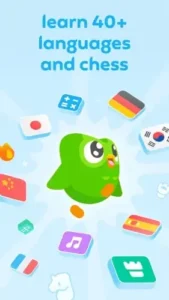

Duolingo It now teaches chess too. Forty languages plus a full chess course. Guided puzzles. Practice matches. All inside one app that fits between meetings, meals, or waiting for coffee to drip.
Here is what you actually get. A 4.8 star rating from over 40 million reviews on Google Play. App size sits around 153 MB depending on your device. Age range is 4 and up, but the real audience is teenagers and adults who want to learn without feeling like they are back in a classroom.
If you like structured learning with a playful edge, you might also enjoy Memrise. It focuses more on vocabulary drills and real world video clips.
Back to Duolingo. The question is not whether it works. The question is whether you will open it again tomorrow. That is what the app actually solves.
What Is Duolingo ?
Duolingo started with languages. Now it also teaches chess. Same formula. Short lessons. Instant feedback. A green owl watching your streak. The app covers 40+ languages and a full chess course with guided puzzles and practice matches. You open it for five minutes or twenty. Either way, you move forward.
Think of it as a learning habit wrapped in a game wrapper. You are not studying. You are completing levels. You are not practicing. You are protecting your streak. That shift in framing matters more than most people admit.
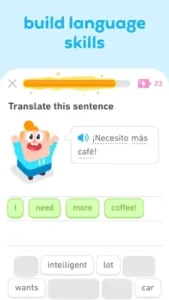
The language side covers speaking, reading, listening, and writing. The chess side covers moves, tactics, and short matches. Neither side expects you to know anything before you start. That is the whole point.
So what keeps people coming back? Not the owl’s smile. The mechanics underneath.
How the App Keeps You Coming Back
Streaks – One lesson a day keeps the streak alive. Break it. Start over. That simple rule has made millions of people open an app at 11:55 PM just to answer one question. Embarrassing? Yes. Effective? Also yes.
XP and levels – Every correct answer adds points. Points unlock new lessons. You watch a bar fill up. Your brain likes watching bars fill up. That is not a trick. That is how reward systems work.
Leaderboards – You compete against random people. Falling down a rank hurts more than you expect. Staying on top feels better than it should. You are not competing for money or prizes. Just bragging rights against strangers. And somehow that works.
Hearts system – Make too many mistakes. Lose a heart. Wait or practice to refill. This creates tension. Not enough to make you quit. Just enough to make you pay attention. Wrong answers have consequences. Small ones. But real ones.
These four mechanics turn a learning app into something closer to a daily ritual. You are not forcing yourself to study. You are trying not to break a chain. Different feeling. Same result.
The New Chess Course. Same Rules. Different Board.
Duolingo did not build a chess simulator. They built a chess course. Starts from zero. Guided lessons first. Then interactive puzzles. Then mini matches. No opening theory overload. Just enough to feel confident moving pieces.
The chess section uses the same short session structure. Three minutes. One puzzle. Done.
Here is what most chess apps get wrong. They assume you already know how pieces move. Duolingo does not make that mistake. The first lessons teach you that a knight jumps in an L shape. The second lesson shows you why that matters. No shame. No judgment. Just a green owl nodding at you.
The puzzles are not random. They follow the lesson. Learn how to fork two pieces. Then solve three forks. Then try a short match where you look for a fork. That scaffolding is rare in free chess apps. Most throw you into the deep end. Duolingo builds a ladder.
And if you already know chess? Skip the basics. Jump to intermediate puzzles or practice matches. The app adapts. Not perfectly. But well enough for a free course.
Duolingo Looks Like and Feels Like
Bright colors. Rounded corners. Duo the owl makes jokes. Progress bars fill up after every lesson. Animations are fast, not flashy. The interface never feels like a textbook. That is the point.
The chess board is clean. Pieces are distinct. No distracting 3D effects. Just a flat, readable board.
Apple featured Duolingo for its design. That is not common for a learning app. Most educational software looks like it was built in 2005 and never updated. Duolingo looks like a mobile game. That is intentional. The team knows that if it looks like work, you will treat it like work. And work gets skipped.
The sound design matters too. A cheerful chime when you get an answer right. A soft thud when you get it wrong. Neither sound punishes you. They just inform you. Move on. Next question.
Duo the owl changes expression based on your streak. Happy when you are consistent. Worried when you miss a day. Disappointed if you ignore him for a week. That little green face has more emotional range than most actors in mobile ads.
Duolingo User Reviews
What people like:
Short lessons fit between real life tasks. You can finish a lesson while waiting for a bus. Or during a commercial break. Or before a meeting starts. That flexibility is not a small feature. It is the main feature.
The app makes consistency feel good. Every completed day adds to a number that keeps growing. Watching a streak hit 100 days feels genuinely satisfying. Even though it is just a number.
The free tier works without paying. Ads appear between lessons. Hearts limit mistakes. But you never hit a paywall that stops all progress. That is rare in 2025.
What people complain about:
The pressure to upgrade to premium. Duolingo asks often. Pop ups. Limited hearts. Ads. The free version works but the app constantly reminds you that a paid version exists.
Lessons can feel repetitive after weeks. You see the same sentences. The same exercises. The same jokes from Duo. That repetition helps memory but hurts engagement.
Good for habit building. Not enough for fluency alone. Users say this repeatedly. Duolingo gets you started. It does not get you finished. For real conversation skills, you need other tools.
Even with those complaints, the rating stays high. 4.8 stars from millions of people. That is hard to fake. People do not rate apps well out of politeness. They rate well because the app delivers what it promises. Short, painless, daily progress.
Duolingo Tips
You do not need more motivation. You need a system that does not rely on willpower. Here are seven Duolingo tips that turn the app from a guilt machine into a daily win.
Set a daily goal you cannot fail
Five minutes counts. That is the secret most people miss. They set a twenty minute goal, miss two days in a row, then quit. Set five minutes instead. Some days you stop at five. Other days you keep going. Either way, the streak stays alive.
Use short sessions, not one long study block
One thirty minute session feels like work. Six five minute sessions feel like a game. Open Duolingo app while water boils. While an email loads. While you wait for someone to finish their story. Those small moments add up faster than a single long grind.
Repeat weak lessons before moving forward
The app lets you jump ahead. Do not. If a lesson felt hard, play it again tomorrow. Repetition is not failure. Repetition is how your brain moves short term memory into long term. Duolingo app tracks your weak skills. Use that data. Trust it.
Chess puzzles first, then matches
This one changes everything for the chess course. Puzzles train your eye for patterns. Matches test your nerve under pressure. If you play matches before puzzles, you lose to mistakes you could have practiced first. Five minutes of puzzles. Then a match. That order alone will raise your rating.
Consistency beats perfect scores
A wrong answer keeps your streak alive. A skipped day does not. That trade off matters. You do not need a perfect lesson. You need a finished lesson. Get the answer wrong. Learn from it. Move on. The perfectionism that helps you in school hurts you here.
Turn on phone reminders
Streaks need memory help sometimes. That is not weakness. That is being a busy person with a real life. Set a reminder for the same time every day. After breakfast. Before bed. On your lunch break. Pick a trigger that already exists and attach Duolingo to it.
Pair app lessons with real world practice
Duolingo english test preparation works because the app teaches pattern recognition. But real conversation teaches fluency. Use the app to build vocabulary. Then talk to a human. Same for chess. Use the app to learn forks and pins. Then play a slow game against a friend. The app starts you. The real world finishes you.
Duolingo Compares Similar Apps
| App | Main Difference |
|---|---|
| Memrise | More vocabulary drills, less structured path |
| Babbel | More grammar, less playful |
| Busuu | Includes community feedback on speaking |
| Drops | Only vocabulary, no sentences or chess |
| Chess.com | Deeper chess tools, no language lessons |
Duolingo similar apps each do one thing well. Memrise wins for real world video clips. Babbel wins for grammar explanations. Busuu wins for speaking practice with native speakers. Drops wins for pure vocabulary in short bursts. Chess.com wins for serious chess improvement.
But none of them combine language and chess in one free app. That is Duolingo’s edge. You do not need five apps. You need one that does enough things well enough to keep you showing up.
Here is a question. Would you rather have ten specialized tools you never open or one general tool you open every day?
Duolingo Social Side. It Is Quiet but Real.
You do not talk to anyone directly. There is no chat window. No voice channel. No way to message that person who keeps stealing your top spot on the leaderboard.
But you see their names. You watch their scores climb. You get a notification that your friend just hit a thirty day streak. You lose your first place rank by fifty points and suddenly you care about something that has no real reward.
That is the social layer. Quiet. Competitive. Effective.
Leaderboards reset every week. You drop into a new group of random people. Same names never appear twice. That keeps the competition fresh. No one dominates forever. You win some weeks. You lose others. Either way, you played more lessons than you would have alone.
Duolingo codes appear sometimes from events or friend referrals. They give you small bonuses. Free streak freezes. Extra XP. Nothing game breaking. Just a nudge.
The real social feature is not the code. It is the shared experience. Millions of people around the world opened the same app today. Did the same lesson. Made the same mistake on the same sentence. That collective grind creates a weird sense of belonging. You are not learning alone. You are learning alongside a crowd of strangers who also fear disappointing a cartoon owl.
Conclusion – So. Does Duolingo Work?
Yes. For what it tries to do.
Duolingo english test preparation works because the test itself follows predictable patterns. The app trains those patterns. People pass because they practiced the exact question types they saw on exam day.
Duolingo chess works because it assumes you know nothing. Most chess apps skip the basics. Duolingo spends real lessons on how a knight moves. That patience pays off for absolute beginners.
But here is the honest answer. The app will not make you fluent alone. It will not turn you into a chess master. No single tool can do that. Anyone promising otherwise is selling something.
What it does do. It builds habits. It removes the friction of starting. It makes language and chess feel approachable instead of intimidating. You open the app because you want to protect a streak, not because you feel forced to study. That difference matters more than people admit.
It will get you to show up tomorrow. And the day after. And probably the day after that. That consistency is harder than most people want to believe.
So does it work? Try it for thirty days. Five minutes each day. No more. No less. After a month, ask yourself one question. Am I better than I was on day one? If the answer is yes, the app worked. The rest is just details.

FAQ
How do I get Duolingo on my phone?
Download Duolingo from the official Google Play Store. The app is free. Size is about 50 MB. Works on most Android phones from the last five years. After install, pick a language or jump straight to the chess course. No account required to try the first few lessons, but creating one saves your streak.
Is Duolingo really free or do I have to pay?
Free tier works. Ads appear between lessons. You get five hearts. Make five mistakes and you have to wait or practice to refill. That is the trade off. Premium removes ads and gives unlimited hearts. But you can finish every language and the full chess course without paying a cent. Millions of people do.
Where can I read more about how the app works and its history?
The Wikipedia page covers the company, the research behind the method, and how the app grew from a small project to one of the most downloaded education apps in the world. It also explains the freemium model and the science of short daily sessions.
Wiki page: Duolingo on Wikipedia
What if I find a bug or need help with my account?
The support team responds faster through email than social media. Include your username and a short description of the issue. If the app crashes, mention your phone model and Android version. That helps them fix it faster.
Developer email for support: super-support[at]duolingo.com
Can I learn both a language and chess in the same app?
Yes. That is the new part. The chess course sits right next to the language courses. Same green owl. Same short lessons. Same streak. You can switch between Spanish and chess in the same session. No separate app needed. No extra login. Just tap and go.