

FlixBus stands at the center of shift, operating as a tech driven mobility provider that has fundamentally redesigned the European coach travel experience.

The image of bus travel has undergone a significant transformation. Gone are the assumptions of uncomfortable journeys and limited routes with FlixBus. Today, a new standard of affordable, connected mobility has emerged, challenging how we move between cities.
Understanding FlixBus: More Than a Bus Company
It is important to recognize that FlixBus operates on a hybrid model. It is both a transportation provider and a technology platform. While its distinctive green coaches are a common sight, the company also partners with regional operators to expand its network under the FlixBus brand. This allows it to maintain consistency in customer experience, branding, and service quality across a vast system.
The geographical reach of this network is its most impressive feature. FlixBus provides extensive coverage across Europe, connecting not only major capital cities but also smaller towns and key airports that might be poorly served by other forms of transport. This makes it a true continent-wide connector, filling gaps in the transportation grid and offering a viable alternative where rail lines end or flight prices soar.
This integrated approach is its key differentiator when compared to pure aggregator apps. Because FlixBus controls the branding and customer experience, it can standardize offerings like onboard amenities and its baggage policy. This direct operator model provides a level of consistency that pure marketplaces, which simply list options from various independent companies, cannot always guarantee.
FlixBus User Experience: Booking and On the Road
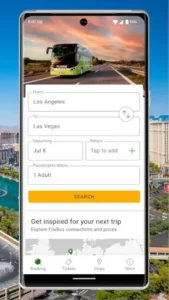
The journey begins with a straightforward booking process. Using the app or website, you enter your route and travel dates. The system displays available times and fares, often with options to select a specific seat for a small fee. Payment is completed through various secure methods, and your ticket is delivered digitally. This entire process is designed for efficiency, typically taking just a few minutes.
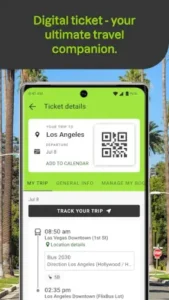
Once booked, the app transforms into a digital toolkit for your journey. The mobile ticket allows for contactless boarding. Most critically, the real time bus tracking feature and push notifications for delays or platform changes provide a layer of transparency that significantly reduces travel day anxiety. Knowing the exact location of your bus and receiving immediate alerts empowers you to manage your time effectively at departure points.
The onboard reality generally aligns with its promises. The coaches are modern and typically equipped with free Wi-Fi, power outlets at each seat, and onboard toilets. The entertainment portal offers movies and reading material. While the experience is functional rather than luxurious, it provides a comfortable and productive environment for the journey. The app holds a 4.8 star rating from over 800,000 reviews, is rated for ages 3+, and has a download size of approximately 100 MB. For those comparing options, Omio is a similar app that aggregates FlixBus routes alongside trains and flights.
The primary draw is undeniable cost efficiency. FlixBus fares are consistently among the most affordable options for medium distance travel in Europe, often significantly cheaper than equivalent train journeys. This makes exploration accessible to a wider range of travelers, from students to families.
A notable secondary benefit is its environmental consideration. The company’s carbon offset program, which invests in certified climate protection projects, is integrated directly into its operations. For eco conscious travelers, this provides a tangible way to reduce the environmental impact of their journeys.
Beyond price, the convenience and transparency offered by its digital tools add significant value. The real time tracking and reliable notifications minimize unnecessary waiting at bus stops and terminals, making the overall travel experience less stressful. Furthermore, the network utility of reaching destinations bypassed by other transport modes is a powerful advantage, connecting places that would otherwise require complex, multi leg journeys.
FlixBus Considerations and Limitations
A clear practical consideration is travel time realism. Bus travel is inherently slower than high speed rail or air travel. This is the fundamental trade off: you exchange time for cost savings. Framing it as a conscious choice rather than a drawback is key; a FlixBus trip can be a time to work, read, or simply watch the scenery.
Potential passengers should also be aware of network reliability. While generally dependable, as with any complex transportation system, occasional delays or operational issues can occur. The prudent approach is to build a buffer into your plans, especially if you have a tight connection at the end of your bus journey.
Finally, user feedback on support experiences is mixed. While the in-app help center is the recommended first point of contact for issues, resolution times for complex problems can vary. For urgent travel-day concerns, having the local station operator’s contact information can be a useful backup.
Choosing the right mode of transport requires understanding the competitive field. Each option serves a different primary need, and identifying where FlixBus fits within this landscape is key to using it effectively and setting accurate expectations for your journey.
FlixBus in the Travel Landscape
To truly gauge its value, it’s useful to compare FlixBus to other common choices, often referred to as FlixBus similar apps. Trainline, for example, is primarily an aggregator. It displays options from numerous train and bus companies, including FlixBus itself. Its strength is comparison across different modes of transport. However, as a marketplace, it doesn’t control the operators themselves. FlixBus, in contrast, is a direct operator. It sets the schedules, prices, and service standards for its branded coaches, offering a consistent product rather than a list of choices.
Another common alternative is BlaBlaCar, which operates on a carpooling model. While it can be cheaper for very specific routes, it lacks the fixed schedules, dedicated amenities, and operational scale of an established coach service. The experience is entirely dependent on the individual driver. Budget airlines compete on price for longer distances, but their value diminishes when you factor in travel time and cost to reach often distant airports, plus fees for luggage that FlixBus includes.
FlixBus’s clear position is that of a direct operator focused on low cost, medium distance coach travel. It dominates the specific niche of affordable, amenity equipped, point to point road travel between city centers. This is a key FlixBus tip: it is most competitive on routes under 500 kilometers where the total door to door travel time is comparable to or better than flying when airport logistics are considered.
This functionality defines its ideal user profile. FlixBus is not for everyone, but it is exceptionally valuable for specific travelers. The primary beneficiary is the budget conscious individual: students, backpackers, and anyone prioritizing cost savings above all else. It is also the optimal solution for travelers moving between cities that lack direct rail connections, where FlixBus provides a vital link.
Finally, it serves those who find train tickets prohibitively expensive for a particular route, offering a reliable and more affordable alternative. It is less ideal for business travelers on tight schedules or those who place a premium on speed above cost.
Conclusion :
The core strength of FlixBus is undeniable: it has successfully modernized and legitimized bus travel as a comfortable, connected, and viable option for the 21st century. It has brought transparency through real-time tracking and convenience through mobile ticketing to a sector that previously lacked it.
The most balanced perspective is that its value is highly situational. FlixBus excels brilliantly in its core competencies: cost-saving and network connectivity. It democratizes travel by making it accessible to those with limited budgets and by serving routes ignored by other transport modes. However, this comes with a mandatory trade off in time efficiency. A journey will almost always be slower than by high-speed rail or plane. The smart user understands and accepts this trade-off at the outset.
Therefore, the parting recommendation is to view FlixBus as an indispensable specialist tool in a traveler’s kit. For the budget-minded explorer traversing Europe, it is often the most practical and logical choice. It won’t be the right answer for every trip, but when your priorities align with affordability, accessibility, and a willingness to trade time for savings, it stands out as a superior service.
The most practical FlixBus booking tip is to book in advance to secure the lowest fares, always enable push notifications for live updates, and consider bringing entertainment for longer journeys despite the available Wi-Fi. Used strategically, it opens up a continent for exploration.
FAQ
What is FlixBus’s policy on luggage and what are the fees?
FlixBus includes one carry on and one stored suitcase in your ticket price, which is a significant advantage over many budget airlines. You can add extra bags during the booking process for an additional fee. Their clear baggage policy, including size and weight limits, is available on their official FlixBus website.
What is the process for a FlixBus download and is the app free?
The FlixBus app is completely free to download and install. You can get it for Android on the Google Play Store. The company generates revenue from ticket sales, not the app itself. For technical support with the application, you can contact the development team.
How does FlixBus handle delays or cancellations?
As the operator, FlixBus manages disruptions directly. In the event of a significant delay or cancellation, they typically notify users via the app’s push notifications and SMS. Their policy is to rebook passengers on the next available service or provide a refund. The in-app support chat is the primary channel for resolving these situations.
Can I modify my booking after purchasing a ticket?
Yes, you can manage your booking through the “My Trips” section in the app or on their website. Changes are subject to availability and fare differences. FlixBus offers a flexible change policy, though specific terms can vary by fare type. For detailed historical and corporate information, you can refer to FlixBus Wiki page.
How does FlixBus compare to taking a train for the same route?
The choice often comes down to a trade off between cost and time. FlixBus is typically the more budget friendly option, sometimes significantly cheaper than rail travel. Trains are generally faster and can offer more space. FlixBus’s advantage includes often more direct city center drop offs and its comprehensive carbon offsetting program.