

Considering a download of NearEscape?
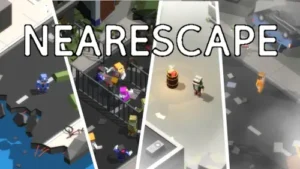

With a rating hovering around 4 stars from over 100K reviews, a download size of roughly 800MB, and an age rating of Teen+, is NearEscape story survival game worth the space on your device?
NearEscape begins with silence.
Not the empty silence of a menu screen, but the heavy, breathing kind. You wake with no memory in a world ended by a virus. The usual script calls for a weapon, a mission to shoot your way to a cure. NearEscape, the solo developed project from ElMaHeDev, offers a different proposition. What if your primary objective isn’t to fight the apocalypse, but to understand your place within it? What if the most powerful tool in your inventory isn’t a gun, but your ability to stay quiet, to observe, and to piece together a past that’s been stolen from you?
This is the core tension that defines the experience. NearEscape carves its niche not with relentless action, but with a commitment to atmosphere and story driven stealth. It presents a compelling, often beautiful, vision of survival that feels genuinely thoughtful. However, stepping into this world means accepting that its ambitious vision is sometimes at odds with its technical execution. The path to recovering your memories is paved with both genuine dread and frustrating glitches.
Waking Up Lost in a Low Poly Wasteland
You are the amnesiac hero. Your goal is simple on paper: explore, scavenge, survive, and remember. The loop is immediately established. You’ll comb through derelict buildings and overgrown city blocks, managing vital meters for hunger, thirst, and a sanity gauge that smartly underscores the psychological toll of your situation. Safe shelters and subway stations become more than waypoints; they are lifelines, places to rest and save your progress in a world that offers no autosave.
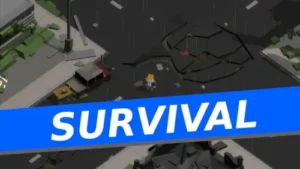
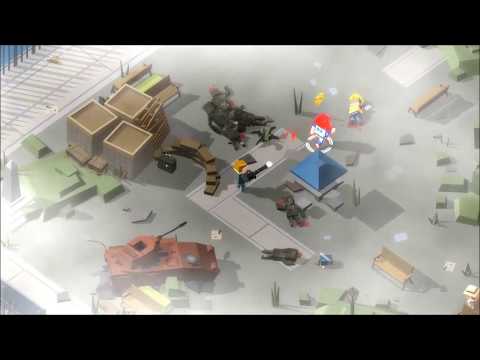
The world itself is rendered in a distinct, low poly aesthetic. Think less about blocky Minecraft replication and more about a deliberate, stylized minimalism. This choice serves a clear purpose. It allows for dynamic weather, sheets of rain that obscure vision, rolling fog that masks threats, and real time shadows that stretch ominously as day shifts to night, all without demanding high-end hardware. The visual design isn’t chasing realism; it’s building a mood. It tells you that in NearEscape, atmosphere is a higher priority than graphical power, and your imagination will fill in the horrifying details.
This feeds directly into the game’s central philosophy: survival over combat. Engaging a zombie is rarely the first or best option. It’s a system designed to make you think before you act.
Stealth, Sound, and the Occasional Necessary Fight
Combat in NearEscape is a failure state of your stealth. The zombies are acutely sensitive to sound. Running, breaking glass, or firing an unsuppressed weapon acts like a beacon. Your primary strategy involves using the environment: sticking to grass, moving through abandoned subways, and using line-of-sight to break pursuit. It’s a system that creates genuine tension, where the scrape of your feet on gravel feels like a calculated risk.
When confrontation is unavoidable, a deep crafting system unlocks. You’ll find “production floors” where you can manufacture bullets, bombs, and melee weapons. Crucially, crafting isn’t a constant chore; it’s a deliberate preparation phase. You stockpile resources knowing a tougher area or a mutated variant, a boss-like threat that normal stealth can’t bypass, lies ahead. This creates a meaningful hierarchy of threats. The common shambler is an obstacle to evade. The mutilated horror is a puzzle to solve with prepared force.
Progress is gated not by kill counts, but by understanding. The story of the global collapse and your own past is hidden in journals, notes, and environmental clues scattered across the world. Finding a new snippet of narrative in a dusty apartment or a ruined lab provides a tangible reward, making exploration feel purposeful. You aren’t just looting for cans of food; you’re looting for context.
What NearEscape Gets Remarkably Right
Several design decisions elevate NearEscape from a generic survival sim. Its staunchly offline first, no advertisement model is a significant advantage. There are no pop ups, no energy timers, no forced videos to continue. The immersion is unbroken, which is essential for a game selling tension and atmosphere.
The day and night cycle isn’t just cosmetic. It dictates zombie behavior and visibility, forcing you to plan expeditions. The core narrative drive, recovering your memories, is a brilliant mechanic. It transforms the protagonist from a blank slate into an active archaeologist of their own life, giving emotional weight to the scavenging loop.
For players compelled by lore and completion, the game offers strong replay value. Hunting for every last journal entry to fully unravel the mystery provides a clear, self-directed endgame. Furthermore, the solo developer, ElMaHeDev, maintains direct lines of communication via email for bug reports and feedback, indicating a project that is actively, if slowly, being nurtured.
The Glitches You Can’t Stealth Past
For all its atmospheric brilliance, your progress in NearEscape will occasionally hit a wall that isn’t made of bricks or zombies. Technical issues are a persistent, documented shadow in this world. The most common complaint, and a potential game stopper, is the notorious black screen that can appear around the 90% loading mark. The game simply halts, leaving you with no option but to force-close and restart. Other players report geometry problems, like buildings with doors that refuse to open or loot that spawns inside solid objects, making it impossible to collect.
A separate, more consistent friction is the quality of the English translation. While the game supports multiple languages, the English text in journals, menus, and tutorials often reads as garbled or directly translated. For a title where narrative is a primary driver, this creates a frustrating barrier. You’ll find yourself deciphering sentences rather than absorbing the story, which can pull you out of the carefully constructed immersion. If you’re looking for polished NearEscape English translation, you will need to adjust your expectations and mentally parse the text.
These aren’t minor quibbles. They are structural cracks. The question becomes: can you work around them? In many cases, yes, but it requires a specific mindset. Think of it as an added, unintentional layer to the NearEscape survival guide. Your first move upon installation should be to grant the game storage permissions. This allows it to create a stable save file outside your device’s cache. Without this, clearing your cache, a common fix for other apps, will delete your entire NearEscape progress. It’s the most critical NearEscape tip for preserving your time investment.
When you encounter a black screen or a hang, the established workaround is a full reload of the game. If a piece of loot is stuck in a wall, sometimes leaving the area and returning can reset its position. For the translation, the solution is patience. Focus on the contextual meaning of journal entries rather than their exact grammar. The community consensus is that the core story remains understandable, but it demands more effort from the reader than it should.
A Quick Reference Survival Checklist
To streamline your time in the wasteland, here’s a condensed strategy guide distilled from player experience. This isn’t about mastering NearEscape; it’s about navigating its systems and bugs efficiently.
Before the First Launch: Go into your device settings and grant NearEscape storage permission. This is non-negotiable for save security. Then, brace for some awkward in-game phrasing.
Your Initial Hours: Movement is life. Memorize the locations of safe shelters and subway entrances, they are your panic buttons. Your early resource goal isn’t to craft a shotgun; it’s to stockpile enough food and water to survive a night spent hiding. Engage only when you have no alternative path.
Once You’re Established: Actively search for production floors and mark them on your mental map. Do not expend rare crafting materials on every encounter. Reserve your most powerful crafted weapons for the mutated variants and boss fights that block critical story progression. Ammo is a currency; spend it wisely.
When the Game Breaks: If it freezes on a load, close the app completely and restart. For persistent soft locks in specific areas, try reloading from your last save at a shelter. The community hasn’t found a universal fix, but persistence with reloads often works.
If You Return for More: A second playthrough should focus on finding all NearEscape journal locations. With the survival mechanics understood, you can dedicate attention to the environmental storytelling and lore snippets you might have missed while initially struggling to stay alive.
Conclusion :
So, is NearEscape worth your time? The answer is conditional, which is the most honest assessment one can give.
This game is built for a specific player: the patient explorer who values mood and mystery above a flawless frame rate. It’s for someone with an older Android device who craves an immersive, offline experience and views troubleshooting as part of the challenge, not a dealbreaker. If your ideal zombie game involves methodical planning, tense evasion, and piecing together a mystery, the core design here will resonate deeply.
To position it clearly: if you want more base building and open world crafting, TEGRA: Zombie Survival Island might be a better fit. If you prefer a purely systems driven scavenging simulation, Under Survival: SIMULATION could satisfy. NearEscape sits between them, emphasizing personal narrative and atmospheric tension over pure management or combat.
The final takeaway is this: NearEscape’s greatest strength and its most glaring weakness originate from the same source, its ambitious, solo developer vision. It offers a uniquely tense and thoughtful apocalypse, but it asks you to meet it on its own occasionally uneven terms. For the right player, that compromise leads to a memorable journey. For others, the glitches will be the final, insurmountable barrier. Your tolerance for that friction will ultimately define your experience.
FAQ:
Where can I get the official NearEscape download?
The safest source to download NearEscape is the official Google Play Store. Always download from official stores to avoid malware and ensure you receive legitimate updates from the developer.
Is there an official NearEscape website or wiki for guides?
The developer, ElMaHeDev, does not maintain a formal website or wiki. Currently, the most reliable sources for community tips and story discussions are Android gaming forums and dedicated YouTube channels. The game’s narrative is designed to be uncovered through in-game exploration.
How do I contact the developer for support or to report a bug?
You can report issues directly to the solo developer at elmahe.team[at]gmail.com. This is the primary channel for support regarding the black screen bug, translation errors, or other technical problems. Be clear and patient in your communication.
I granted storage permission, but my save file is still gone. What happened?
If you cleared your device’s app cache (not just data) through your phone’s settings, it may still delete the save if it wasn’t properly written to external storage. The permission is the best defense, but it’s not infallible. Regular saves in different shelter slots is the best in-game practice.
Can I play NearEscape on PC or iOS?
Currently, NearEscape is developed and released exclusively for Android devices. There is no official PC (Windows/Mac) client or iOS version available. The game is optimized for mobile touch controls and offline play on the Android platform.