

Sonic Dash Run mobile runner maintain player interest years after its initial release.
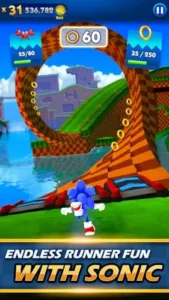

With over 500 million downloads, a 4.7 star rating from more than 10 million reviews on the Google Play Store, and a file size around 150MB, the Sonic Dash Run game has demonstrated significant staying power. Designed for a broad age range but with particular appeal for SEGA fans, it presents a clear proposition: can you handle high speed navigation while managing long term goals?
Sonic Dash Run Loop: Running, Jumping, and Fighting
The foundation of Sonic Dash Run will feel immediately familiar to genre enthusiasts, yet it introduces critical nuances. The control scheme is pure and responsive: swipe left or right to change lanes, swipe up to jump, and down to slide. This simplicity is vital because the environments demand constant, split second decisions. You are not just running in a straight line; you are navigating the series’ signature loops, corkscrews, and narrow pathways, which require precise timing to traverse successfully.
The iconic rings serve a dual purpose, functioning as both a health mechanic and the game’s primary currency. Getting hit by an enemy costs you rings, but collecting them builds the resources needed for upgrades. This creates a compelling risk reward dynamic. The most significant deviation from the standard runner formula is the integration of boss battles. Encounters with Dr. Eggman or Zazz temporarily shift the gameplay from evasion to a more targeted confrontation.
These segments test your ability to recognize attack patterns and strike during brief openings, adding a layer of strategy that breaks the monotony of a standard run. This fusion of mechanics is central to the Sonic Dash Run boss battle strategy.
Sonic Dash Run Characters and Abilities
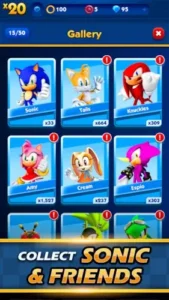
Progression in Sonic Dash Run is deeply tied to its cast. Unlocking characters like Tails, Knuckles, and Shadow is a primary long-term objective, and it’s more than a cosmetic pursuit. Each character possesses a unique ability. Sonic might have his trademark dash, while another character could offer a magnetic ring attraction. This means your choice of runner directly influences your strategy and potential score.
The upgrade system allows you to enhance these innate abilities and other attributes, such as ring capacity or the effectiveness of power-ups. Costumes further this customization, often providing specific stat bonuses that can complement a particular playstyle. This system creates a tangible sense of growth. You are not just getting better at swiping; your character is becoming objectively more powerful, which makes tackling higher scores and more difficult missions feel progressively more achievable. This focus on a Sonic Dash Run character upgrade guide is a key part of its retention model.
Sonic Dash Run Zones and Obstacles: The Level Design
Visual and structural variety is crucial for any endless runner, and this game draws from a rich heritage. The game faithfully recreates classic locations like the Green Hill Zone, leveraging player nostalgia while providing visually distinct backdrops. The transition from a lush, green landscape to a fiery volcanic area or an icy track is not merely aesthetic; it often signals a change in obstacle patterns and environmental hazards.
The level design actively challenges player reflexes. The loops and corkscrews are not just for show; they require well timed inputs to maintain momentum and avoid crashing. This constant environmental shift ensures that the Sonic Dash Run level navigation remains engaging, forcing players to stay alert rather than relying on muscle memory alone. The familiarity of the zones provides comfort, while the precise execution they demand provides the ongoing challenge.
Sonic Dash Run Events and Competition:
Beyond the solo run, Sonic Dash Run constructs a robust framework for community engagement. The game features daily and weekly tournaments that pit your scores against a global player base. This introduces a direct competitive element that gives every run higher stakes. Climbing the leaderboards becomes a personal objective, and the exclusive rewards offered for high placement act as powerful incentives.
The regular introduction of seasonal events and limited time challenges ensures the content pipeline never fully dries up. These updates often introduce new mechanics, character skins, or missions, giving lapsed players a reason to return and active players new goals to pursue. This cycle of content is essential for maintaining a dedicated community and is a core aspect of the Sonic Dash Run global tournament appeal.
If the model of a character driven runner interests you, the chaotic fun of Minion Rush provides a similar structure with a different comedic tone and collection system.
Technical Performance and Polish in Sonic Dash Run
How does a game built on speed maintain its polish under pressure? The technical execution of Sonic Dash Run is a critical component of its success. The game’s visual presentation does more than just look good; it faithfully translates the bright, energetic aesthetic of the Sonic franchise into a functional 3D space. The characters are instantly recognizable, and the environments pop with the same vibrant color palette that defined the classic games. This visual authenticity is crucial for player immersion, making the experience feel like a natural extension of the Sonic universe rather than a generic mobile runner.
The true test, however, lies in the controls. In a game where a mistimed swipe can end a high scoring run, responsiveness is non negotiable. The game generally delivers on this front, with inputs registering accurately to facilitate the precise jumps and slides necessary for navigating complex tracks. This reliability is what makes advanced Sonic Dash Run tips involving perfect loops and last-second dodges possible.
However, some player feedback highlights occasional friction points. The free to play model is supported by optional ad views and in app purchases, which some users find intrusive. While an in app purchase can remove ads, their presence in the base experience is a noted consideration. Other occasional issues, such as cloud save synchronization problems or rare bugs during boss transitions, are mentioned in reviews, though they do not appear to be widespread game breaking problems.
Sonic Dash Run Tips and tricks
What separates a good run from a great one? Beyond quick reflexes, a strategic approach to the game’s systems is key.
First, make a habit of checking for active Sonic Dash Run codes. The developers periodically release these on official social media channels, offering free rewards like rings, red starfish, or even special costumes. This can give your resource pool a significant boost without any cost. Second, focus your upgrades on a primary character. Instead of spreading resources thinly, powering up one character’s ability and stats will yield better results more quickly, making it easier to tackle difficult missions and climb leaderboards.
Finally, learn the specific patterns of boss attacks. These encounters are less about frantic movement and more about observation and timing. Recognizing a telegraphed attack and knowing the exact moment to strike can turn a challenging boss into a predictable source of high scores.
Conclusion :
So, where does Sonic Dash Run ultimately stand? Its strengths are clear: a successful and authentic adaptation of a beloved franchise, a gameplay loop enhanced by strategic character progression, and a competitive social framework that encourages repeat play. It takes the established endless runner formula and adds meaningful layers without overcomplicating its core appeal.
This game is an excellent match for two primary audiences: dedicated Sonic fans looking for a competent mobile rendition of the series’ speed, and players of runner games who seek more long term objectives than simply beating a high score. If you enjoy the process of collecting characters, optimizing their capabilities, and testing your skills in a global arena, this game will likely hold your attention.
For those considering Sonic Dash Run alternative games, the straightforward, obstacle focused navigation of Temple Run 2 provides a more pure runner experience with less emphasis on character collection and boss fights. Your choice hinges on whether you want the added strategic depth of a roster and combat or prefer the simplicity of a continuous, unbroken sprint. Both are quality titles, but they cater to slightly different preferences within the same genre.

Frequently Asked Questions
Where can I find the official game for my Android device?
The direct source for a Sonic Dash Run download is the Google Play Store. This ensures you get the authentic version with all current updates and security features from SEGA.
Is there a central site for official news and patch notes?
Yes, the game maintains an official online hub. You can find the latest announcements, update details, and official links on the Sonic Dash Run official website.
I need help with a technical problem or account issue. Who should I contact?
For support with gameplay bugs, purchase problems, or account synchronization, your most effective option is to contact the developer directly at help[at]segaamerica.com.
Where can I find information about character abilities and missions?
The community managed Sonic Dash Run wiki serves as a detailed database. It’s a valuable resource for learning about character stats, mission requirements, and event strategies.
How does the character collection system work?
The game features a gallery where you can unlock and track characters like Sonic and Knuckles. Each character has unique abilities that affect gameplay, making collecting them a key part of