

Strava has become the default network for anyone who takes their movement seriously, from first time runners to world class cyclists.

Strava by Strava Inc. has crossed 100 million downloads on Google Play with a 4.4 star rating from over 1.1 million reviews. The app currently sits at roughly 100 MB to 150 MB depending on your device and region, and it carries a Teen age rating, though the community is built for athletes of all ages. With over 180 million active users worldwide,
If you searched for “what is Strava app” expecting a basic fitness tracker, the reality is different. This is a social fitness network disguised as a tracking app. It records the work, but its real power lies in what happens after you stop moving. The feed, the kudos, and the segment leaderboards create a feedback loop that turns a solitary workout into a shared experience.
Athletes have a saying that captures the app’s cultural weight perfectly: “If it’s not on Strava, it didn’t happen.” It sounds like a joke until you finish a grueling run, forget to hit start and feel a genuine sense of loss. That is the hook.
Whether that social pressure motivates you or exhausts you depends on what you want from your fitness. If you are a dedicated runner or cyclist looking for competition, this is the platform. If you just want to track your steps and nutrition without sharing them with the world, you might want a simpler tool. This Samsung Health breakdown covers a fully free, highly private alternative that pairs deeply with Galaxy devices.
How Strava Works
The Activity Tracking Engine
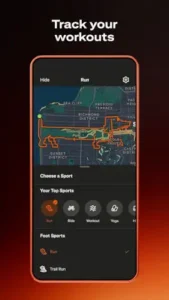
Strava records 40+ sport types, covering running, cycling, walking, hiking, yoga and more. It uses your phone’s GPS to map the route, calculate distance and track speed. If you wear a smartwatch or bike computer, the app syncs seamlessly to pull in heart rate and cadence data. It also integrates with strength training apps to auto-log exercises, sets, reps and weights, giving you a complete view of your physical output.
The Segment System
This is the feature that built the empire. A segment is a specific stretch of road or trail, created by users, where Strava tracks your time. You are not just running a hill. You are racing everyone who has ever run that hill. The leaderboards rank your effort against the community and for many users, this turns a casual jog into a full blown time trial. Live Segments, which require a subscription, give you real time feedback on your pace against the leaderboard while you are actually moving.
Free vs Subscription
The free version is generous compared to most apps. You get core GPS tracking, the social feed, kudos, club participation, monthly challenges and access to segment leaderboards. Strava subscription unlocks the deeper analytical tools. You get intelligent route recommendations, Live Segments, the full Training Log, Best Efforts, Athlete Intelligence (AI insights) and Recover Athletics for injury prevention. If you have been asking “is Strava free,” the answer is yes, but the app saves the serious coaching tools for subscribers.
Strava Core Features
Activity Tracking and Device Sync
The app records over 40 sport types, from running and cycling to yoga and hiking. If you move, Strava wants to track it. Sync is where it shines. It connects seamlessly with Apple Watch, Garmin, Fitbit, and Peloton, pulling your data into one unified timeline. The Wear OS integration includes a tile and complication, letting you launch activities directly from your wrist without fumbling for your phone. If you have been searching for “does Strava work without a watch,” the answer is yes, your phone handles the GPS. But the experience gets sharper when you pair it with hardware.
Social Feed and Kudos
This is the feature that separates Strava from every other fitness app on the market. You follow friends and athletes and their real workouts populate your feed. You send kudos to celebrate their wins. There is no algorithmic manipulation pushing random content at you. It is real efforts from real people. That simple design choice makes the feed feel supportive rather than competitive and it is why users check the app even on rest days.
Challenges and Clubs
Monthly challenges give you a concrete goal to chase and digital badges to collect. Clubs let you build a support network, find running partners, and organize real-life meetups. If you have been looking for “Strava tips” to stay consistent, joining a local club is the fastest way to turn a solo habit into a social routine.
Privacy and Safety Controls
The app takes safety seriously. The Beacon feature shares your real-time location with loved ones during activities, which is a genuine comfort on long solo runs. If you have been wondering “how to hide start and end points on Strava,” the map visibility controls let you mask the exact location of your home or workplace. Granular who-sees-what settings give you full control over your footprint.
What Users Say About Strava App
The Praise
Users love the community aspect. Kudos and challenges keep people moving on days they would otherwise skip. The 40+ sport types and strength training integration mean you can track everything in one place. Segment leaderboards motivate competitive users to push harder than they would alone. Privacy controls like Beacon earn consistent praise from runners and cyclists who train solo.
The Complaints
Recent updates caused GPS, distance, speed and route inaccuracies for some users, which is a serious issue when the app’s core value is accurate tracking. The subscription push has grown aggressive, with features that used to be free moving behind a paywall. Some users feel the free version exists mainly to harvest data. And a segment of the community is upset over the patent lawsuit with Garmin, which colors how they view the company. Are these dealbreakers? For casual users, maybe. For dedicated athletes, the core experience still delivers.
Strava Subscription: Is It Worth Paying For?
The free version of Strava is genuinely useful. The subscription adds depth for athletes who want more than a social feed.
What You Get
You get intelligent route recommendations and the ability to build custom routes. Live Segments give you real time performance feedback on leaderboards while you move. The Training Log and Best Efforts track your progress over time. Athlete Intelligence delivers AI insights, and Recover Athletics helps with injury prevention. If you have been searching for “Strava subscription worth it,” the answer depends entirely on how seriously you train.
Who Should Subscribe
Competitive athletes chasing segment leaderboards will get their money’s worth. Runners and cyclists who plan routes regularly will use the routing tools constantly. Anyone dealing with recurring injuries will find Recover Athletics valuable. For this group, the subscription is not an expense. It is a training tool.
Who Should Skip
Casual walkers and hikers do not need Live Segments or AI insights. Users who just want a social feed and basic tracking will find the free version covers everything. People who only need data syncing and kudos should save their money and stick with the free tier.
Strava Tips
Use Segments for Motivation
Segments are the heartbeat of the Strava running app experience. Instead of chasing strangers on day one, find local segments near your house and race your own ghost. Once you beat your personal best on a familiar hill, chasing the community leaderboard becomes a genuine thrill. That progression is what keeps people lacing up when it is cold outside.
Set Up Beacon for Safety
If you run or ride solo, Beacon is non negotiable. It shares your real-time location with a partner or family member, giving them peace of mind and giving you a safety net. It is one of those features you hope you never need, but you will be glad it is on when you do.
Hide Your Start and End Points
This is the privacy setting everyone should turn on but few actually do. If you search Strava Reddit threads, you will find endless warnings about people accidentally revealing their home address because they started a run from their driveway. Use the map visibility controls to hide the first and last quarter mile of every activity. It takes thirty seconds and protects your front door.
Join Challenges to Stay Consistent
Monthly challenges give you a reason to move on days when motivation dips. The digital badges are silly until you earn your first one and realize you actually want the next. Pair that with a club and you get accountability from real people, not an algorithm.
Sync Your Devices Properly
Connecting your watch or bike computer eliminates the “I forgot to hit start” problem and delivers cleaner data. If you are juggling multiple apps and wondering which one actually tracks your runs, check out Strava similar apps before committing. For nutrition, the MyFitnessPal app pairs well with Strava because one tracks the output and the other tracks the input. Getting both dialed in is how you see the whole picture.
Strava Similar Apps
The fitness app market is crowded, and the application Strava is not the right fit for everyone. Here is how it stacks up against the apps you are most likely to be comparing it to right now.
Strava vs Garmin Connect
Garmin Connect is a data hub built for Garmin users who want deep analytics and device management. Strava is social first, built around segments, kudos and community. If you own a Garmin and love charts, use both. If you want the social layer that Garmin lacks, Strava is the one to install.
Strava vs Samsung Health
Samsung Health is fully free, has no ads and integrates deeply with the Galaxy Watch. Strava is social driven with premium tiers for competitive features. If you own a Galaxy Watch and want a free tracker, Samsung Health is the obvious call. If you want the leaderboards and the community feed, Strava earns the subscription.
Strava vs MyFitnessPal
MyFitnessPal is nutrition first, with calorie and macro tracking. Strava covers activity tracking and social fitness. These apps barely compete because they solve different problems. Use MyFitnessPal to track what goes in and Strava to track what goes out. Together, they cover the full equation.
Strava vs Google Fit
Google Fit is a simple activity tracker with no social layer. Strava is built entirely around community, competition and segments. If you just want a step count, Google Fit works. If you want to feel like you are training with other people, Strava is the answer.
Conclusion
Strava is a powerful social fitness platform with real friction points. The 4.6 star rating reflects both sides. The app works best when you lean into the community rather than fighting it. If your workout needs an audience to feel real, what does that say about your motivation? The app is a mirror. The people who stick with it are the ones comfortable looking into it.
FAQ
Where do I find the Strava download and who do I contact if something breaks?
You can get the Strava download straight from the Official Google Play. The official company details and subscription tiers live at strava.com, and the broader corporate background is on Wikipedia at en.wikipedia.org/wiki/Strava. If you hit a bug, a syncing issue or an account problem, the developer support email is support[at]strava.com. That is the direct line to the team. Use it before you leave a one star review in frustration.
Is Strava Free to Use?
Yes. Core tracking, the social feed, and monthly challenges are all free. The subscription unlocks advanced tools like Live Segments and route recommendations. If you have been asking “is Strava free” before downloading, the short answer is that the free version is generous enough to be genuinely useful.
Does Strava Work Without a Smartwatch?
Yes. Your phone’s GPS handles the tracking on its own. A watch adds convenience and accuracy, but it is not a requirement. Plenty of runners log serious miles with nothing but a phone in their pocket.
How Do Strava Segments Work?
Segments are GPS defined sections of road or trail, often created by other users. The app tracks your time on that specific stretch and ranks it against everyone else who has run or ridden it. It turns an ordinary hill into a competitive event.
Why Is My Strava GPS Inaccurate?
Three common causes. Recent update bugs have caused route and speed inaccuracies for some users. Poor phone GPS hardware is another factor. Dense tree cover or tall buildings can throw off the signal. Check for app updates and if accuracy still suffers, try running with your watch instead of your phone.
Can You Hide Your Location on Strava?
Yes. Map visibility controls let you hide the start and end points of every activity. This is a privacy essential for anyone who runs from home.
What makes Strava different from other fitness trackers?
Strava is a social network disguised as a fitness tracker. Most apps just log your steps or your heart rate. Strava puts your effort on a leaderboard against everyone else who has ever run that same stretch of road. That competitive layer, combined with the kudos and community feed, creates a feedback loop that keeps people moving on days they would otherwise skip. It is less about the raw data and more about how the data makes you feel.