

MONGIL: STAR DIVE is not like most monster catching games that put creatures at the center. You collect them. You train them. You send them into battle.
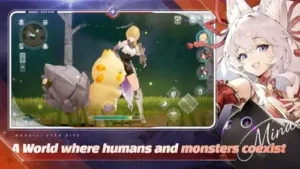

MONGIL: STAR DIVE flips that setup. The main characters, Verna and Cloud, are the stars. Monsterlings support them. That shift changes how combat feels and how team building works. The question is whether this new approach works better than the old formula.
Let us find out.
What is MONGIL: STAR DIVE exactly?
You are looking at a monster taming action RPG from Netmarble, a studio known for large scale mobile games with high production values.
MONGIL: STAR DIVE follows Verna and Cloud through guild missions, character driven storytelling, and real time tag team combat. The game builds on Netmarble’s original monster taming concept but modernizes it with Unreal Engine 5 visuals, Monsterling companions, and a more character focused battle system. Instead of monsters as the main roster, characters do the fighting while Monsterlings provide support.
On Google Play, the game holds a 4.6 star rating from more than 60,500 reviews. The app size comes in at roughly 2.1 GB, which reflects the Unreal Engine 5 assets and high quality visuals. The age rating is 12 and up, with mentions of violence, gacha mechanics, and online interactions. The game also launches on PC, with cross platform progression planned.
A monster taming action RPG from Netmarble
The genre label tells you what to expect. This is not a turn-based collector like older Pokémon games. MONGIL: STAR DIVE sits in the action RPG category with monster-taming layered on top. You control characters directly. You dodge, attack, and switch between party members in real time. Monsterlings are equipped to characters and affect stats, skills, and battle performance.
Who this game was built for
Not every mobile player will enjoy MONGIL: STAR DIVE. Here is who will.
Monster collection fans
Do you like filling out a codex? Catching every creature? Completing collections? That system is here. The Monster Codex tracks every Monsterling you find. Completionists will spend hours hunting rare spawns.
Action RPG players
If you prefer games where timing and positioning matter, this one fits. Combat happens in real time. You need to dodge enemy attacks, time your skill usage, and switch characters at the right moment. Slower turn based fans might feel overwhelmed.
Anime style fantasy lovers
The art direction is bright, colorful, and heavily anime influenced. Characters have big eyes, expressive faces, and flashy attack animations. Environments look like fantasy illustrations brought to life. If that style appeals to you, the game delivers.
Guild and party based progression players
Guild missions are a major part of the loop. You join a guild, complete group objectives, and earn rewards together. Players who enjoy social progression in games like Genshin Impact or Honkai Star Rail will find familiar systems here.
MONGIL: STAR DIVE Main Features you will use
The game offers many systems. Here are the ones that matter most.
Real time action RPG combat
Combat is not turn based. You control one character at a time while the other two in your party fight automatically or wait for you to switch. You can dodge roll, use special skills, and trigger ultimate attacks. Enemy attacks have tells. Learning those tells separates good players from dead ones.
Monster taming and collecting systems
You find Monsterlings in the wild, earn them from missions, or summon them through gacha mechanics. Each Monsterling has a type, elemental affinity, and set of passive bonuses. Collecting them all is a long term goal, not a weekend project.
Monsterling companion system
Equipping monsters to characters
Each character has Monsterling slots. You equip Monsterlings to those slots. The equipped Monsterling adds stats, elemental damage, or special effects to that character. A fire character with a water Monsterling might gain defensive bonuses. A healer with an attack Monsterling might deal more damage. Experimentation is encouraged.
How Monsterlings affect battle performance
Monsterlings do not fight directly. They provide passive bonuses and trigger occasional support actions. A Monsterling might heal the party when health drops low. Another might increase critical hit rate. Another might apply shields at the start of battle. Choosing the right Monsterling for each character matters more than collecting the rarest ones.
Tag team battles with live character switching
You can switch between your three active characters at any time during combat. Each character has different skills, elemental affinities, and Monsterling setups. Switching mid combo extends your attack chain. Switching to dodge an incoming attack keeps you alive. Good players switch constantly. New players forget to switch and struggle.
Guild missions and narrative progression
Verna and Cloud as main characters
The story follows Verna and Cloud, two guild members exploring a fantasy world. They recruit allies, discover Monsterlings, and uncover a larger conspiracy. The writing aims for a lighthearted tone with occasional serious moments.
Story driven mission structure
Missions are split between story chapters and guild tasks. Story missions advance the narrative. Guild missions reward resources and increase your guild’s rank. Both are required for steady progression.
Unreal Engine 5 presentation
The game uses Unreal Engine 5, which is rare for mobile RPGs. That means better lighting, more detailed environments, and smoother character animations. The trade off is a large file size and higher device requirements. Not every phone can run this game well.
PC and mobile cross-platform launch
You can play on PC through Netmarble’s launcher or on mobile through the app stores. Progress carries over between platforms. That means you can do daily missions on your phone during the day and run harder content on PC at night.
Monster Codex collection completion
The Codex tracks every Monsterling you have ever caught. Each entry shows lore, stats, and where to find it. Completion rewards include currency, cosmetics, and rare items. Filling the Codex is a long term goal for dedicated players.
Party building with multiple combinations
You have three character slots. Each character has three Monsterling slots. That is up to nine Monsterling bonuses per party. Finding synergies between character skills and Monsterling passives is the game’s deepest system. A poorly built party struggles in late game content. A well built party clears missions faster than the developer intended.
MONGIL: STAR DIVE Graphics and Design
Bright anime style character art
Characters are colorful and expressive. Outfits are detailed. Attack animations are flashy without being distracting. The art style will appeal to fans of games like Genshin Impact or Granblue Fantasy.
Polished 3D environments with Unreal Engine 5
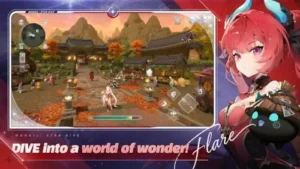
Environments have depth. Lighting shifts as you move through areas. Water reflects. Grass moves when characters walk through it. The Unreal Engine 5 polish is noticeable compared to standard mobile RPGs.
Where the design works well
Menus are clean. The Monster Codex is easy to navigate. Combat UI shows character health, skill cooldowns, and switch timers clearly. The game does a good job of keeping information readable during fast fights.
Where it can feel busy during combat
With three characters on screen, enemies, particle effects, and damage numbers, combat can get crowded. New players sometimes lose track of their character in busy fights. The game offers settings to reduce effect intensity. Use them if the screen gets too chaotic.
What players actually say about the MONGIL: STAR DIVE game
The parts people enjoy
Positive reviews often mention the combat feel. Real time tag switching is responsive and satisfying. The Monsterling system gets praise for being different from standard monster collectors. Unreal Engine 5 visuals are called out as impressive for a mobile game.
The parts people complain about
No gacha game escapes criticism. Here is what comes up most often.
Gacha elements
Monsterlings and characters are obtained through gacha summons. Drop rates for rare items are low. Some players report spending currency without getting anything useful. The game gives free summons through events, but the gacha model is clearly present.
Progression pacing
The early game moves fast. New characters and Monsterlings unlock quickly. Then around account level 25 or 30, progress slows down. Upgrade materials become scarce. Waiting times increase. That is when the game encourages spending.
Character writing quality
Some players find the story too light. Verna and Cloud are likable but not deep. Side characters feel one dimensional. The game prioritizes gameplay over narrative. If you need a compelling story, this might disappoint.
Monetization concerns
The game offers battle passes, monthly subscriptions, and currency packs. Free players can complete all content but slower. Paying players progress faster and have more summon chances. That gap bothers some players more than others.
Long term balance questions
Because the game is still relatively new, long term balance is unknown. Some Monsterlings appear stronger than others. Some characters seem mandatory for late game content. The developer has promised balance patches, but it is too early to know if they will deliver.
How the MONGIL: STAR DIVE game mechanics work
Story and guild missions as progression
You progress through two parallel tracks. Story missions unlock new areas and characters. Guild missions provide resources and rank rewards. Ignoring either track slows your overall progress.
Real time combat with tag team switching
Combat happens in real time. You control one character. Your other two party members fight automatically but less effectively than the active character. Switching to a character lets you use their skills and position them manually. Good players switch every few seconds.
Monsterlings as equipped companions
Monsterlings are not fighters. They are equipment with personality. Each Monsterling provides passive bonuses to the character it is equipped to. A high level Monsterling can double a character’s damage output. A poorly matched Monsterling adds almost nothing.
Party composition and synergy
Characters have elemental affinities. Fire beats wind. Wind beats water. Water beats fire. Light and dark beat each other. Monsterlings also have affinities. Matching character and Monsterling affinities provides bonus stats. Mismatching them provides penalties. Building a party with full affinity synergy takes planning.
Collection completion as long term goal
The Monster Codex has hundreds of entries. Some Monsterlings only appear during specific events. Others are locked behind hard content. Completing the Codex takes months. That is by design. The game wants dedicated players to have long-term goals.
Live service update structure
MONGIL: STAR DIVE runs on a live service model. New characters, Monsterlings, and events arrive every few weeks. Seasonal content offers limited-time rewards. The game expects you to log in regularly or risk falling behind.
Looking for another anime style action RPG with collection elements? Check out Genshin Impact, the open world action RPG with character gacha, elemental combat, and regular content updates.
MONGIL: STAR DIVE Tips
You can learn the basics of MONGIL: STAR DIVE game in an afternoon. Getting good at team building takes weeks. These tips separate players who clear hard content from players who hit paywalls and quit.
Build a balanced team instead of collecting randomly
New players love collecting rare Monsterlings. They chase the shiniest creatures. Then they wonder why their party dies in mid game content.
A balanced team has three roles. Damage dealer. Tank or crowd controller. Healer or support. Damage without defense dies fast. Defense without damage takes forever to win. Support without damage or defense helps neither. Look at your party. Are all three characters glass cannons? Replace one with a tank. Are all three defensive? Add a damage dealer. Balance matters more than rarity.
Match Monsterlings to your main characters
Here is a question. Why do two players with the same characters perform so differently? Monsterling choices.
Each character has strengths. A melee fighter benefits from Monsterlings that increase attack speed or life steal. A ranged caster benefits from Monsterlings that increase critical chance or reduce skill cooldowns. A healer benefits from Monsterlings that increase healing output or provide shields. MONGIL: STAR DIVE tips from top players all say the same thing. Read each character’s kit. Then choose Monsterlings that amplify what that character already does well. Do not put attack Monsterlings on a healer. Do not put defense Monsterlings on a damage dealer.
Use tag switching actively during combat
Most new players pick one character and stick with them. They switch only when their main character dies. That is a mistake.
Tag switching is not an emergency button. It is a combat mechanic. Switch to your tank when the boss charges a heavy attack. Switch to your healer when the party needs healing. Switch to your damage dealer when the boss is stunned. Good players switch every five to ten seconds. Bad players never switch and wonder why they struggle. Practice switching even when you do not need to. Make it a habit.
Prioritize guild and story missions early
The game gives you multiple mission types. New players often chase side content and ignore the main path.
Do not do that. Story missions unlock new systems, characters, and Monsterling habitats. Guild missions provide steady resource income and rank rewards. Focus on both until you hit account level 30 or 40. Then branch out to side content. Prioritizing story and guild early prevents the mid game resource drought that frustrates so many players.
Save resources for characters that fit your playstyle
MONGIL: STAR DIVE gives you upgrade materials slowly. Spending them on every character you unlock is a trap.
Pick two or three characters you enjoy playing. Upgrade only them for the first few weeks. Keep everyone else at minimum investment. Why? Because late game content requires highly invested characters. A team of three strong characters beats a bench of fifteen weak ones every time. Test characters in the training mode before committing resources. Save your rare materials until you are sure.
Learn enemy patterns, not just stats
Many action RPG players focus on numbers. Higher attack. More defense. Better gear.
MONGIL: STAR DIVE rewards pattern recognition more than stat checking. Every enemy has tells. A boss raises its arm before slamming the ground. A ranged enemy glows before firing a beam. A crowd of small enemies groups up before charging. Learn the tells. Dodge or block accordingly. A player with average stats who knows enemy patterns outperforms a player with great stats who facetanks everything.
Treat collection as a long term goal
The Monster Codex is massive. Hundreds of entries. Some Monsterlings only appear during limited time events. Others require high level content to unlock.
MONGIL: STAR DIVE game is designed to be played for months, not weeks. Do not burn out trying to catch everything in your first month. Set small collection goals. Complete one region of the Codex at a time. Save event currency for rare Monsterlings. Treat collection as a marathon, not a sprint. Players who rush collection quit out of frustration. Players who pace themselves stay for years.
Watch for balance changes and launch updates
Netmarble updates the game every few weeks. Patch notes include character buffs, Monsterling adjustments, and system changes.
A character that feels weak today might become strong next month. A Monsterling that seems useless now might get buffed into relevance. Check patch notes regularly. Follow content creators who analyze balance changes. Adjust your team when the meta shifts. Players who ignore updates fall behind. Players who adapt stay competitive.
MONGIL: STAR DIVE Community
MONGIL: STAR DIVE is designed to be played with other people. The social features are not optional extras.
Guild missions and shared progression
Guilds have daily and weekly missions. Completing them rewards everyone in the guild. That creates positive pressure. Your progress helps others. Their progress helps you. Guilds also have shared chat rooms and donation systems. Being in an active guild doubles your resource income.
Build discussions and team synergy guides
The game is complex enough that no single player figures everything out alone. The community shares team builds. They post videos of boss kills. They write guides for new players. Reddit, Discord, and YouTube are essential resources. Players who engage with the community progress three times faster than players who do not.
Monsterling tier lists and strategies
Not all Monsterlings are equal. The community maintains tier lists ranking each Monsterling by usefulness. S tier. A tier. B tier. F tier. These lists change with every balance patch. Following tier lists helps you avoid investing in weak Monsterlings. Ignoring tier lists leads to wasted resources and weaker teams.
Solo vs group play balance
You can play most content solo. Story missions. Exploration. Monster collection. But guild content and some late game bosses require groups. The game pushes you toward social play at higher levels. Solo players hit a wall around mid game. Group players keep progressing. If you prefer playing alone, accept that you will progress slower. If you want the full experience, join a guild early.
Conclusion
Who this game is for
MONGIL: STAR DIVE works for three types of people. First, monster collection fans who want something faster than turn based games. Second, action RPG players who enjoy character switching and real time combat. Third, gacha veterans who understand the pacing and monetization model.
If you fit any of those, the download is worth it.
What holds it back
Gacha elements are present and aggressive. Progression slows down noticeably in mid game. The story is light and characters are not deeply written. Free players progress slower than paying players. Some Monsterlings are locked behind limited time events.
None of these are deal breakers for the right player.
One question before you download
Do you enjoy optimizing team synergies and learning enemy patterns over weeks of play? Or do you prefer games that respect your time without pressure to spend?
If the first one, MONGIL: STAR DIVE offers deep combat and rewarding collection systems. If the second one, look for premium action RPGs without gacha mechanics. Both answers are fine. Just know what you are signing up for.

Frequently asked questions about MONGIL: STAR DIVE
How do I get MONGIL: STAR DIVE download on my phone?
Download MONGIL: STAR DIVE from the Official Google Play Store. The game also launches on PC through Netmarble’s launcher with cross platform progression.
Is MONGIL: STAR DIVE free to play, or do I need to spend money?
The game is free. You can play through the story, collect Monsterlings, join guilds, and fight battles without spending anything. The app makes money from optional purchases like gacha summons, battle passes, and currency packs. You can progress without paying. It just takes longer. Free players can complete all content, but paying players will get there faster.
Where can I find the official website and game wiki?
The official website has news, character profiles, Monsterling showcases, and event schedules: Official MONGIL STAR DIVE Website .
I have a problem with the app. Who do I contact?
Send an email to the developer support team. They handle bug reports, account recovery, purchase issues, and feature requests. Here is the address: netmarbles[at]igsinc.co.kr. For MONGIL: STAR DIVE download problems specifically, that same email applies. Include your device model and operating system version for faster help.
How does the Monsterling system work compared to other monster catching games?
Unlike Pokémon or Summoners War where monsters fight directly, Monsterlings in this game are equipped to characters as support companions. Each character has Monsterling slots. Equipped Monsterlings provide passive bonuses, stat increases, and occasional support actions. They do not fight on their own. That means team building is about matching the right Monsterling to the right character, not just collecting the rarest creatures. It is a different approach. Some players love it. Others miss controlling monsters directly.