

Zangi is solution to communicate without the prerequisite of personal data

What if your messenger worked not just on high speed Wi-Fi, but on the faint signal of a 2G network in a remote area? This is the specific problem Zangi solves. Developed by Secret Phone, Inc., it is a private messenger built on a foundation of anonymity and resilience. With over 10 million downloads and a 4.7 star rating from approximately 200,000 reviews, it has carved out a distinct niche. The app size is a lean 45MB, and while its user base spans all ages, it particularly resonates with privacy advocates, journalists, travelers, and individuals in regions with unstable internet infrastructure.
What Is Zangi and Who Is It For?
Zangi is a secure communication application that prioritizes two things above all else: user privacy and network reliability. Its core identity is not as a social network, but as a utility for confidential conversation. The app is designed for a specific user profile. It is for the person who is uncomfortable linking their phone number to a messaging service. It is for the professional operating in a sensitive environment where data leaks are a tangible risk. It is for anyone who has ever struggled to complete a call on a weak or congested network. The value of Zangi for secure communication lies in this focused approach; it does not try to be everything to everyone, but rather excels in its chosen domains of security and connectivity.
The Privacy First Foundation: How Zangi Protects You
The app’s security model is built on principles that directly challenge industry norms, making Zangi private messenger a standout option.
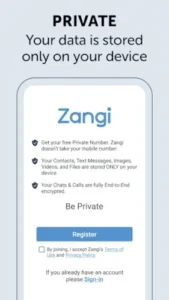
The most immediate differentiator is Anonymous Registration. Unlike virtually every major competitor, Zangi does not require a phone number to create an account. You can register with a username and password, completely disconnecting your identity from your account. This severs a primary link that advertisers and data brokers rely on.
Underpinning all communication is Military Grade Encryption. The app uses the AES-GCM 256-bit encryption standard, a protocol recognized by global security experts for its strength. This end to end encryption applies to every text, voice note, file, and video call, ensuring that only you and the intended recipient can access the content.
Perhaps most fundamentally, Zangi operates on a “No Data Collection” Model. Your chat history, contact lists, and media are stored exclusively on your device, not on company servers. This means there is no central database for hackers to target or for the company to mine. Your data footprint begins and ends with you. This approach to Zangi anonymous messaging is its most compelling privacy argument.
Zangi Features: Communication Without Compromise
Despite its focus, the app provides a full suite of communication tools, all protected by its security framework.
-
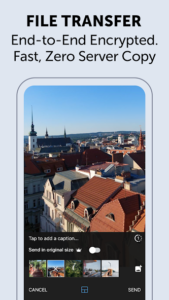
Secure Messaging: You can exchange encrypted text messages, share documents, photos, and videos with the confidence that the content is protected from interception.
-
Voice and Video Calls: The call quality is a key selling point, especially the reliability of Zangi low bandwidth calls. The app is specifically optimized to maintain stable voice and video connections even on slow or unreliable 2G networks, a feat many mainstream apps struggle with.
-
Cross Platform Functionality: The service works seamlessly across phones, tablets, and desktops, allowing you to maintain secure conversations across all your devices without compromising the privacy model.
Zangi User Experience: Design and Performance
Zangi’s interface is minimalist and functional. The design avoids visual clutter, prioritizing clear navigation to chats and calls. The color scheme and typography are straightforward, making the app easy to use on screens of all sizes. This simplicity is intentional, putting the emphasis on the utility of communication rather than on decorative elements.
The app’s performance hallmark is its low bandwidth optimization. The technology dynamically adjusts data usage to maintain connection integrity, which is why it can function in network conditions that would cause other apps to fail. This makes Zangi for weak signal areas a practical tool, not just a theoretical one.
However, this specialized focus comes with some trade offs. Some users, particularly on Android, report occasional bugs such as Bluetooth call disconnections or notification delays. The interface and experience can also feel less polished or slightly different between Android and iOS versions, suggesting platform-specific development challenges.
User reviews consistently validate the app’s core promises. The overwhelming praise is for its robust privacy features, with the anonymous sign up process frequently highlighted as a primary reason for adoption. Users in rural areas or developing nations specifically commend its reliability on slow networks, where other messengers are unusable.
The criticisms are typically technical and platform specific. The mentioned Bluetooth issues on Android and occasional notification inconsistencies are recurring themes in critical feedback. Some users also note that the call interface can feel less intuitive compared to more mainstream applications. For those seeking a different approach to private messaging, Signal Private Messenger offers a highly regarded, open source alternative that also provides strong end to end encryption, though it requires a phone number for registration.
Positioning Zangi in the Secure Messaging Landscape
The world of private messaging is not a monolith; it’s a spectrum of tools, each with a different philosophy. When evaluating Zangi similar apps, its unique configuration of features becomes clear. Signal is widely considered the gold standard for security, with its open source protocol and mandatory end to end encryption. However, Signal requires a phone number, which immediately creates a link to your identity that Zangi deliberately avoids. Telegram offers vast channels and cloud-based convenience, but its default chats are not end to end encrypted, and its focus is on features, not necessarily on performance over poor networks.
Then there’s Threema, which, like Zangi, allows for anonymous use without a phone number. The key differentiator often comes down to Zangi’s engineering focus on low bandwidth environments. While Threema is a robust privacy tool, Zangi’s specific optimization for 2G networks and unstable connections gives it a practical advantage in specific real world scenarios. This positions Zangi for low bandwidth messaging not just as a privacy app, but as a communication tool for challenging conditions. It answers the question: how do you maintain a secure conversation when your internet connection is barely functional? For users in this situation, Zangi’s niche is not just preferable; it’s essential.
Zangi Tips for Optimal Use
To fully leverage what Zangi offers, a proactive approach is required. Implementing a few key Zangi tips ensures you are getting the maximum privacy and performance the app is designed to provide.
The first and most critical step happens during setup. To truly maximize anonymity, be deliberate about your registration details. Choose a username that contains no personal information, avoid your real name, email address, or any familiar handles you use elsewhere. Since the app doesn’t require a phone number, this username is your sole identifier; make it untraceable. Furthermore, manage your app permissions carefully after installation. Only grant access to your microphone, camera, and contacts if and when you need to use those specific features. This minimizes the data points on your device that could potentially be correlated with your activity.
Next, configure the app for your network environment. If you consistently use Zangi on mobile data or in areas with weak signals, actively seek out the data saver or low data mode within the app’s settings. Enabling this tells Zangi’s algorithms to prioritize connection stability over high resolution video or image previews, which is the core of its how to use Zangi on slow networks advantage. For the best call quality, use a wired headset on desktop or a Bluetooth device that you know pairs reliably with your phone, as this can mitigate some of the audio issues mentioned in user reviews.
Finally, ensure compatibility and maintain security. Use the same version of Zangi across all your devices, phone, tablet, and desktop. Mismatched versions can sometimes lead to syncing problems or unexpected behavior. Just as importantly, enable automatic updates for the app. Given that Zangi’s value is so tied to security, running the latest version ensures you have the most recent bug fixes and, crucially, any enhancements to its encryption and privacy protocols.
Zangi for Private Groups and Teams
The application’s utility extends effectively into small scale collaboration. The Zangi encrypted group chats feature allows you to create private spaces for teams, families, or trusted circles. The same security principles apply: all messages and shared files within the group are protected by end to end encryption, and the conversations reside only on the participants’ devices. This makes it a viable option for a small business team discussing sensitive strategy, a group of activists coordinating efforts, or a family that wants to keep its shared memories completely private.
The dynamic within these groups is inherently trust based. Because the platform lacks the data harvesting business model of larger networks, the community ethos is different. It is less about broadcasting and more about confidential sharing. The success of a Zangi group hinges on a mutual understanding among all members about the importance of the security being provided. It fosters a focused, intentional form of communication, free from the noise and algorithms of social platforms.
Conclusion :
It will not replace WhatsApp, Signal, Telegram for the average user who values network effect above all else, and it may not satisfy the open source purist who exclusively uses Signal. However, for its target audience, it is exceptionally capable.
Its strengths are powerful and specific: genuine anonymity from the moment you install it, a robust security model that respects your data, and a unique ability to function where other apps fail. These are not minor features; they are foundational pillars for users with specific threat models or connectivity challenges.
The trade offs, including the occasional interface bug or platform inconsistency, are real but must be viewed in this context. For a user who needs to communicate securely from a remote location or who simply refuses to hand over their phone number, these are minor inconveniences compared to the profound benefits.
In conclusion, Zangi is a testament to the idea that the most effective tools are often those designed for a specific purpose. It does not attempt to be all things to all people. Instead, it serves a critical niche with precision and reliability. For those who need what it offers, it is not just another messaging app; it is the right tool for a very important job.
Frequently Asked Questions (FAQ)
Is Zangi truly free to use?
Yes, the core application is completely free. This includes private registration, end to end encrypted messaging, and voice and video calls. The business model is based on providing a secure service, not on selling user data or placing ads within the app.
Where is the safest place to download Zangi ?
The most secure source to download Zangi is the official Google Play Store. You can also find verified information and direct links on the Zangi Official Website to ensure you are installing the authentic application from Secret Phone, Inc.
What happens to my data if I lose my phone?
Because Zangi stores all data locally on your device and not on its servers, your chat history is not automatically backed up to the cloud. It is crucial to use the in-app export feature to manually back up your data to a separate, secure location periodically.
Who should I contact for technical issues?
For support with account problems, troubleshooting, or to report a bug, you can contact Zangi’s support team directly. They can be reached at support[at]zangi.com.
How does Zangi compare to other secure messengers?
Zangi’s distinct combination of anonymous registration (no phone number), local only data storage, and optimization for low bandwidth networks sets it apart. It serves a specific niche for users who prioritize these features over the larger networks of apps like WhatsApp or Telegram.