

Arcana Tactics does something most mobile strategy games won’t: it hands you a pile of random heroes and tells you to figure it out.


Arcana Tactics won’t hand you a perfect team. It hands you a problem. That’s the point.
What Arcana Tactics Is
This is a tactical random defense RPG from Com2uS Holdings, free to download, sitting at 4.0 stars across roughly 55,800 reviews on Google Play. The install base crossed 1 million downloads. Current build runs Version 5.4.1, patched recently for bug fixes, and the file size lands around 1.4 to 1.8 GB depending on your device and platform. Age rating is 13+ on iOS, largely for fantasy violence and in-app purchases.
You get over 160 heroes to fuse, 70 Arcana cards that bend each run in different directions and real time PvP against players dealing with the same chaos you are . If you’ve been hunting for a tactical RPG with hero fusion mechanics, this is the one that actually makes the fusion feel like a decision instead of a slot machine.
How the Fusion System Separates Luck from Strategy
Here’s the pitch: heroes arrive randomly during battle. You fuse them. Three become one, one becomes two and somewhere in that mess you either build a functioning team or you don’t. The randomness sounds like it should flatten skill expression. It doesn’t.
Arcana Tactics hero fusion forces you to read the board in real time. Do you fuse your tank and healer to chase a higher tier unit, knowing you’ll be exposed for the next wave? Or do you hold, absorb pressure and wait for a better piece? The game hands you chaos. What you do with it is the actual game. That’s a strategy RPG that respects your decision making rather than your credit card balance.
The 70 Arcana cards layer on top of this. Each card changes how your deck functions and different Arcanas push you toward radically different team compositions. You’re not just fusing heroes. You’re building a run specific identity around whatever fate decides to hand you. Players searching for Arcana Tactics Arcana card list or best Arcana deck builds are already circling the depth here.
Real Time PvP Makes the Chaos Competitive
Most gacha games treat PvP as an afterthought. A stat check with extra steps. Arcana Tactics real time PvP puts two players in the same fusion storm and asks who can navigate it better. Your opponent is dealing with their own random pulls, their own timer pressure, their own bad luck. The winner isn’t the person with the biggest roster. It’s the person who adapts fastest.
That’s a refreshing change if you’ve burned out on arena modes that reward whaling over thinking. Arcana Tactics PvP tips and how to win real time battles in Arcana Tactics are search terms with real weight because the mode genuinely demands a different approach than the story content.
The Gacha, Events and What You’re Actually Grinding For
Arcana Tactics gacha uses standard and limited banners for hero recruitment, and the game cycles through events with rate-ups and seasonal stages. Materials for leveling, promoting and skilling up come from story stages and event farms. The Sweep system lets you skip cleared stages for efficient material runs, and the Link system deploys new heroes without forcing you to re-level them from scratch. Does the f2p structure get grindy? Yes. It’s a gacha game. But the fusion mechanic keeps the moment to moment play from feeling like a spreadsheet. You’re always making a call, always adjusting.
Arcana Tactics Features :
Hero Gacha and Progression: You Pull Keys, Not Finished Units
Standard and limited banners hand you unlock keys for fusion recipes, not ready to field heroes. The roster runs past 160 heroes across star tiers, and the 1 star to 3 star combinations are free from the start. Four star and five star fusion paths open through chests or gold. Here’s the part most reviews skip: unlocking all hero synthesis routes takes roughly two days of normal play. Whales can speed that up, but they can’t buy the thing that actually gates progress, which is your memory of which hero plus which hero produces what.
Progression splits four ways: level, star promotion, skill upgrades, gear. Materials come from story stages, event stages and dedicated farm nodes. No one click max out exists, but neither does a paywall that stops you cold. Early on the game floods you with resources, and the new player seven day track alone hands out pulls in the thousand plus range across standard, limited and premium banners. That sounds absurd until you realize those pulls mainly stock your fusion material library. They don’t hand you an arena ready squad.
Events and Limited Banners: Rhythm Beats Card Art
Time limited events work in three layers. First comes new stages and storylets, the reason to reopen the game beyond dailies. Second comes rate-up heroes, usually a key fusion node or an Arcana card that changes how a team functions. Third comes the seasonal exchange shop, winter snowflake collectibles for limited items, anniversary attendance rewards, that sort of thing.
If you’re searching Arcana Tactics seven day event worth grinding or Arcana Tactics limited hero priority, the answer depends on your roster gap, not the event itself. Reward volume is fixed. Whether you convert it into power depends on whether you’re missing a tank fusion chain or a support Arcana. No limited unit is a “skip it and your account is dead” situation. The balance philosophy here gives every banner a use and makes none of them mandatory.
Sweep and Link: Cutting the Daily Twenty Minutes Down to Five
Sweeping cleared stages is nothing new. What matters is what happens when Sweep sits next to Link. Link deploys a freshly pulled hero at usable level without the from level one grind. Sweep strips repeated farming down to two taps. Together they solve a real problem: you don’t have to log an hour of mechanical busywork to keep pace.
The most expensive cost in mobile gaming was never money. It’s the inertia of knowing you’re wasting time and not stopping. Sweep and Link don’t eliminate that inertia, but they compress it below the threshold where the game starts feeling like a job. For a title whose real fun lives in fusion calls and PvP reads, that trade is the right one.
Multiplayer and Competitive Modes: Facing Someone Else Who’s Also Scrambling
The store tags say Multiplayer and Competitive multiplayer. In practice, real time PvP is the sharpest and most honest part of the game. You and your opponent get the same random rules, the same countdown, the same incomplete pool. The winner isn’t the highest star count. It’s whoever reads the board fastest and dares to gamble when resources run thin. Reviews mention PvP matches where both sides make strange calls under random deal pressure and that’s precisely the appeal, because your opponent is drowning in the same chaos.
Arena seasons rotate and the meta develops from players, not patch notes. If you’ve searched Arcana Tactics PvP how to win or Arcana Tactics arena team ideas, there’s one core answer: leave the PvE “stack up before engaging” mindset at the door. In PvP you never finish stacking. You make imperfect but fast decisions and you live with them.
How to Farm Resources to Unlock Rare Arcanas Faster
The speed at which you unlock rare Arcanas has less to do with how many matches you grind and everything to do with which cards you bring into the run. You get one Major Arcana from the birthday input at the start, and the rest come from pulls, but the in-match economy is where the real gap opens up.
Separate the in-match economy from the meta unlocks. Inside a match, watch your Cube and Gem pacing. One underrated card for new players is The Chariot, which provides a steady supply of heroes so you always have fusion fodder to snowball early. Wheel of Fortune is a slow burn; its Gem gain scales per battle, so it pays off in later stages, though the current meta favors Snatcher steal builds and pushes it down the priority list.
If you want to speed up Arcana leveling itself, The Fool is built for exactly that. It gives a 40% Arcana EXP boost at T1 and scales to 100% at T5. It won’t hand you a rare Arcana directly, but it doubles the pace at which you level the cards you already have, which shortens the time it takes to assemble a usable deck. Pair it with The Hierophant, which raises the odds of high rarity heroes showing up in the pop-up shop, so your Cubes stretch further.
Don’t forget the Guild Raid rewards after arena runs. Guild Raid opens every two weeks against the Goblin King, and your damage plus your guild’s ranking determine the payout. It doesn’t eat your main story stamina, so treat it as free income you pick up along the way.
How to Find and Recruit Special Characters Everyone Misses
Hidden heroes don’t sit in the standard pool. They come through weekly rotating Story Special Dungeons, and each hidden hero has its own one week pickup window. Miss the window and you wait for the next rotation, so check patch notes in advance instead of waiting for someone on the forum to post a screenshot.
The other overlooked source is mid tier fusion paths. Most players stare at the 5 star endpoint, but some 4 star heroes are mandatory materials for a specific 5 star and their recipes hide inside low star combinations. Snatcher sees heavy use in the current meta, and its prerequisites live among specific 3 star Rogues. If you don’t stock those low-star units ahead of time, you’ll be farming them on demand and losing days.
One more thing: half the 3 star roster unlocks through story progression, not pulls or fusion. Plenty of players dump everything into banners and ignore this free channel entirely. Push the main story far enough to collect all the story 3-stars before you decide where your gacha budget goes.
What Makes a Character Worth Recruiting in Late Game?
Late game value comes down to three things: elemental coverage, position in a fusion chain and whether it holds the line when your squad isn’t perfect.
Elemental counters are a hard 30% damage swing in Arcana Tactics. Fire beats Nature, Nature beats Ice, Ice beats Fire, Light and Dark trade hits and Steel deals extra to Steel. A unit with massive stats that gets hard countered by the stage’s enemy composition will put out numbers that make you question the screen. Late-game roster depth isn’t about how many 5 stars you own. It’s about how many elements those 5 stars cover.
Fusion chain position matters more than individual card power. Some 5-stars aren’t top tier on their own, but they’re the required node for another top tier 5 star, and the 4 star materials they need happen to be sitting in your box. Fuse them first and push upward rather than waiting for a lucky “Tier S” drop. Pocket Gamer’s tier list puts Dragoon at the front of S-tier for its extreme survivability and the stun on Phase Destruction. But if you don’t have the materials to build toward it, staring at the ranking won’t help.
Vampire is another late game pick worth holding onto. Its kit converts damage into healing, with Bloody Wave and Endless Thirst letting it both deal damage and sustain itself against groups. Self-sustaining units like this carry far more value in solo play than pure burst characters, because you aren’t relying on a healer to keep you alive.
Best Arcana Tactics Characters for Solo Players
Solo players need one thing above all: units that hold the line without a teammate covering their gaps. Self sustain and clear efficiency beat raw damage in that context.
Dragoon sits at the top because it raises your solo margin for error. High survivability plus stun control means a botched fusion call doesn’t end the run; you buy time and adjust. Vampire follows closely for the reason above, damage to heal mechanics keep it standing in squads with no support.
If you lean toward ranged play, Falcon and Soul Bow are the friendlier 5 star Archer options for solo runs. Ranged output gives you more room to read the fusion queue and enemy waves instead of pouring all your attention into positioning. Just remember the Archer class runs squishy, so put a damage sponge in front, even if it isn’t a 5 star.
The part solo players overlook is this: Arcana choice shapes your solo experience more than hero choice does. Run The Chariot for steady hero materials and The Hierophant to raise shop quality. Those two keep you from losing turns because your fusion fodder ran dry. A strong hero you can’t fuse is just a portrait.
If you’re still deciding who to build, ask yourself one question. When you hit a wall, is it because damage is too low or because your front line folds before your damage comes online? The answer points to entirely different character types to build first.
What Players Say About Arcana Tactics Game:
Praise clusters around art and character design. Chibi sprites with full illustrations, a consistent style, skill effects that read clearly on a phone screen. Early gacha feels generous for free players, and progress doesn’t require spending. One review puts it plainly: fun game, good concept, strong strategy.
Complaints are just as consistent: device heat, long load times, server instability. Multiple reviews cite mid battle disconnects, PvP rewards that fail to register, and slow startup screens. One more piece of feedback deserves real weight: the early game stacks too many systems at once. Relics, Arcana, gear, skill slots all arrive together and casual players drown. A player’s own words: too much to do, overwhelming for casual players, sometimes simple is better.
Those two crowds don’t actually contradict each other. The ones who stay love fusion calls and PvP mind games. The ones who leave wanted an auto battler they could open and forget. Arcana Tactics is not that game. It asks you to choose from the first minute.
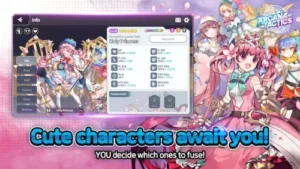
Arcana Tactics Tips
Build One Core Team First, Not a Collection
The fastest way to stall your account is spreading resources across every shiny new pull. Gold, soulstones and skill materials are tight in the early game. Dump them into ten heroes and you end up with ten mediocre units that lose in arena and can’t clear story stages.
Pick one or two damage dealers you actually enjoy using and push their level, stars and skills as far as they go. Everything else is fusion fodder until your core squad clears content on its own. One player put it plainly in a review: too much to do, overwhelming for casual players. The fix is deliberate subtraction. Your first month of Arcana Tactics tips should be about what you ignore, not what you chase.
Matchups Decide Fights, So Swap Your Lineup Per Stage
Elemental advantages and class roles shift damage numbers in ways raw power can’t overcome. The same squad that steamrolls chapter three hits a wall around chapter five if you never adjust.
Before each stage, scan the enemy composition. Heavy caster waves want a front line with magic resistance. Physical burst waves want evasion or armor. This sounds obvious until you’ve run auto battle for a week and forgotten what manual team building feels like. Thirty seconds of lineup tweaking saves you thirty minutes of retries.
Sweep Is for Farming, Auto Is for Testing
Once a stage hits three stars, add it to your sweep rotation immediately. Material accumulation drives your core heroes’ growth curve, and sweeping is the least time expensive way to feed it. Skipping this habit early means you’re manually grinding stages you already beat, which is exactly the kind of busywork that makes people quit.
Auto battle earns its keep as a testing tool, not a clearing tool. Want to know whether a new fusion combination holds up or whether an overlooked Arcana card has hidden value? Run it through auto a couple times instead of theorizing. When you push into hard content, take manual control back. Arcana Tactics game veterans tend to separate these two modes cleanly, and it shows in how fast their rosters develop.
Pull With a Gap in Mind, Not a Banner in Sight
Rate-up banners are designed to look urgent. They’re not, unless the featured hero fills a hole in your fusion chain. Pulling a unit you have no materials to build around just gives you a pretty portrait and an empty slot.
Save crystals for banners that patch a real weakness in your core squad. Read the pity rules before you commit and don’t burn resources in pools without a safety net. Code drops like arcanadiscord hand out a few hundred crystals here and there. Grab them when they appear, but don’t build your pull strategy around them. Arcana Tactics codes are a bonus, not a plan.
Heat Management Is a Real Skill, Not a Meme
Reviews consistently mention device warmth and long load times. This isn’t one person’s phone acting up. If you’re on a mid range or older flagship, drop graphics settings to medium, close background apps and cap sessions around forty minutes.
PvP punishes instability hardest. A stutter during a fusion countdown or a disconnect while collecting rewards costs you a match you’d already won. Keeping your device cool does more for your arena record than any lineup change. Controlling device load is the one variable you fully own.
Arcana Tactics Similar Games
Arcana Tactics vs TALION comes down to tempo. TALION is a traditional turn based JRPG with open world exploration and long narrative arcs. You sit down, read, roam and invest in story. Arcana Tactics runs in discrete fusion matches you can knock out in half an hour. Both carry strong anime art and Com2uS publishing behind them, but one asks for immersion and the other asks for reflexes. If your gaming time is fragmented, the match based structure fits better.
Arcana Tactics vs NIKKE splits on combat logic entirely. NIKKE is a third person shooter where aim, cover and gear scaling carry the weight. Arcana Tactics gives both PvP players the same random resources, so matches turn on fusion reads rather than roster investment. NIKKE fans may find the visual scale here smaller, but if the appeal of every match having a comeback path matters more to you, this PvP delivers that more cleanly.
Arcana Tactics vs OUTERPLANE differs in where the thinking happens. OUTERPLANE is turn based strategy with speed lines, chain skills and break timing, and its pre-fight planning runs deeper. Arcana Tactics puts randomness first. You accept an imperfect hand, then squeeze the best outcome from it. Both demand thought. One rewards the planner, the other rewards the adjuster.
Arcana Tactics vs Morimens is the sharpest contrast. Morimens is a Cthulhu flavored roguelite deckbuilder with oppressive atmosphere, fragmented lore and heavy deck construction. Its PvP strips progression for fair fights, which echoes Arcana Tactics’ equal resource approach. But the tone splits them completely. Arcana Tactics is bright, chibi styled and built around chaotic fun. Want dread and deep deckbuilding, go Morimens. Want to turn a bad hand into a highlight, stay here.
Conclusion
Arcana Tactics give you what it promises: a fairytale aesthetic wrapped around tactical chaos that actually demands decisions. The fusion mechanic is the star and it holds up under repetition in a way most gacha combat loops don’t. The performance hiccups are real and worth knowing about before you commit storage space.
FAQ
Where do I get Arcana Tactics download and is it really free?
You can download Arcana Tactics from the Official Google Play. The download costs nothing, and the game runs on a gacha system for heroes and Arcana cards with optional purchases. Early progression hands you enough currency to build a functional core team without spending, though the pull economy slows down later. If you want the official listing with the latest version and reviews, the Play Store page is your starting point .
What’s the official website?
Com2uS Holdings maintains the official site through their hub at withhive.com, and the game’s dedicated pages have shifted over time. Discord and Facebook links are listed on the App Store page, and those spaces tend to fill up with active players sharing team builds faster than any official channel.
How does hero fusion actually work and do I need to memorize everything?
You combine lower-tier units during battle to produce higher-tier heroes, and the randomness is the mechanic, not a flaw. Over 160 heroes feed into the system, and the fusion chart is something you learn through repetition rather than study. A community wiki helps when you’re stuck on a specific recipe, but most players internalize the common paths within a week of regular play. The timer keeps you from overthinking it.
What’s the support email if I run into account or purchase issues?
Com2uS Holdings handles player support through help[at]com2us.com. That’s the address listed on the Play Store developer contact and it covers account recovery, purchase disputes, and technical bugs. Response times vary, so include your player ID and a clear description of the issue if you want a faster resolution.
Does the game run on older phones and what are the workarounds?
Reviews consistently flag device heat and load times, especially on mid range hardware. If your phone struggles, dropping graphics settings to medium and closing background apps helps.
What Are the Best Heroes?
Rarity alone won’t answer this. A five star unit slotted into a team with no elemental synergy or class support underperforms a well chosen three star that fits the matchup. Community tier lists exist and they’re useful as a starting reference, but the game’s own design pushes you toward situational picks over permanent favorites. Elemental advantages shift damage numbers in ways raw stats can’t compensate for. The honest answer is that the best hero is the one that completes your current fusion chain or patches a weakness in the stage you’re stuck on.