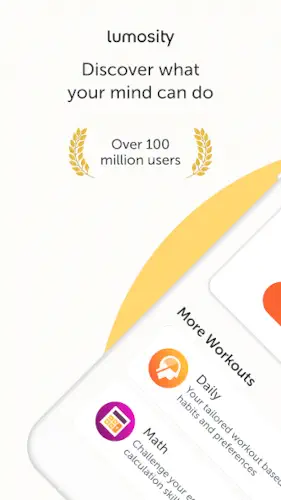
Lumosity works on the idea of use it or lose it. Your brain works the same way. If you do not challenge it, it gets slower.
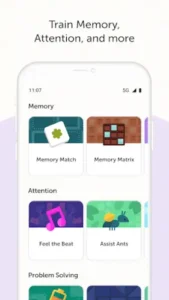
Lumosity gives you daily mental workouts. Short games. Memory challenges. Attention exercises. Problem solving puzzles. The idea is simple: train your brain like a muscle.
What is Lumosity exactly?
You are looking at a brain training app from Lumos Labs, Inc. that offers short, game like exercises to target memory, attention, speed, problem solving, and flexibility.
Lumosity is designed to help users train their minds through quick, engaging exercises rather than long lessons or lectures. The app is built around a large catalog of brain games that adapt to your performance and keep the difficulty changing as you improve. It is available on mobile and web, and Lumos Labs positions it as a playful, science-informed brain training program rather than a medical treatment.
Lumosity holds a 4.9 star rating from more than 318,000 reviews. The app size is roughly 177 MB. The age rating is 4 and up. The app is free with a premium subscription for full access.
A brain training app with short, game-like exercises for cognitive skills
The category matters here. Lumosity is not a learning app. It is not a puzzle game. It is a brain training app. You complete short exercises. Each exercise targets a specific cognitive skill. Memory. Attention. Speed. Flexibility. Problem solving. The games adapt to your performance. The difficulty increases as you improve.
Who this app was built for
Not every mobile user will enjoy Lumosity. Here is who will find it useful.
People who want to improve memory and attention through daily practice
Do you forget names? Do you lose focus easily? Lumosity trains those skills. The exercises are designed to strengthen cognitive function.
Users who enjoy short, game like cognitive challenges
The games are fun. They are short. They are challenging. If you enjoy brain teasers, you will enjoy Lumosity.
Anyone looking to build a daily brain training habit
Consistency is key. Lumosity encourages daily practice. The habit is easy to build.
Those who prefer gamified learning over traditional study methods
Lumosity is not a textbook. It is a game. The gamification makes training feel less like work.
Lumosity Main Features
40 plus brain games targeting memory, attention, and problem solving
The game catalog is large. More than 40 games. Each game targets a different skill. The variety keeps training fresh.
Personalized challenges that adapt to your performance
The app learns as you play. It adapts to your skill level. The difficulty increases as you improve. The personalization keeps you challenged.
A Fit Test or baseline assessment to start training
The Fit Test establishes your baseline. You play a set of games. The app measures your starting performance. The baseline is used to track progress.
Progress tracking and performance stats
You can track your improvement. The app shows your scores over time. You see which skills are improving. You see which need work.
Training across multiple cognitive skills including flexibility, speed, and language
Memory is not the only skill. Lumosity trains attention. It trains speed. It trains flexibility. It trains problem solving. The training is broad.
Daily training sessions for habit building
The app encourages daily play. Short sessions. Five to ten minutes. The daily habit is the key to progress.
Free membership with limited access and premium options for full access
The free version has limited games. Premium unlocks all games. The subscription is the main revenue model.
Available in many countries and multiple languages
Lumosity is global. The app is available in multiple languages. The reach is broad.
Lumosity Graphics and Design
Clean, colorful, easy to navigate interface that puts mini-games front and center
The design is clean. The colors are bright. The games are the focus. The interface is simple.
Design is playful while still being simple enough for quick daily use
The design is fun. It is not childish. It is playful. The simplicity makes daily use easy.
Games are visually pleasant and intuitive
The games look good. They are intuitive. You understand the rules quickly.
Where the design works well
The app is easy to navigate. The games are engaging. The interface is responsive.
Where subscription cost and transferability concerns affect the experience
The subscription is expensive for some. The free version is limited. Some users question whether the training transfers to real life.
What users actually say about the Lumosity app
The parts people enjoy
Positive reviews often mention the engagement. The games are fun. The daily habit is easy to build.
One user wrote: “Love the daily brain workouts. Games are fun and challenging. I notice a difference in my focus.”
The parts people complain about
No brain training app escapes criticism. Here is what comes up most often.
Subscription cost is a common concern
Lumosity is not cheap. The subscription cost is high for some users. The free version is limited.
Limited free access frustrates some users
The free version has few games. Some users feel the free content is too limited. The paywall is frustrating.
Doubts about how much training transfers to real world ability
Some users question the science. Does brain training actually improve real-world performance? The debate continues.
Some users question the science behind brain training
The scientific evidence is mixed. Some studies show benefits. Others do not. The skepticism is valid.
How the Lumosity app mechanics work
Structured like a daily workout: complete mini games, app evaluates performance, difficulty adjusts
The structure is simple. Play games. Get scored. Difficulty adjusts. The daily workout is the core.
Many games based on cognitive tasks
The games are not random. They are based on cognitive tasks. Working memory. Attention. Processing speed. The tasks are scientifically informed.
Uses scoring and comparisons to show progress
Scoring is immediate. You see your performance. You compare to past scores. The progress is visible.
Core loop: play short rounds, improve scores, unlock better challenge levels, build daily habit
The loop is simple. Play. Improve. Unlock. Repeat. The daily habit is the goal.
Difficulty adapts as you improve
The games get harder as you get better. The adaptation keeps you challenged.
Daily sessions for habit building
Consistency is encouraged. Daily sessions build the habit. The habit is the path to improvement.
Looking for another brain training app with daily exercises and progress tracking? Check out Elevate, a similar app with a focus on reading, writing, and math skills.
Lumosity Tips
You can start Lumosity app and play your first brain game in seconds. Getting the most out of the daily workouts takes a little strategy. These tips help you build an effective brain training habit.
Do the Fit Test first so the app can set a baseline for your training
Here is a question. Why do some users see progress while others feel stuck? They skipped the Fit Test.
Lumosity tips from experienced users all say the same thing. Do the Fit Test first. The app measures your starting performance. It sets a baseline. A player who starts with a baseline tracks real progress. A player who skips the Fit Test has no reference point.
Use the daily sessions consistently instead of playing only once in a while
Consistency is the key to brain training. Lumosity is built around daily workouts.
A short session every day is better than a long session once a week. A player who plays daily builds the habit. A player who plays sporadically does not. The daily sessions are the core of the program.
Focus on weak areas like memory or attention instead of trying to maximize every score at once
New users try to get high scores in every game. They spread their effort too thin.
Focus on your weakest areas. If your memory scores are low, play memory games. If your attention scores are low, play attention games. A player who focuses on weaknesses improves faster than a player who chases high scores in every category.
Treat the games as practice, not just entertainment, to get more value from the app
Lumosity app is fun. The games are entertaining. But they are also training.
Treat each game as practice. Focus on the task. Pay attention to your performance. A player who treats the games as training gets more value than a player who treats them as casual entertainment.
Check your stats regularly so you can see where you improve most
Lumosity similar apps show progress. This app does too.
Check your stats. Look at your trends. See which skills are improving. See which need work. A player who checks stats makes informed decisions. A player who ignores stats plays blindly.
If premium is expensive for you, use the free version to judge whether the style fits your routine
Lumosity codes for free trials sometimes appear during promotions. More importantly, the free version is a good starting point.
Try the free version first. See if the daily workouts fit your routine. A player who tries the free version makes an informed decision. A player who subscribes immediately may regret it.
Replay challenging games to train specific skills; difficulty adapts as you improve
Lumosity app adapts difficulty. As you improve, the games get harder.
Replay challenging games. Focus on the skills they target. A player who replays challenging games trains specific skills. A player who only plays easy games does not improve.
Keep sessions short and consistent; Lumosity is built around small daily workouts
Lumosity is not for long sessions. It is for short, daily workouts.
Five to ten minutes a day is enough. A player who keeps sessions short builds the habit. A player who tries to play for an hour burns out.
Apps similar to Lumosity
If you like Lumosity, here are five other apps worth your time. Each offers something similar with a different twist.
Elevate
Elevate focuses on cognitive skills. Reading. Writing. Math. Speaking. Lumosity similar apps should start here. The difference is that Elevate has a more structured learning approach. Good for users who want skill building with clear educational goals.
Peak
Peak is another brain training app. Short games. Progress tracking. Difficulty adaptation. The difference is that Peak has a more game like interface. Good for users who prefer casual brain training.
Brilliant
Brilliant teaches math, science, and coding through problem solving. The difference is that Brilliant focuses on learning subjects, not cognitive training. Good for users who want to learn specific topics while training their brain.
Duolingo
Duolingo uses gamified learning for languages. The difference is that Duolingo is focused on language acquisition, not cognitive skills. Good for users who want to train their brain while learning a new language.
CogniFit
CogniFit is a brain training app with a focus on cognitive assessment. The difference is that CogniFit has a more clinical approach. Good for users who want detailed cognitive assessments alongside training.
Lumosity Community
Social layer through comparisons, progress stats, and shared challenge framing
You can compare your progress. You can see how you stack up. The comparisons add motivation.
Some users compare results with others or see how they stack up over time
Comparing results is motivating. Seeing progress over time is satisfying. The social layer adds accountability.
Brand emphasizes research, large user base, and science backed development
Lumosity brand is built on science. The research backing is a selling point. The large user base adds credibility.
Community identity exists beyond the app itself
Lumosity users discuss the app on forums. They share tips. They compare scores. The community exists outside the app.
Conclusion
Lumosity works for three types of people. First, people who want to improve memory and attention through daily practice and short cognitive exercises. Second, users who enjoy short, game like challenges and gamified learning. Third, anyone looking to build a daily brain training habit with a structured, adaptive program.
Do you enjoy short, game like brain exercises and want to build a daily habit, even if the subscription cost is high and the science is debated? Or do you prefer free, evidence based learning with clearer real world applications?
If the first one, Lumosity offers one of the most polished brain training experiences available. If the second one, look at free alternatives like Elevate or Khan Academy. Both answers are fine. Just know what you want.
FAQ (Frequently asked questions)
How do I get Lumosity download on my phone?
Go to the Google Play Store if you use Android. Search for Lumosity Brain Training. The developer is Lumos Labs, Inc. Tap install or use the direct link to Download Lumosity from the Official Google Play Store.
Is Lumosity free to use, or do I need to pay?
The app is free with limited access. You can play a few games each day without paying. Premium unlocks the full catalog of 40 plus games, personalized training plans, and detailed progress tracking. Premium is available through a monthly or annual subscription. Free users can still build a daily habit with the limited version.
Where can I find the official website and help documentation?
The official Lumosity website has information about the science behind brain training, game descriptions, and pricing: Official Lumosity Website. For troubleshooting, user guides, and community discussions, check the help center on the website or the community wiki: Lumosity Wiki.
I have a problem with the app. Who do I contact?
Send an email to the Lumosity support team. They handle account issues, billing problems, bug reports, and technical support. Here is the address: info[at]lumosity.com. For Lumosity download problems or installation issues, that same email applies. Include your device model, app version, and a description of the problem.
Does Lumosity actually improve brain function?
The answer is mixed. Some studies show that brain training can improve performance on the trained tasks. Other studies question whether the skills transfer to real world activities. Lumosity positions itself as a science informed training program, not a medical treatment. Many users report feeling sharper and more focused after consistent use. The best approach is to try it yourself and see if you notice a difference in your daily life.