Where Winds Meet begins with a specific, often underserved fantasy.

Where Winds Meet is an impressively crafted open world RPG that excels in delivering the foundational fantasy of Wuxia through its graceful traversal, deep combat, and lovingly detailed world. However, its sheer commitment to scale and systemic depth comes with noticeable costs in consistent narrative polish and technical smoothness.
A World Built for Wuxia Parkour
The land of Where Winds Meet is not merely a backdrop; it is the game’s first and most convincing argument. Set against the tumultuous backdrop of 10th century China’s Five Dynasties era, the world spans over 20 distinct regions, from emerald bamboo forests and misty mountain peaks to bustling capital cities. This isn’t just visual spectacle. It’s a playground engineered for the Wuxia fantasy, populated with over a thousand points of interest.
Movement is where this philosophy crystallizes. Traversal is built on a fluid parkour system augmented by “windstride” abilities, graceful, extended glides and leaps that make crossing canyons or scaling palace walls feel like an extension of your martial prowess. Simply traveling from one quest marker to another becomes an engaging act of athletic expression. Beyond the critical path, the world invites quieter immersion. You can pause to play the flute atop a vista, participate in lantern ceremonies, or share a drink with a stranger.
These moments of Where Winds Meet exploration solidify the feeling of inhabiting a living, poetic world, not just conquering a checklist of tasks.
Fluidity, Strategy, and the Freedom to Fight Your Way
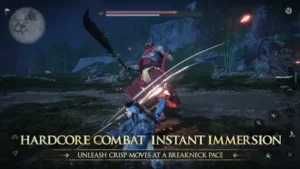
If the world sets the stage, the combat system delivers the performance. This is not a simple button-mashing action RPG. It is a layered, strategic dance designed to make you feel like a master of multiple disciplines. The core mechanic is fluid weapon swapping mid combo. You might engage an enemy at range with the spinning blades of a deployed umbrella, close the gap with a flurry of spear strikes, and finish with the sweeping power of a greatsword. This constant flow between styles is the heart of the Where Winds Meet combat system.
Defense is equally active and rewarding. Generous parry and dodge windows encourage you to read enemy movements and react precisely. Layered on top of this are “internal arts”, special abilities that channel qi for effects like crowd control, healing, or explosive mobility. Your progression supports this diversity. Deep talent trees, equipment tuning where you sacrifice old gear to empower the new, and professions all allow you to refine a unique playstyle, shaping your journey as a noble hero or a cunning outlaw.
Crucially, the free to play model has been widely praised for focusing solely on cosmetics and a seasonal battle pass, avoiding pay to win mechanics, a significant point in its favor for the Where Winds Meet PC and console audience.
Where the Winds Falter: Bugs and Localization
For all its strengths, Where Winds Meet does not present a perfectly polished facade. The ambition of its scale is mirrored by a list of technical and presentation issues that form the core of player criticism. Bugs are not uncommon, ranging from minor visual glitches to quest-blocking obstacles. On consoles, texture pop-in can be noticeable, occasionally breaking the visual immersion of its beautiful landscapes.
The narrative presentation faces its own hurdles. The English localization, reportedly assisted by AI, can result in stilted dialogue and awkward phrasing. Inconsistent voice acting quality and poorly synced lip movements further distance the player from key story moments. For some, the sheer density of the game’s systems, the talent trees, the crafting, the faction reputations—can feel overwhelming at first, presented by a user interface that prioritizes information over elegance. These factors can make the initial hours feel like a struggle against the game’s own complexity.
It is essential to balance this with the significant praise the game has received. Critics consistently highlight its exceptional world building, the depth and satisfaction of its combat, and the fair, non-predatory free to play approach. The Where Winds Meet release has been seen as a major, if imperfect, entry into the genre. The issues are real, but for many players, they exist as friction points on top of a fundamentally strong and captivating foundational experience.
Finding Your Flow in a Vast World
Navigating the opening hours of Where Winds Meet can feel daunting. Its scale and system density are real. These strategies are designed not to min max, but to help you establish a confident rhythm, letting you engage with its depth without feeling overwhelmed.
Your first combat decisions set the tone for early viability. When allocating points in the talent trees, a reliable Where Winds Meet tip is to prioritize talents that enhance your heavy attacks and your chosen “internal arts” abilities. These provide significant damage and utility spikes. For weapon rotation, develop a simple, effective combo. A strong opener is using the umbrella’s ranged turret mode to engage or control groups, swiftly switching to the spear for high damage melee pressure, and using an internal art for crowd control or a quick escape. Practice this flow against common enemies until it feels instinctual.
Liberally using the parry system is also key; its generous timing makes it a powerful, accessible defensive tool.
Managing your time and resources efficiently is crucial in a 150 hour world. Use the map’s filter functions to highlight gathering nodes for specific ores or herbs you need, saving hours of blind searching. For earning the premium jade currency, focus your efforts on hunting NPC bounties rather than engaging in prolonged player-versus-player skirmishes. Defeating targeted NPCs is a more reliable and often faster method. Most importantly, do not feel compelled to clear every side quest immediately.
For Where Winds Meet progression efficiency, focus on advancing the main story questline alongside your daily assignments. This ensures you unlock core features and regions at a steady pace without getting bogged down.
The social systems are more than an add-on; they are force multipliers. Use the party summon feature early to tackle content with others. This not only makes battles easier but lets you observe how other players approach combat. Joining an active guild unlocks access to exclusive dungeons, raids, and guild wars, providing some of the game’s most rewarding late game activities and a built-in community for advice and co-op. Do not treat this as a purely solitary Where Winds Meet game.
Finally, manage your own expectations. The journal can fill up quickly. Give yourself permission to ignore lower-priority tasks. Focus on the activities that directly feed your sense of being a martial hero: mastering a new weapon combo, discovering a breathtaking vista via windstride, or completing a chapter of the main saga. Protecting your engagement with the core fantasy is the best strategy for long term enjoyment.