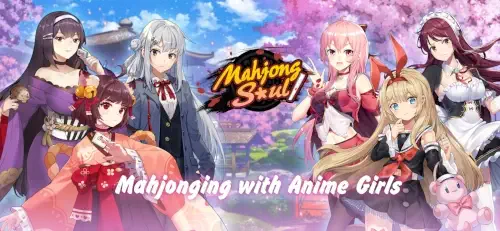
Mahjong Soul, has a specific tension that no other tile game quite matches.
Mahjong Soul, developed by Yostar and launched globally in 2019, takes that classical Japanese riichi mahjong experience and wraps it in a stunning anime aesthetic. Fully voiced characters react to your every move. Visual effects make each tile draw feel impactful. Emotes let you banter with opponents across the globe.
The core is simple: learn the rules, climb the ranked ladder from Novice to Celestial, customize your avatar, and participate in events. The question it answers is straightforward: can a traditional tile game find new life through anime presentation and online multiplayer? With active 2026 events like the Spring Festival, new characters Mia Shinohara and Jin Wu, and the upcoming Yostar Account system, the answer is a definitive yes .
Mahjong Soul First Draw: Visuals, Sound, and World Introduction
The visual identity is immediately appealing. ACG character designs with stunning effects make every tile draw feel impactful. Characters integrate seamlessly, reacting with voice lines and emotes that add personality to every match. Technical performance is smooth across Android, iOS, and PC via Steam, with full cross platform account sync . Audio features fully voiced characters by Japanese CVs, with sound effects that enhance the tension. Your first impressions involve completing the tutorial (which teaches basics quickly), customizing your first avatar, and joining a casual room. The world hooks you immediately.
Mahjong Soul Heart of the Game: Riichi Mahjong Explained
For newcomers, the basics are approachable. Four players compete with 34 tile types (man, pin, sou, honors), aiming to complete a hand of four melds plus a pair . Key actions include calling tiles for melds: pon (triplet), chi (sequence), and kan (quad). The riichi mechanic lets you declare a ready hand for bonus points, but locks your discards .
Winning hands require a yaku (scoring pattern), common ones include Tanyao (all simples) and Riichi itself . Scoring is calculated via han (stars) and fu (minute points), with dora (bonus tiles) adding excitement . Defense involves reading opponent discards to avoid dealing into a big hand. The depth is immense, but the tutorial eases you in.
Mahjong Soul Characters and Customization: Your Anime Avatar
The gacha and cosmetic system gives the game its personality. The character roster features unlockable avatars with distinct personalities, voice lines, and story modes. The gacha element lets you obtain characters and outfits through in-game currency or events. The emote system provides hilarious and expressive emojis for banter during matches. Outfits and decorations include seasonal and event exclusive items to personalize your avatar and table.
Progression involves leveling up characters to unlock more voice lines and interactions. Some players argue a well customized avatar is a psychological weapon. The recent Spring Festival event introduced new characters Mia Shinohara (an idol from W.I.N.) and Jin Wu (a self proclaimed spirit bird), along with animated Chinese style costumes for Fu Ji, Eve Krist, and Ju .
Mahjong Soul Game Modes: From Casual to Competitive
Variety abounds in how you play. Ranked matches let you climb through ranks from Novice to Celestial against global players. Casual rooms are perfect for playing with friends or practicing without pressure. Tournaments include official and community run events with prizes. The upcoming “Mahjong Soul Dual Saint Battle 2026 – 10th Edition” is an official tournament open only to the top 1200 3 player ranked players .
Story mode offers single player narrative experiences featuring the game’s characters. Special events like the Spring Festival and “Daydream Paradise” bring unique rewards and limited time modes . The friend system lets you add rivals, practice in private rooms, and compare stats.
Mahjong Soul holds a 4.6 star average from over 27,000 reviews on Google Play, with over 500,000 installs . The app size is approximately 114 MB on Android . Rated 12+, its anime aesthetics and gambling theme suit a teen and adult audience. The game’s monetization focuses purely on cosmetics, with no p2w elements, a design choice widely praised by the community . Cross platform progression via the new Yostar Account system (launching March 9, 2026) will unify accounts across devices .
For players seeking another strategic online game with deep mechanics, Steam offers various board game adaptations, while Tenhou remains the gold standard for pure, no frills online riichi mahjong.
Mahjong Soul Start: A First Week Player’s Guide
Your first week should establish fundamentals. The best Mahjong Soul tips for beginners focus on learning over winning.
Tutorial first is non negotiable. The in-game tutorial teaches riichi fundamentals clearly. Do not skip it.
Practice with friends using private rooms. Learn without rank pressure. Mistakes here cost nothing.
Riichi aggression is a mindset shift. Do not be afraid to declare riichi. It is a core scoring mechanic and pressures opponents.
Basic defense means watching opponent discards. Learn suji (safe tiles) to avoid dealing into big hands.
Yaku list memorization can be gradual. Start with a few key yaku: Tanyao (all simples), Riichi, and Pinfu. Expand from there.
Customize wisely by saving currency for limited event characters and outfits you really want. The gacha is cosmetic; do not feel pressured.
Join events even as a beginner. Participation rewards are often generous. The Spring Festival 2026 gave out free character vouchers .
Patience is the final lesson. Mahjong has significant variance. Focus on making correct decisions, not short term results. The tiles will balance out over time.
Mahjong Soul Economy and Monetization:
The free to play model in Mahjong Soul is remarkably pure. Core gameplay, ranked and casual mahjong is completely free and unrestricted. You can climb to the highest ranks without ever spending a cent, because money cannot buy you better tiles or better hands.
The gacha and cosmetics are where spending comes in. Characters, outfits, and decorative items are obtained through gacha pulls or event participation . Currency income flows from daily logins, achievements, and events. The new Spring Festival event, for example, rewarded players with a free character recruitment voucher just for logging in .
F2P viability is absolute. There is no pay to win. Skill alone determines your rank. All monetization is cosmetic. Spending options include purchasing premium currency for gacha pulls and seasonal outfits, but nothing that affects gameplay. Community sentiment consistently praises this approach, keeping competitive integrity pure while monetizing flair .
Mahjong Soul Similar Games and how It Compares
The online mahjong space has its players. Understanding Mahjong Soul similar games clarifies its unique appeal.
Versus Tenhou, the gold standard of online riichi, Mahjong Soul offers a friendlier UI, anime characters, and mobile apps. Tenhou is pure function; Soul adds form.
Versus Mahjong Time, another online platform, Mahjong Soul’s anime aesthetic and social features differentiate it. One is a tool; the other is a community.
Versus Janji, an anime mahjong competitor, Mahjong Soul has a larger player base and more frequent updates. The global community matters.
Versus Uma Musume, both are anime gacha games. Uma Musume is a horse girl simulator with racing. Mahjong Soul is pure mahjong with anime skin. Different genres, similar appeal.
Versus Love Live School Idol Festival, both leverage character appeal. Love Live is a rhythm game; Mahjong Soul is tile strategy. Different gameplay, same love for characters.
Mahjong Soul’s unique territory is specific: the only major online riichi mahjong platform with fully voiced anime characters, extensive cosmetics, and cross play on mobile, PC, and Steam. No competitor offers that combination.
Conclusion : Who Should Join the Table
The strengths are clear. Perfect introduction to riichi mahjong for newcomers. Beginner friendly tutorial that teaches without overwhelming. Thriving global player base ensuring quick matches at any hour. Pure skill based ranked mode with no pay to win. Charming characters and social emojis adding personality. Cross-platform progression via the new Yostar Account system. Active events and updates throughout the year.
The limitations deserve acknowledgment. Gacha for characters is purely cosmetic but can be pricey if you want specific limiteds. The learning curve for mahjong itself is steep, this is not a casual card game. RNG frustration is inherent to mahjong; bad luck happens. In-game currency grind for free players can feel slow.
So who is this for? The Mahjong Soul target audience includes anime fans curious about mahjong. Strategy game enthusiasts looking for deep 1v1v1v1 competition. Players who enjoy social and customization layers in competitive games. Mahjong veterans wanting a polished online platform with a global community.
It is not for players who dislike any RNG or luck based games. Not for those who prefer action over turn based strategy. Not for anyone expecting a traditional, purely serious mahjong sim without anime flair.
But for the player who loves the tension of a close hand, the thrill of a successful riichi, and the joy of emoting after a lucky draw, Mahjong Soul has been dealing tiles since 2019. The table is waiting.
FAQ
Is Mahjong Soul free to play?
Yes, Mahjong Soul is completely free to download and play. The core gameplay, ranked and casual mahjong, is fully accessible without spending. Monetization focuses entirely on optional cosmetics like characters, outfits, and decorative items. There is no pay to win; skill alone determines your rank.
Where can I get the game and find official information?
You can complete your Mahjong Soul download directly from the Google Play Store, iOS App Store, Steam. You can also play on your pc with Google Play Games on PC The game supports full cross platform progression via the new Yostar Account system launching March 9, 2026 . For official news, updates, and developer announcements, visit the official Mahjong Soul website . For technical support, contact Yostar’s customer service at mjs.cs[at]yo-star.com .
How do I unlock new characters and apparels?
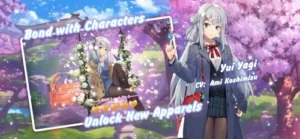
Characters and outfits are obtained through the gacha system using in-game currency earned from daily logins, events, and achievements. Limited time events like the Spring Festival often reward free character recruitment vouchers and exclusive apparel. Featured characters like Yui Yagi (CV: Ami Koshimizu) are available during specific banners. Bonding with characters through gameplay unlocks additional voice lines and interactions.
I’m new to mahjong. Can I learn to play in Mahjong Soul?
Absolutely. The game features a comprehensive tutorial that teaches riichi mahjong fundamentals clearly. You can practice in casual rooms without rank pressure, play with friends in private rooms, and join events as a beginner for participation rewards. The community on Discord and Reddit (r/mahjongsoul) is also very helpful for new players.
What’s the best way to improve at riichi mahjong?
Start with the tutorial and focus on learning a few key yaku (scoring patterns) like Tanyao, Riichi, and Pinfu. Practice in casual rooms to build confidence. Learn basic defense by watching opponent discards (suji) to avoid dealing into big hands. Don’t be afraid to declare riichi, it’s a core scoring mechanic. Join events for rewards and remember that mahjong has variance; focus on making correct decisions rather than short-term results.