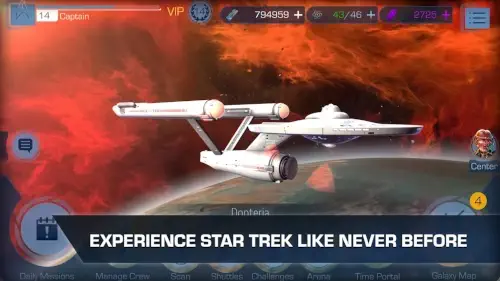
Star Trek Timelines presents a unique narrative problem: what happens when the entire Star Trek universe fractures, bringing characters from every era together?
This character collection RPG from Tilting Point addresses this by merging deep crew management with turn based strategy and a strong narrative focus. It is a game where your roster’s diversity directly impacts your ability to resolve temporal crises.
For new players, understanding the fundamentals of Star Trek Timelines beginner strategy and effective Star Trek Timelines crew management is essential for early progress. Currently, the game holds a rating of approximately 4.0 stars from over 500,000 reviews, with a download size around 400MB and a Teen rating.
The Temporal Anomaly: Concept and Setting
The game’s premise is built on a “temporal anomaly” that has merged timelines from every major Star Trek series, from the Original Series to Discovery. This allows Captain Kirk to serve on a crew with Captain Picard. The core loop revolves around a cycle of collection and deployment: you acquire new crew members through various means, level and equip them, and then deploy them on missions that require specific skill sets. This entire process is supported by three key pillars: building and developing your crew roster, commanding a fleet of iconic starships, and cooperating with other players in fleets to tackle larger goals.
Star Trek Timelines Crew: The Heart of the Experience
The crew collection system is the foundation of the game. You recruit hundreds of officers, each rendered as a detailed 3D character model faithful to their on screen appearance. Acquiring a character is just the beginning. Progression involves leveling them up, “fusing” duplicate copies to increase their star rating and maximum level (a process called Immortalization), and equipping them with gear that boosts their stats.
The strategic depth comes from the need for a diverse roster. Missions require specific skill combinations, such as Diplomacy, Science, or Security, so possessing a wide variety of specialized crew, rather than a few powerful ones, is often the key to success in the Star Trek Timelines mission guide.
Starship Command: Fleet and Combat
Building and Upgrading Your Fleet
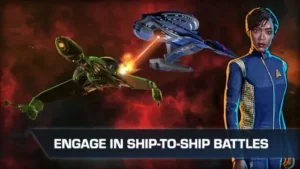
Beyond your crew, you command a collection of iconic starships like the USS Enterprise-D and a Klingon Bird-of-Prey. Ships are not just visual flair; they are leveled up and equipped with modules that enhance their capabilities in combat. Each ship has unique active and passive abilities that can turn the tide of a battle, making your choice of vessel a significant strategic decision before engaging an enemy.
The Turn Based Combat System
Space combat is a tactical, turn based affair. You select a ship and a crew to man it, and then engage in a series of rounds. Combat involves managing ability cooldowns, timing your attacks to exploit enemy weaknesses, and using your crew’s specific bridge officer abilities at the right moment. It is a system that rewards foresight and understanding the synergy between your chosen ship and the crew members assigned to it, rather than simple stat comparisons.
Star Trek Timelines Missions and Alliances: Progression and Community
Engaging with Narrative and Events
The game offers a substantial amount of story-driven content through its episodic missions and frequent limited-time events. These narratives often explore the consequences of the fractured timeline and allow you to use your crew in scenarios that feel authentic to the source material. Success in these missions is gated by your crew’s combined skill scores, providing a constant incentive to broaden and deepen your roster. Regular events are also the primary source for acquiring rare characters and resources, making consistent participation a core part of the Star Trek Timelines event strategy.
The Power of Fleets
The alliance system, known as Fleets, provides a crucial social framework. A Fleet offers access to a shared starbase that provides permanent stat bonuses to all members, exclusive group missions, and a communication channel for coordinating strategies and sharing advice. The rewards for participating in Fleet activities are substantial, making membership in an active group a significant accelerator for progression.
Star Trek Timelines Visuals and Interface: A Star Trek Aesthetic
The game’s presentation is a major strength, with highly detailed and recognizable 3D character models that faithfully capture the likeness of the actors. The starships are similarly well rendered. The user interface is necessarily dense, designed to manage a roster that can number in the hundreds, which can feel overwhelming initially but becomes more navigable with experience. It is worth noting that some players report performance can be variable on older mobile devices, particularly when navigating menus filled with high resolution character art. For a different style of Star Trek strategy with a greater focus on real time fleet command and territory control, you might also consider Star Trek Fleet Command.
The Captain’s Assessment: Strengths and Considerations
The Core Appeal
The game’s lasting power comes from its unprecedented character roster, which spans the entire Star Trek franchise and allows for unique crew combinations. The storytelling successfully captures the spirit of the source material, presenting new narratives that feel authentic to the universe. The combat system adds a layer of tactical decision making that goes beyond simple stat checks, requiring you to consider ability timing and crew ship synergy.
Points of Friction
Player feedback consistently highlights the resource intensive nature of progression. The process of leveling crew and equipping them can require significant material farming. The method of acquiring new characters through a random system means obtaining specific desired crew members can involve a considerable element of chance, which influences long term roster building strategies.
Star Trek Timelines Command Strategies: Tips & Tricks
Building a Versatile Roster
A successful captain prioritizes crew diversity over focusing on a single powerful character. Mission success often depends on having specific skill sets, so developing a wide range of specialists is more beneficial than a narrow team of generalists. This approach to your Star Trek Timelines crew guide ensures you can tackle a broader spectrum of challenges.
Managing Your Strategic Resources
Dilithium and Honor are premium currencies that require careful allocation. Use Dilithium for crew slots and critical resource refreshes rather than on standard time skips. Save Honor to purchase specific legendary crew from the faction store instead of spending it on random packs. This disciplined approach to your Star Trek Timelines progression guide provides more predictable advancement.
The Value of Fleet Membership
An active fleet is one of the most valuable assets for any player. Fleet membership provides access to a shared starbase that offers permanent stat bonuses, exclusive group events, and a community for sharing advice. The collective rewards significantly outpace what a solo player can achieve. For additional support, checking for active Star Trek Timelines codes can provide free credits, chronitons, or other resources to supplement your operations.
Prioritizing Event Participation
Limited time events are the primary source for acquiring rare crew, blueprints, and resources. Consistent participation in these events, even at lower reward tiers, provides a steady stream of valuable assets that accelerate your progress more reliably than any other activity in the game.
Star Trek Timelines Similar Games
For players exploring their options, several Star Trek Timelines alternative games offer different approaches to the sci-fi RPG genre. Star Wars: Galaxy of Heroes shares the character collection and turn based combat mechanics but within the Star Wars universe. Star Trek Fleet Command focuses on real time strategy, base building, and territory control rather than character driven narrative and turn based combat. Marvel Strike Force offers a similar squad building and combat loop but with a comic book superhero theme.
Final Log Entry: Is This Your Vessel?
Star Trek Timelines establishes its position as a deep and authentic character collection RPG that excels in its faithful representation of the Star Trek universe and its vast roster of crew members. Its appeal is balanced against a progression system that is designed for long term engagement and can involve significant resource management.
The ideal captain for this vessel is a player with a genuine appreciation for Star Trek lore, who enjoys the strategic elements of team composition and resource allocation, and who finds satisfaction in the long term goals of crew collection and fleet collaboration. If you prefer action oriented gameplay or a less collection focused experience, this might not be your ship. But if you are prepared to engage with its deep systems and persistent events, a galaxy of temporal anomalies awaits your command.
Frequently Asked Questions (FAQ)
What type of game is Star Trek Timelines?
It’s a character collection and management RPG where you assemble crews from across all Star Trek eras, command iconic starships, and complete missions through turn based combat and strategic crew deployment.
How does the crew collection system work?
You acquire crew members through various methods, then level them up, equip them with gear, and fuse duplicate copies to increase their power and capabilities for different mission types.
Where can I find Star Trek Timelines download options?
The Star Trek Timelines game is available on Android, iOS and PC through platforms like the Google Play Store, Apple App Store, and Steam.
What’s the best approach for managing resources?
Focus on building a balanced crew roster rather than maxing out single characters, participate actively in fleet activities for bonus rewards, and prioritize limited time events for rare crew members.
Who develops Star Trek Timelines and how do I get support?
The game is developed by Tilting Point. For technical issues or account help, you can contact their support team through the game’s official email sttsupport[at]tiltingpoint.com.