Memrise offer real native speakers
You have tried flashcards. You have watched YouTube videos. You have a translation app on your phone. But when a real person speaks to you in another language, your brain still freezes.
That is the gap most apps miss. They teach you words. They do not teach you to understand a real person speaking at normal speed with a normal accent.
Memrise fills that gap. Not with robotic audio. With real native speakers on video. Not with textbook dialogues. With conversations you actually have. Ordering coffee. Asking for directions. Making small talk while waiting for a bus.
Here is what you get. A 4.5 star rating from over 1.49M reviews on Google Play. App size is about 40 MB. Age range is 4 and up, but the real audience is teenagers and adults who want practical language skills, not abstract grammar drills.
If you like structured learning with real video content, you might also enjoy Drops. It focuses on pure vocabulary with visual flashcard sessions. Quick. Clean. No typing.
Back to Memrise. The question is not whether you can learn words. The question is whether you will understand a native speaker when they answer back.
A quick note on Memrise app size and requirements. The app takes about 40 MB of storage. Works on Android 8.0 and up. Offline mode available with premium, but free users need a connection for video clips.
So what makes Memrise different from Duolingo? Duolingo feels like a game. Memrise feels like a classroom with real people. Both work. They just work differently. Keep reading to see which one fits you.
What Is Memrise ?
Memrise is a language app built around practical words and real conversations. Not abstract drills. Not grammar rules out of context. Native speaker videos. AI conversation partners. Short daily sessions. You learn what locals actually say, not what a textbook thinks you should say.
The app launched as a flashcard tool with memory tricks. It has since grown into something closer to a speaking coach. The focus shifted from memorization to communication.
You still review words. But now you also watch a clip of someone on a street in Paris asking for directions. You hear the speed. The slang. The way words blend together. Then you practice saying it back. An AI listens. It gives feedback. No judgment. Just repetition until it sounds right.
That is the Memrise difference. It assumes you want to speak, not just pass a test.
For anyone searching Memrise review before downloading, here is the short version. The app excels at listening and speaking. It struggles with grammar explanations. Use it for real world practice. Supplement it with something else for grammar rules.
How Memrise Differs from Other Language Apps
Other apps teach you to pass tests. Memrise teaches you to speak. The difference shows up in the details. Native speaker videos filmed on streets and in shops. AI Buddies that talk back to you. Vocabulary lists filtered for frequency, not convenience.
The app does not care if you can conjugate every verb. It cares if you can order coffee without panicking.
Here is a concrete example. A typical app teaches you “Where is the bathroom?” as a single phrase. Memrise shows you three different people asking the same question. Fast. Slow. With an accent. With a cold. Then you hear it again in a noisy café recording. Then you say it yourself.
By the time you finish that lesson, you are not repeating a phrase. You understand the phrase the way a real person says it.
That is the difference between memorization and acquisition.
If you are looking for Memrise vs Babbel, here is the breakdown. Babbel teaches grammar and structure. Memrise teaches real speech and listening. Babbel is a textbook. Memrise is a trip abroad. Choose based on what you need right now.
Memrise Features
Real life scenario lessons
Ordering food. Asking for directions. Small talk at work. Not classroom dialogues. Each scenario comes from actual situations. You learn what to say when the waiter asks if you want another drink. Not just how to order once.
Native speaker video clips
Real people. Real accents. Real speed. No slow, over pronounced textbook audio. The clips are short. Fifteen to thirty seconds. You watch. You listen. You repeat. The same person appears in multiple clips so you get used to their voice.
AI Buddies
A conversation partner that never judges you. Practice speaking out loud. Make mistakes privately. Get better. The AI asks questions. You answer. It responds based on what you said. Not a script. A real back and forth.
This feature alone makes Memrise worth trying for anyone who freezes up when a real person talks to them.
Vocabulary training
Essential words and phrases locals actually use. Not “the pen is on the table.” Memrise pulls from frequency lists. The most common words first. The words you will hear on day one of a trip, not month six.
Sentence building and grammar
Conjugation and structure practice, but only after you have words to work with. Grammar comes second. Vocabulary comes first. That order matters.
Memrise Looks and Feel
Clean interface. Bright but not childish. Progress bars that fill up. Navigation that stays out of your way. The design priority is speed. Get in. Learn something. Get out.
Video clips play inside the lesson. No pop ups. No distractions. Each screen asks for one thing. A translation. A spoken phrase. A word match. One task. Then the next.
The color scheme uses soft greens and whites. Easy on the eyes for late night study sessions. Buttons are large enough to tap without looking. Typing exercises use a simple keyboard overlay so you do not leave the app.
Progress tracking shows three things. How many words you have learned. How many days in a row you have practiced. How close you are to finishing your current course. No leaderboards. No competition. Just your own growth.
For anyone wondering how to use Memrise effectively, the interface gives you hints. A progress bar encourages short daily sessions. Review reminders pop up at the right time. The app trains you as much as you train the app.
Memrise User Reviews
What people like:
Vocabulary sticks better than other apps. The combination of video, audio, text, and speaking practice hits the same word from four angles. That repetition works.
Real videos help with listening skills. Users report understanding native speakers faster after watching Memrise clips. The brain gets trained on real accents, not studio recordings.
AI conversation feels low pressure. Speaking to a machine removes the fear of sounding stupid. You can repeat a sentence ten times without anyone hearing.
What people complain about:
Navigation can feel confusing at first. The app has older sections and newer sections. Switching between them is not always obvious.
Technical bugs pop up sometimes. Audio fails to load. Progress does not save. Most bugs get fixed, but they appear often enough to frustrate users.
Older courses and newer courses feel inconsistent. Some languages have polished video content. Others rely on older flashcard systems.
User generated content varies in quality. Community courses are a strength and a weakness. Great when well made. Frustrating when poorly organized.
Even with those complaints, the rating stays strong. 4.6 stars from half a million people. That many ratings do not lie. The app delivers practical skills.
A common Memrise review theme is this. The app works best for beginners and intermediate learners. Advanced speakers may find the content too basic. But for getting from zero to conversation ready, few apps do it better.

Memrise Tips
You do not need more motivation. You need a system. Here are Memrise tips that turn the app from a random practice tool into a daily habit that actually improves your speaking skills.
Use the app daily. Even five minutes
Repetition needs frequency. Cramming on Sunday does not work. Five minutes on Monday, Tuesday, Wednesday, Thursday, Friday works better than one hour on Saturday. The Memrise app tracks your activity. A daily streak is not just a number. It is a signal to your brain that this matters.
Preview course content before starting
Saves time. Reduces frustration. You can see if a course matches your level before committing. Some Memrise language learning app courses are beginner friendly. Others assume you already know basic words. Previewing takes ten seconds and saves you from quitting out of boredom.
Mix official courses with community courses
Broader vocabulary that way. Official courses give you quality. Community courses give you niche words. Use both. If you are learning Spanish for a medical internship, the official course teaches general vocabulary. A community course teaches “blood pressure” and “prescription.” That combination makes Memrise apps more flexible than almost any competitor.
Speak with AI Buddies
Do not just tap answers. Say them out loud. The app listens. It gives feedback. Your mouth needs practice just like your ears. This is where most Memrise tips miss the point. People treat AI Buddies as optional. Treat them as required. Speaking out loud changes how your brain stores words.
Repeat lessons after a gap
Next day. Two days later. That gap strengthens memory. The app reminds you when words are due for review. Trust that timing. The science is solid. A word seen four times with gaps between sticks better than a word seen ten times in one sitting. Let the Memrise app schedule your reviews.
Watch video clips actively
Listen for pronunciation. Copy the rhythm. Pause after each sentence. Say it back. Do not just watch. Participate. Passive watching feels productive. It is not. Active watching means your lips move. Your ears strain. You replay a clip three times because the first two sounded wrong. That effort pays off.
Keep sessions short
Consistency beats marathon study sessions every time. Ten minutes a day for a month beats three hours once a month. Small amounts. Often. If you only remember one of these Memrise tips, remember this one. Short sessions work because your brain continues processing after you stop. A long session overwhelms it.
Are you using the app in a way that fits your real life or the life you wish you had?
How Memrise Compares to Other Apps
You have options. Here is how Memrise vs other language apps stacks up.
| App | Main Difference |
|---|---|
| Duolingo | More gamified, less real world video |
| Babbel | More grammar structure, less AI conversation |
| Busuu | Includes community feedback on speaking |
| Drops | Vocabulary only, no sentences or video |
| Rosetta Stone | Immersion focus, less short session friendly |
Memrise sits in the middle of this table. Less game like than Duolingo. Less formal than Babbel. More video than Busuu. More conversation than Drops. Shorter sessions than Rosetta Stone.
Pick Memrise if you want real voices and real scenarios. Pick something else if you want leaderboards or grammar deep dives.
Here is a question. Do you want to win a leaderboard or do you want to order dinner in another language without panicking?
One more comparison people search for. Memrise language learning app versus Pimsleur. Pimsleur is audio only. Great for driving. Terrible for seeing words written down. Memrise gives you both. Audio from real people. Text on screen. That combination works for more learning styles.
Memrise Community Side. User Generated but Useful.
Memrise lets anyone create a course. That means you can find vocabulary for niche topics. Medical terms. Business phrases. Slang from a specific city. The official courses are polished. The community courses are weird and wonderful.
The trade off is quality control. Some community courses are excellent. Others are messy. Check ratings and recent activity before diving in. A course with fifty ratings and an average of 4.5 stars is safe. A course with two ratings and no recent updates is a gamble.
The community also creates shared challenges. Groups of learners compete to see who can log the most study time or learn the most new words. Low stakes. High motivation. You are not playing for money. You are playing to see your name at the top of a small group of strangers. That works.
You can also find user generated Memrise codes for discounts or bonus features. These codes appear on Reddit, language learning forums, and social media. Some work. Some expire. Search before you pay for premium. A working code saves you money.
The community adds something else. Tips for difficult words. Memory tricks. Pronunciation hacks. Cultural notes. The official app does not have time to explain why a word is spelled strangely. A community member might. That shared knowledge makes Memrise feel less like a product and more like a project.
So here is a question. Do you want to learn alone or learn with a crowd that leaves notes for each other?
So. Does Memrise Work?
Yes. For what it tries to do.
Memrise will not turn you into a fluent speaker alone. No app can. But it will give you something most language apps miss. Real words. Real voices. Real conversations.
The AI Buddies are not perfect. The navigation takes getting used to. Some features feel half finished. But the core loop works. Learn a word. Hear it from a native speaker. Say it back. See it again tomorrow. That repetition with real context is why people stick with Memrise.
It will not make you fluent. It will make you confident enough to try.
Here is a final question before you download. What is the point of knowing a thousand words if you freeze when a real person says the first one back to you?
Try it for thirty days. Ten minutes each day. Speak out loud. Watch the videos twice. After a month, find a native speaker. Say one sentence. See what happens.
Most people never get that far. Not because they are bad at languages. Because they picked the wrong tool. Memrise is the right tool for one specific job. Turning textbook words into real conversation.
If that job matches what you need, the app works. If you want grammar charts and leaderboard trophies, look elsewhere.
FAQ
How do I get Memrise on my phone?
Memrise download is simple. Open Google Play, search Memrise, tap install or use the direct link Download Memrise from official Google Play Store. The app is free. Size is about 40 MB. Works on most Android phones from the last five years. After install, pick a language. The app asks your current level. Be honest. Starting too advanced leads to frustration.
Is Memrise really free or do I need to pay?
Free tier gives you access to basic vocabulary courses, video clips, and review sessions. Premium adds AI Buddies, more speaking practice, and offline access. You can learn a lot without paying. The free version is not a trial. It is a real way to use the app. Try free for two weeks. If you still open it daily, consider premium.
Official website: www.memrise.com
Where can I read more about how Memrise started and the science behind it?
The Wikipedia page covers the company history, the research on spaced repetition, and how Memrise grew from a flashcard project to a full language app. It also explains the difference between official courses and community created content.
Wiki page: Memrise on Wikipedia
What if I find a bug or need help with my account?
The support team responds faster through email than social media. Include your username, a short description of the issue, and your phone model if the app crashes. Screenshots help. If a video clip does not load, mention which language and which lesson.
Developer email for support: android[at]memrise.zendesk.com
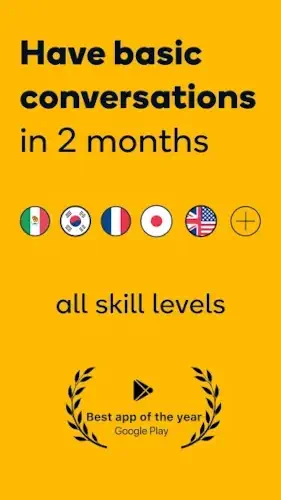
Can Memrise really help me have basic conversations in two months?
The app claims exactly that on its Google Play listing. Basic conversations in two months. That means greetings, ordering food, asking for directions, and simple small talk. Not fluency. Not deep discussions. Realistic goal for someone who practices ten minutes daily. The native speaker videos and AI Buddies are built for exactly that timeline. Try it for sixty days. You will surprise yourself.