
Moovit help you navigating an unfamiliar city’s public transportation system challenges.
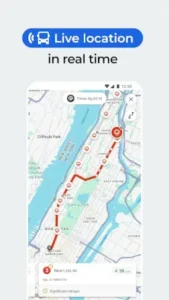
Which bus goes to the museum? How often does the train run? Is this line experiencing delays? Moovit enters this space as a comprehensive solution designed to aggregate buses, subways, trains, and even scooters into a single, intelligible platform. It promises to reduce the inherent stress of urban mobility by providing clarity and control.
Moovit Center: Real Time Data and Community Intelligence
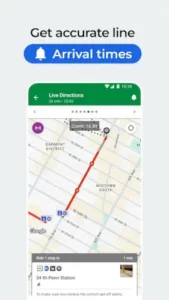
The core of Moovit‘s functionality lies in its dual stream data approach. It integrates official, real time GPS data from transit agencies themselves with a constant flow of crowd-sourced reports from its millions of users. This combination is what fuels its live arrival predictions. While agency data provides the skeletal schedule, user reports add the flesh and blood, flagging a bus that’s running behind, a sudden service disruption, or a crowded station. This synergy aims to create a system more responsive and detailed than any official source could manage alone.
The reliability of this Moovit real time bus tracking naturally varies; in major metropolitan areas with robust agency partnerships, it is exceptionally accurate.
In smaller cities or on less traveled routes, it becomes more dependent on its community, which can sometimes lead to gaps. How does your city’s data stack up?
Moovit Feature Set:
Moovit extends far beyond simple A to B directions. Its step by step navigation is comprehensive, guiding you from your current location to your destination’s doorstep, complete with walking segments, transfer points, and live service alerts that can proactively warn you of delays. The app’s value is amplified by several integrated features. In supported cities, the ability to purchase and validate digital tickets within the app eliminates the friction of finding a working kiosk or correct change. The bike integration feature is a thoughtful addition for multi modal commuters, showing docking stations and helping plan trips that combine cycling with public transit.
Perhaps most impressively, the augmented reality wayfinding tool uses your phone’s camera to overlay directional arrows onto the real world, making it remarkably simple to locate a bus stop in a complex urban landscape. This suite of tools moves the app from a simple planner to a complete Moovit trip planner for urban navigation.
Moovit User Experience: Design for Efficiency and Clarity
A feature rich app is useless if it’s confusing. Moovit employs a clean, intuitive interface that prioritizes clarity. The map uses a clear color coding system for different transit lines, and stops are marked with unmistakable icons. Information is presented in digestible chunks, ensuring you can find your next step with a quick glance, a critical design consideration for people on the move. The AR functionality, while advanced, is simple to activate and use, solving a very specific pain point. Furthermore, the option to download maps for offline use is not a minor bonus; it is essential for subway travel or areas with poor cell service, ensuring you never lose your way underground.
This focus on functional, accessible design is a key reason for the app’s strong rating of 3.5 stars from over 4 million reviews and its designation for users of all ages.
Moovit Community Effect: Strength in Numbers
App community is its most valuable sensor network. The app encourages users to report delays, crowdedness, and other incidents, creating a finely grained, real time understanding of system conditions that official data alone cannot provide. This community driven aspect means the app’s accuracy improves with user participation. Each report contributes to a more responsive and detailed transit network for everyone. This collaborative ecosystem transforms users from passive consumers of data into active participants, fostering a sense of collective efficiency.
For those comparing options, Citymapper offers a similarly robust feature set in select global cities, often with a different design philosophy, making it a worthwhile alternative to explore depending on your location.
Practical Application: Making Moovit Work for You
To truly harness the power of Moovit, move beyond basic searches. The first step is personalization. Save your home address, workplace, and frequently visited locations as Favorites. This allows for one-tap access to departure times and route options, transforming the app into a personalized dashboard for your daily commute. For regular routes, activate service alerts to receive push notifications for delays or disruptions, giving you a chance to leave earlier or choose an alternative before you’re stuck waiting. Before heading into areas with unreliable service, like subway networks or remote neighborhoods, proactively download offline maps. This ensures continuous access to route information and stops regardless of connectivity.
To manage battery consumption during long navigation sessions, consider lowering your screen brightness or activating battery saver mode. Finally, contribute to the ecosystem. Reporting a crowded bus, a delay, or an out of service vehicle takes seconds but significantly improves the Moovit bus schedule accuracy for every user after you. This active participation is what keeps the community powered model thriving.
Moovit in the Transit App Landscape
Understanding Moovit requires comparing it to its primary competitors. Google Maps is the generalist; it excels at overall navigation, business listings, and driving directions, with transit as one feature among many. Citymapper offers a similar feature set to Moovit but is primarily focused on a smaller number of major global cities, often with a more curated and opinionated approach. Moovit‘s unique value proposition is its specialized, deep focus on public transportation, combined with its massive, global community.
It covers over 3,400 cities, far more than most competitors, making it invaluable outside major hubs.
Its strength is its granularity: detailed platform information, step free access routes, and its integrated ticketing where available. Therefore, the choice is situational. For a deep dive into pure public transit, especially in a wide range of cities, Moovit is often superior. For a one stop shop that includes extensive walking, driving, and business discovery, Google Maps may be more practical. This is why users sometimes search for Moovit similar apps; not because one is definitively better, but because the best tool depends on the specific need.
Conclusion :
Moovit’s strengths are clear: comprehensive multi modal coverage, generally reliable real time data fueled by its community, and features that address the entire transit journey from planning to payment. These make it a powerful tool for demystifying urban mobility. The considerations are its advertising supported model, which some find intrusive, and the fact that its accuracy can be variable in regions with fewer users or less robust official data partnerships. This profile clearly defines its ideal user. App is not necessarily designed for the occasional driver who rarely uses transit. It is an indispensable resource for urban dwellers and daily commuters who rely on buses and trains, and for travelers exploring new cities.
It is for the person who values knowing which specific car on a train is least crowded or needs to seamlessly combine a bike ride with a subway trip. If your goal is to navigate public transit systems with maximum confidence and efficiency, Moovit provides the intelligence to make that happen.
FAQ
How does Moovit get its real time arrival data?
Moovit combines official data from transit agencies with live reports from its user community. This dual-source approach helps provide accurate arrival times and service alerts based on actual vehicle locations and conditions.
Where can I find the official Moovit download for Android?
The Moovit app is available on the Google Play Store.
Is there a resource for learning about all of Moovit’s features?
Yes, the Moovit Wiki serves as a comprehensive knowledge base with detailed guides and explanations. The official Moovit website also provides news, updates, and regional availability information.
Does Moovit work in cities with limited public transportation data?
While Moovit works best in areas with established transit data partnerships, its community reporting features help fill gaps in coverage. Users can contribute reports to improve accuracy in less served areas.
Who develops Moovit and how can I provide feedback?
Moovit is developed by Moovit Inc. (a subsidiary of Intel). For general feedback or business inquiries, you can reach them through their official contact channels or email: support[at]moovit.com