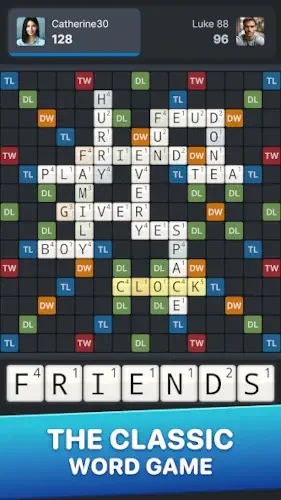
Love Scrabble but wish it were more flexible? That’s exactly what Wordfeud (4.6 stars, 660K+ reviews) delivers – a polished mobile word game that keeps Scrabble’s brain teasing challenge while adding modern twists.
With over 10 million downloads, Love Scrabble became the go to for word game enthusiasts who want strategic depth without being tied to a physical board.
Why Wordfeud Stands Out
At first glance, it looks familiar – the 15×15 grid, the letter tiles, the premium squares. But three key differences change everything:
-
Randomized Boards
Unlike Scrabble’s fixed layout, Wordfeud shuffles the double/triple word/letter squares in “random board” mode. This means:
-
No memorizing optimal opening moves
-
Each game demands fresh strategy
-
Prevents repetitive play patterns
-
-
Play 30 Games at Once
The asynchronous design lets you:-
Take turns when convenient (great for busy schedules)
-
Mix casual and competitive matches
-
Play across time zones without pressure
-
-
True Cross Platform Play
Start a game on Android during your commute, continue on your Windows PC at home, then check in via iPhone – all progress syncs seamlessly.
Love Scrabble Features :
For Casual Players
-
No time limits: Take hours (or days) between turns
-
Simple interface: Clean design minimizes distractions
-
Gentle learning curve: Helpful for Scrabble newcomers
For Competitive Players
-
Global leaderboards: Climb rankings in your language
-
Advanced stats: Track win rates and average scores
-
Strategic depth: Random boards prevent formulaic play
For International Users
Support for 10+ dictionaries means:
-
Norwegians can play in their native language
-
Spanish speakers aren’t stuck with English words
-
Great for bilingual practice (try playing in a foreign language)
How Scoring Really Works
The multiplier system looks familiar but has nuances:
| Multiplier | Effect | Pro Tip |
|---|---|---|
| DL (Double Letter) | Doubles tile value | Best for high-value letters (J, X, Z) |
| TL (Triple Letter) | Triples tile value | Combine with vowels for maximum impact |
| DW (Double Word) | Doubles entire word score | Plan words that cross multiple DW squares |
| TW (Triple Word) | Triples entire word score | Save power tiles for these game changers |
Bingos (using all 7 tiles) net an extra 40 points – but the real advantage is forcing your opponent to play from behind.
Who Gets the Most From Wordfeud?
-
Scrabble Fans Wanting More
The random boards and async play solve Scrabble’s two biggest limitations. -
Commute Gamers
Perfect for playing in short bursts on public transport. -
Long Distance Friends/Family
Stay connected through friendly word battles across time zones. -
Language Learners
Switching dictionaries helps build vocabulary in Spanish, French, etc.
What Players Think About Wordfeud (And How to Beat Them)
What Players Love
-
“The random boards force you to think differently each game – no relying on memorized openings.”
This feature alone solves Scrabble’s biggest flaw: predictable early game moves. One tournament player noted they’ve played 1,200+ games and still see fresh board layouts. -
“Finally a word game that doesn’t dumb things down for mobile.”
The lack of flashy power-ups keeps focus on vocabulary and strategy. Serious players appreciate not being matched against opponents using paid boosts. -
“Can play my Norwegian aunt and Spanish colleague in their native languages.”
The 10+ dictionary support gets particular praise from bilingual households and language learners.
Where It Frustrates
-
First time UX hurdles:
Several reviews mention struggling with:-
How to swap tiles (long-press)
-
Why some words get rejected (language settings)
-
Where to find game history (buried in settings)
-
-
Stats nerds feel underserved:
Competitive players want:-
Move by move replays
-
Win/loss records against specific opponents
-
Average scores per dictionary
-
How to Score Higher in Wordfeud (Beyond Basic Tips)
Everyone knows to save “Z” for triple word scores. These lesser-known tactics separate good players from great ones:
Master the Opening Gambit
On randomized boards:
-
Avoid center plays unless hitting a premium square – unlike Scrabble, the middle isn’t always optimal
-
Prioritize creating hooks (adding one letter to make new words) over pure points
Example: Playing “JIN” vertically sets up “JINX” or “JINK” for your next turn
The 40 Point Bingo Calculus
Getting the 40 point bonus for using all 7 tiles requires:
-
Tracking tile probabilities:
-
12 “E”s in the bag vs. just 1 “Z”
-
Know when to hold vowels for bingo chances
-
-
Strategic swapping:
Dump awkward letters early (like four vowels) rather than hoping for miracles
Defensive Playbook
-
Blocking TW squares is obvious – but also watch for:
-
Potential parallel plays (where opponents could score vertically and horizontally)
-
Open “S” spots that let them pluralize existing words
-
-
Sacrifice points to deny opponents premium squares if you’re comfortably ahead
Dictionary Hacks
-
Learn your dictionary’s quirks:
-
Norwegian allows “QA” as a word
-
German accepts all compound words
-
-
Test boundaries:
One player reported “BINGO” itself doesn’t work in some languages
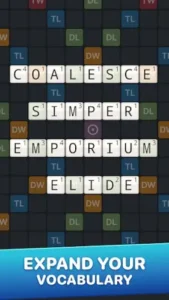
How Wordfeud Stacks Up Against Alternatives
| Feature | Wordfeud | Words With Friends | Wordzee! |
|---|---|---|---|
| Boards | Randomizable | Fixed | N/A |
| Languages | 10+ | 5 | 1 |
| Game Pace | Async | Async | Real time |
| Strategy Depth | High | Medium | Low |
| Social Features | Basic chat | Voice messages, profiles | Emoji only |
Best For:
-
Wordfeud: Purists who want Scrabble++
-
Words With Friends: Social players who prioritize chat
-
Wordzee!: Quick 5 minute word bursts
Notably, Wordfeud lacks team play options found in Crosswords With Friends – a missed opportunity for classroom or family use.
Conclusion :
You’ll Love It If You:
-
Still have a physical Scrabble set but can’t find opponents
-
Enjoy spotting that perfect 7 letter bingo
-
Want to practice Spanish/Norwegian/etc. vocabulary
Skip It If You:
-
Prefer cooperative word games
-
Need constant visual feedback and rewards
-
Mainly play solo against AI
FAQ
How does Wordfeud’s scoring compare to Scrabble?
While both use similar letter values and multipliers, Wordfeud’s random boards change strategy. The “TW” (Triple Word) and “TL” (Triple Letter) squares appear in unpredictable locations.
Can I play Wordfeud offline?
You need internet to start games, but can play turns offline. Completed moves sync when you reconnect. The app itself is lightweight at 35MB (as we post). Download Wordfeud from Google Play Store
How to track Wordfeud stats manually?
Since the app lacks advanced stats:
-
Note each game’s final score in a spreadsheet
-
Track bingos (7 letter words) separately
-
Calculate win/loss ratios per opponent
For help, email support: support[at]wordfeud.com
What’s the best strategy for random boards?
Unlike fixed boards:
-
Premium squares often cluster differently
-
Center play isn’t always optimal
-
Defensive blocking becomes crucial
Try World of Solitaire if you prefer predictable layouts.
Why do some words get rejected?
Wordfeud uses separate dictionaries for each language. “QI” works in English but not Norwegian. Check your game’s language in settings.