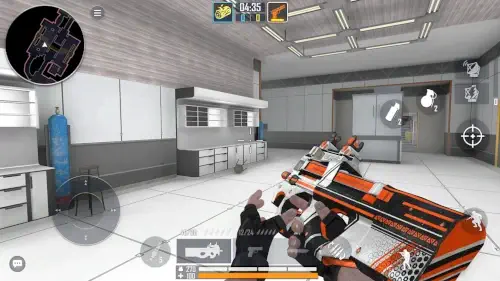
Fire Strike, from Edkon Games GmbH, enters arena as a dedicated 5v5 tactical shooter built for short, intense sessions.
Fire Strike promises the strategic team play of a desktop title condensed into five to seven minute matches. But does it successfully refine the mobile formula, or does it succumb to the common pitfalls of control limitations and aggressive monetization that often plague the genre?
Fire Strike Combat Loop: Objective Based Action
Fire Strike establishes its identity immediately through pace and purpose. Matches are designed for speed, typically lasting under ten minutes, which aligns perfectly with mobile gaming habits. The focus extends beyond simple team deathmatch to objective driven modes like Bomb Defuse, which demand more coordinated strategy than pure shooting skill. This emphasis on playing an objective, rather than just hunting kills, provides a layer of tactical depth that more casual shooters skip.
The game’s adoption, with over 10 million downloads and a collective rating of 4.1 stars from several million reviews, indicates a strong initial appeal for this specific, fast paced tactical format. For players, understanding the best Fire Strike game modes for ranking up often starts with mastering these objective scenarios.
Fire Strike Roles and Loadouts: Your Tactical Identity
Before the match even begins, your strategic decisions matter. Fire Strike employs a class system where you choose a specialist role, such as a close quarters SMG Assassin, a long range Sniper or a area denial Machine Gunner. This is not merely a cosmetic choice; it defines your function within the squad. A balanced team composition that covers multiple engagement ranges often has a distinct advantage over a team of five snipers. This role system is complemented by a detailed weapon and attachment customization setup.
Unlocking and upgrading scopes, grips and magazines for your preferred arsenal forms the core progression loop, allowing you to fine tune a weapon to fit your exact playstyle. This creates a meaningful meta game where knowledge of effective Fire Strike weapon builds becomes as important as quick reflexes.
Fire Strike Controls and Accessibility: The Interface Hurdle
The control scheme is where Fire Strike most directly confronts the limitations of the mobile platform. It includes auto fire and auto lock features by default, mechanics designed to lower the barrier to entry for players unfamiliar with twin stick shooter controls. However, this approach creates a clear tension. While these features make the game more approachable, they can also lower the skill ceiling and lead to frustrations, such as the commonly cited “bullet sponge” effect where enemies absorb excessive firepower.
Player feedback frequently mentions that the default control layout can feel static and clunky, though the game does offer extensive HUD customization. Mastering the game, therefore, involves not just learning maps but also spending time tailoring the control interface to your preferences, a key step for anyone looking to create a good Fire Strike control layout for ranked play.
Is Fire Strike Competitive Ladder: The Climb to Fire Titans
For players seeking structured competition, Fire Strike provides a clear goal oriented progression system. The ranked mode is built around a 15 tier ladder, culminating in the top Fire Titans league. This tiered system gives every match stakes, as wins grant points to advance while losses can set you back. The existence of clans and global leaderboards adds a social and long term competitive layer, encouraging team play and sustained engagement over time. This framework successfully taps into the compulsive “one more match” drive, as players strive to reach the next rank and secure seasonal rewards. The entire structure is designed to answer the player’s question of “what’s next?” and provides a tangible sense of advancement beyond simply unlocking new guns.
At the time of publication, Fire Strike is rated 4.1 stars, requires approximately 1.2 GB of storage and is rated for Teen audiences due to violent content. For players interested in another tactical 5v5 mobile FPS with a different feel, Modern Ops provides a comparable, gritty alternative.
Fire Strike Presentation and Performance:
The game employs a stylized 3D aesthetic that leans into realistic military inspirations without attempting photorealism. Maps like Chernobyl and Slums Raid are designed with a keen eye for atmospheric detail, creating immersive, war torn environments that facilitate tactical play. However, the technical execution sometimes struggles to keep pace with the artistic intent. Player reports consistently note instances of lag and frame rate drops during intense team fights, which can disrupt the flow of a clutch moment. This performance inconsistency remains a point of friction for a title built on quick reflexes.
A genuinely valuable feature in this context is the offline practice mode. It provides a no pressure environment to not only learn sightlines on new maps but also to test the best Fire Strike weapon builds and adjust control sensitivity without the penalty of a ranked loss.
Fire Strike users review :
The community’s perspective on Fire Strike is a study in clear strengths and persistent frustrations. Players widely commend the smooth core gunplay, the genuine variety in its map pool and the developers’ commitment to frequent content updates with new modes and events. This consistent support indicates a healthy live service. On the other hand, criticisms are equally vocal. The “bullet sponge” effect, where enemies require an excessive number of hits to eliminate, is a frequent complaint that impacts the feel of combat.
Furthermore, the implementation of ads and a perceived pay to win model, where upgraded weapons from paying players can dominate at higher ranks, creates a significant barrier for free to play users. These points are not minor nitpicks; they represent the real world challenges the development team must prioritize to maintain player trust.
Fire Strike Practical Play: Sharpening Your Tactics
Moving from a participant to a consistent contributor requires a strategic approach. First, do not treat your chosen role as permanent. The ability to effectively counter pick is a advanced skill; switching from a Sniper to an SMG Assassin when your team needs to push a site can change the match’s outcome. Second, aggressively customize your HUD and controls. The default layout is a starting point, not an optimal configuration.
Spending time in the settings to create a reliable Fire Strike control layout that places jump, crouch and aim comfortably under your thumbs is a direct investment in your performance. Third, use the offline mode with purpose. Practice peeking corners, learning grenade trajectories and controlling weapon recoil patterns without the pressure of live opponents. In ranked matches, even basic communication through pings can dramatically improve squad coordination and win rates.
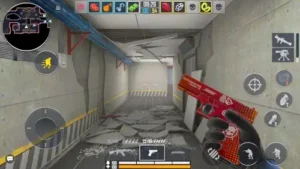
Fire Strike Position in the Ecosystem: Finding its Range
Fire Strike does not attempt to directly compete with the production scale of Call of Duty: Mobile, nor does it embrace the pure arcade chaos of FRAG Pro Shooter. Its strategic position is in a middle ground. It offers more tactical depth and role specialization than hyper casual shooters, but with a faster, more streamlined match structure than the genre giants. This makes it a compelling option for players who want the team based strategy of a 5v5 shooter without the longer time commitment or steeper learning curve. When considering Fire Strike similar apps, its unique blend of distinct class roles and a focused, rapid fire match format gives it a specific identity in a crowded field.
Conclusion :
Fire Strike demonstrates considerable strengths with its accessible yet tactical team play, a competitive ranked system that provides clear goals and a visible commitment to new content. These elements form a solid foundation for a enduring mobile FPS. The challenges it faces, however, are fundamental to the user experience. Achieving consistent technical performance, refining the control feel beyond automated assists and balancing the monetization to feel fair at all skill levels are the critical hurdles. It remains a viable and often enjoyable game for players specifically seeking quick sessions of objective based 5v5 combat. Its long term success hinges entirely on how well the developers address the friction points its most dedicated players have already identified.
FAQ
What type of game is Fire Strike?
Fire Strike is a tactical 5v5 mobile FPS focused on short, objective based matches. It features distinct character roles, weapon customization and a competitive ranked ladder, offering a streamlined team shooter experience.
How can I get started with a Fire Strike download?
Download Fire Strike from the official Google Play Store.
What should I do if I encounter a technical issue or have an account problem?
For dedicated support with bugs, technical problems or account related inquiries, please contact the development team directly at their official support email: info[at]edkongames.com.