There is a moment in the first hour of Wuthering Waves where you stop thinking about the controls and simply move.
You run up a vertical cliff face without pausing. You dodge through an enemy attack, counter instantly, and absorb its essence as a new ability. You look down from a ruined structure onto a bioluminescent landscape and realize nothing has asked you to stop, to wait, or to recharge.
This is the Wuthering Waves game’s quiet thesis: exploration and combat should be frictionless. Set in Solaris 3, a world still recovering from the apocalyptic event called the Lament, you awaken as Rover, identity lost, memory absent, but instinctively capable. The Resonators you meet along the way operate on unique frequencies, their powers harmonizing with yours against the Tacet Discords that now roam the land. The central mystery is yours to uncover.
Wuthering Waves First Impressions: Visuals, Performance, and Atmosphere
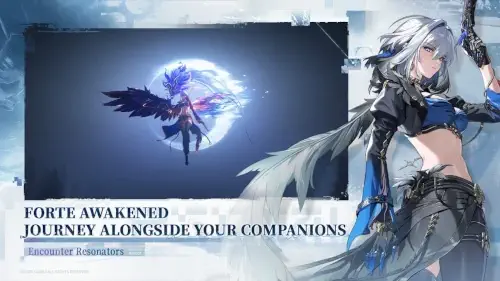
Kuro Games brought their technical ambition from Punishing: Gray Raven and scaled it upward. Wuthering Waves graphics present a stunning anime aesthetic rendered with high fidelity effects and dynamic lighting that shifts believably across day cycles. The world design emphasizes verticality. You are not walking through corridors; you are ascending ruined towers, descending into cratered valleys, and crossing bridges suspended over glowing abysses. Ruined architecture tells stories of what the Lament destroyed. Bioluminescent flora suggests what grew in its wake.
Performance holds together impressively across hardware. On mid range devices, the game maintains smooth frame rates with only occasional hitches during complex particle effects. Optimization has clearly been a priority. The audio atmosphere supports rather than overwhelms, the soundtrack establishes mood without demanding attention, though community feedback has noted that voice mixing in certain scenes could benefit from adjustment. The hook is immediate: within the first hour, you have fought, explored, absorbed an enemy ability, and encountered a character whose motivations are not immediately clear. You want to know more.
Wuthering Waves Combat: Fluidity as a Feature
The combat in Wuthering Waves gameplay inherits DNA from Punishing: Gray Raven but opens it into a wider arena. The dodge and counter system rewards precise timing. Enemy attacks have tells; your response window is generous enough to learn but tight enough to demand attention. Successful dodges open counter windows where your damage multiplies.
The Echo System is the mechanical standout. Defeating certain enemies allows you to absorb their essence, which becomes an equippable active skill. That basic enemy you just killed? Its projectile attack might now be yours. That elite with the sweeping area blast? You can claim it. This creates a continuous feedback loop where combat directly feeds your growing toolkit.
Wuthering Waves combat mechanics also include QTE integrations during specific encounters, cinematic moments that break up standard fighting without removing player agency. Concerto Effects trigger when Resonators in your party harmonize, creating combo chains that reward thoughtful team composition. The manual skill ceiling is intentionally high. Auto play exists for basic farming, but boss fights demand your attention. This is not a game you can idle through.
Wuthering Waves Exploration: No Stamina, No Limits
Most open world games impose an invisible leash. You can only climb for so long before your stamina depletes. You can only sprint in bursts. Wuthering Waves exploration removes this entirely. There is no stamina bar for running, climbing, or swimming. If you can see a point on the map, you can reach it without pausing to recover.
Traversal tools extend this freedom. Flight mechanics appear in specific zones. Grappling hooks let you close distance to outcrops. Wall running turns vertical surfaces into pathways. Recent updates have added a bicycle for faster ground traversal, and community speculation points toward additional vehicles. The world is designed to be crossed, not endured.
Wuthering Waves map rewards density supports this philosophy. Puzzles are scattered across every region. Hidden chests reward curiosity. Challenges test your combat or platforming skill and grant meaningful currency. Exploration does not feel like a checklist; it feels like the point of the game.
Wuthering Waves Progression: Resonators, Echoes, and Builds
Your party consists of Resonators, each with unique Forte abilities that define their role. The gacha system awards new characters through limited and standard banners, with pull currency generously distributed through events and story quests. Wuthering Waves Resonator guide essentials: learn each character’s role before investing heavily.
Echo Collection runs parallel to character progression. Each Echo you absorb can be leveled and equipped, providing stat bonuses and that active skill. Building a set around a specific element or attack pattern dramatically increases your effectiveness. Resonance Chains activate when you obtain duplicate characters, enhancing their core abilities. This creates long term goals for dedicated players without making base characters feel incomplete.
The resource economy leans toward generosity. Events and quests provide substantial pull currency. Wuthering Waves 4 star characters remain viable with proper support and investment. The gap between high investment low rarity units and baseline high rarity units is narrower than in comparable games.
At the moment of writing Wuthering Waves holds a 4.3 star rating on Google Play, drawing from hundreds of thousands of reviews. It has surpassed 10 million downloads globally. The application size is substantial, reflecting its high fidelity assets and open world scope, typically requiring significant storage. Rated for Teens, its content includes fantasy violence and mild suggestive themes appropriate for its target demographic.
For players drawn to this blend of fluid action and open exploration, the combat depth in Punishing: Gray Raven offers a more focused, mission based experience from the same developer.
Living Wuthering Waves Game: Version 3.0 and Beyond
Wuthering Waves is not a static product. It evolves visibly, and the trajectory matters as much as the starting point. Version 3.0, titled We Who See the Stars, represents the game’s current state, a new region added to Solaris 3, a continuation of the main story, and a clear signal that Kuro Games intends to support this world for years.
Two new Resonators headline the update. Lynae wields Spectro damage with pistols, a ranged playstyle that rewards positioning and sustained fire. Mornye brings Fusion damage with a broadblade, trading range for impact and crowd control. Their addition expands the roster and shifts the Wuthering Waves tier list conversation. Character viability is not static; each update introduces units that enable new team compositions.
The industry has noticed. Wuthering Waves awards include nominations at The Game Awards in both 2024 and 2025. This recognition matters less as validation and more as signal, the game competes in a crowded field and holds attention.
What distinguishes the development cycle is responsiveness. The official Wuthering Waves Discord and Reddit communities are not just social spaces; they are feedback channels that demonstrably influence patches. Voice mixing critiques led to adjustments. Character balance concerns receive acknowledgment. The roadmap is shared transparently, and content cadence maintains player engagement without overwhelming. This is a live game managed with evident care.
Starting Smart in Wuthering Waves : First Week Guide
Your first seven days in Solaris 3 determine your trajectory for months. The most efficient Wuthering Waves tips all circle back to one principle: follow the story and events first. Main quests and limited time events are the primary sources of pull currency. Side content is valuable, but the main line pays immediate dividends.
Wuthering Waves Echo farming should begin early but strategically. Not every Echo is worth building. Target the ones that match your starting Resonators’ damage types and roles. A well built 3 star Echo on a 4 star character outperforms a mismatched 5 star Echo sitting unused.
Manual dodge practice is not optional. The game will auto target and auto attack during basic farming, but boss fights expose players who rely on this. Wuthering Waves boss strategies all share one common element: timing your dodge to the red flash, not before it. Master this, and the difficulty curve flattens considerably.
Team composition in the early game should prioritize synergy over rarity. A team of 4 star characters with complementary Concerto Effects will outperform a mismatched collection of high rarity units. Wuthering Waves team building becomes more nuanced at higher levels, but early on, pairing a main damage dealer with a support who amplifies their element carries you through the first several zones.
Resource management means hoarding the right things. Shell credits disappear faster than expected. Weapon and Echo enhancement materials feel plentiful until you need them for multiple characters. Spend only on units you are certain you will use for weeks, not days.
Wuthering Waves Similar Games
The comparison between Wuthering Waves and Genshin Impact is inevitable and useful. Both are open world gacha games with anime aesthetics and elemental-ish combat systems. The divergence is in execution. Genshin emphasizes elemental reactions and team rotations. Wuthering Waves prioritizes combat fluidity and individual mechanical skill. Genshin’s exploration is stamina gated. Wuthering Waves removes the gate entirely. Neither is objectively superior; they serve different preferences within the same genre.
Wuthering Waves similar games include Honkai: Star Rail, but the comparison is apples and oranges. Star Rail is turn based, narrative-focused, and intentionally slower. Wuthering Waves demands twitch responses and active engagement. They share an audience only at the broadest level, people who enjoy gacha games.
Punishing: Gray Raven is the clearest through line. Same developer, same combat DNA, but different scope. Gray Raven delivers focused, mission based action. Wuthering Waves expands that philosophy into an open world. Players who appreciate Kuro’s mechanical priorities will recognize the family resemblance.
Tower of Fantasy represents the MMO branch of the genre. Wuthering Waves remains solo focused with optional co-op. The narrative is yours alone; the world does not require other players to feel populated.
Wuthering Waves unique selling point is this combination: Kuro’s combat expertise applied to a persistent open world, with exploration unshackled from stamina mechanics. No other game in the space offers exactly that blend.
Conclusion : Who Should Answer the Call?
The strengths are the story returning players tell others. Combat fluidity that rewards practice. A reward system that feels generous rather than stingy. Developers who read feedback and act on it. Stamina free exploration that respects your time. Visual presentation that holds up against any competitor.
The limitations are acknowledged by the same community. Voice mixing in certain scenes pulls you out of the moment. Some 4 star characters need specific team support to shine, and not all players have those pieces. The game continues to refine itself; it is not a finished monument but a living construction.
So who is this for? Wuthering Waves target audience includes action RPG players who value mechanical execution over menu navigation. It includes Genshin veterans who love the open world but wish combat demanded more from them. It includes gacha players tired of games where free currency feels like a rumor.
It is not for everyone. Turn based enthusiasts will find the combat stressful rather than engaging. Players who prefer to progress through menus rather than practice timing will hit walls. Anyone seeking a concluded story with a final chapter should wait years, not weeks.
But for the player who wants to run up a cliff without stopping, dodge through an attack, absorb its power, and keep moving, Wuthering Waves was built for that feeling.
FAQ
Is Wuthering Waves free to play?
Yes, the game is free to download and play. It generates revenue through optional gacha banners for characters and weapons. The entire main story, exploration content, and events are fully accessible without spending. Free currency is awarded generously through regular play.
Where can I get the game and find official information?
I’m experiencing technical issues or account problems. Who can help?
For technical support, bugs, or account concerns, contact Kuro Games’ customer service at: wutheringwaves_ensupport[at]kurogames.com. Including your device specifications, account UID, and a clear description of the issue will help them assist you efficiently.
Are there active bonus codes, and where do I find them?
Yes, the developers regularly release gift codes during livestreams, version updates, and community milestones. The official Wuthering Waves Discord and subreddit are the best sources for active codes. These codes typically provide pull currency, upgrade materials, or cosmetic items.
What’s the best way to find Resonators and plan my progression?
Focus on main story quests and limited time events first, as they award the most pull currency. The game features a beginner’s banner with discounted pulls to help build your early roster. For detailed planning, the Wuthering Waves interactive map helps locate all Echoes and chests, while community tier lists offer guidance on character investment priority.