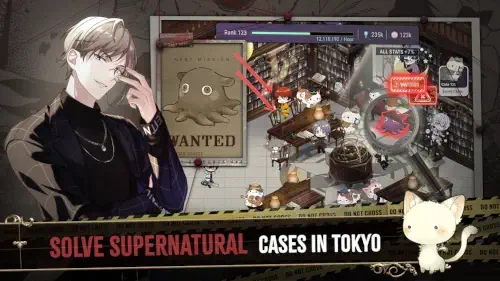
Tokyo Debunker is not choosing like most anime RPGs that pick one genre and stick with it. Story or battles. Collection or simulation. Rhythm or idle.
Tokyo Debunker refuses to choose. You read comic style story scenes. You build facilities with cat helpers. You collect characters. You fight monsters. You tap to rhythm mini games. You play co op with friends. The question is whether this kitchen sink approach feels like variety or chaos.
What is Tokyo Debunker exactly?
You are looking at a supernatural anime RPG and simulation game from ZigZaGame Inc., the studio behind narrative focused mobile titles.
Tokyo Debunker takes place around Darkwick Academy, where you work with ghoul classmates and cat familiars to investigate supernatural incidents across Tokyo. The game blends visual novel storytelling, Live2D scenes, gacha style collection, rhythm elements, and co op features into one mobile package. The tone is strange, dark, and stylish, mixing mystery, fantasy, and urban legend energy.
On Google Play, Tokyo Debunker holds a 4.9 star rating from more than 62,000 reviews. The app size comes in at roughly 800 MB, smaller than many 3D RPGs. The age rating is 12 and up, with mentions of violence, gacha mechanics, and online interactions.
A supernatural anime RPG and simulation hybrid
The genre label here is unusual. Tokyo Debunker is not a pure action RPG. It is not a pure visual novel. It is not a pure simulation game. It sits somewhere in between. You spend time reading comic style story panels. Then you build facilities with cat helpers. Then you fight monster battles. Then you play rhythm mini games. Then you team up with other players in co op modes. That mix of formats is the game’s identity. Some players love the variety. Others find it scattered.
Who this game was built for
Not every mobile player will enjoy Tokyo Debunker. Here is who will.
Visual novel and story heavy game fans
Do you enjoy reading through story scenes? Do you like watching characters come to life through Live2D animations? That is a core part of Tokyo Debunker. The story is presented through comic style panels with animated character sprites. If you skip dialogue, you miss half the experience.
Character collectors and gacha enthusiasts
You collect ghoul classmates through gacha summons. Each character has unique art, voice lines, and abilities. Building your roster takes time and luck. Gacha fans who enjoy pulling for new characters will find familiar systems here.
Players who enjoy idle progression and simulation
Your facilities produce resources while you are away. Cats help manage them. You log in, collect rewards, upgrade buildings, and log out. That loop appeals to players who enjoy slow, steady growth without constant attention.
Fans of supernatural and urban fantasy settings
The game is set in Tokyo with occult themes. Ghosts. Ghouls. Mysterious incidents. Dark academies. If you enjoy supernatural anime like Jujutsu Kaisen or urban fantasy settings, the atmosphere will pull you in.
Tokyo Debunker Main Features you will use
The game offers a mix of systems. Here are the ones that matter most.
Story progression through comics and Live2D scenes
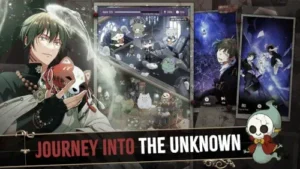
Story scenes play out like a comic book. Panels with character art. Speech bubbles. Dramatic zooms. Live2D animations bring character portraits to life. They blink. They move. They react. The presentation is closer to a digital manga than a traditional visual novel.
Facility building with cat familiars
You build and upgrade facilities around Darkwick Academy. Libraries. Cafeterias. Training rooms. Each facility produces resources or provides bonuses. Cats help manage these facilities. Assign cats to buildings to boost production. Collect resources, upgrade buildings, assign more cats. That loop continues indefinitely.
Character collection and team building
You collect ghoul classmates through story progression and gacha summons. Each character has a role in combat. Damage dealer. Tank. Healer. Support. Build a team of up to five characters. Swap them based on enemy types and mission requirements.
Monster battles with classmates
Combat is turn based or automation friendly. You select skills. Enemies attack. Characters have health bars and skill cooldowns. Victory rewards resources and story progression. Defeat may require trying again with a different team composition.
Rhythm gameplay to earn items
Here is a curveball. Rhythm mini games. Tap notes in time with music. Accuracy determines rewards. Rhythm games drop items you cannot get elsewhere. Players who enjoy music games will appreciate the variety. Players who dislike rhythm games may feel forced into a mode they do not enjoy.
Co op modes with other players
You can team up with other players for special missions. Co op battles reward extra items and currency. Some co op modes require coordination. Others are simple drop in and fight. Social players will appreciate the option. Solo players can ignore co op but will progress slower.
Anime style presentation and visual novel elements
The game looks like an anime. Character designs are colorful and expressive. Story scenes use visual novel conventions. Background music sets the mood. Voice acting appears in key scenes.
Idle style progression and resource growth
Resources accumulate while you are offline. Facilities produce materials. Cats gather items. Log in, collect, upgrade, log out. That idle loop means you never feel stuck waiting for resources. But it also means active play does not always feel rewarded.
Lightweight mobile footprint
The game is roughly 800 MB. Smaller than many 3D RPGs. Runs on older devices without major performance issues. Good for players with limited storage or older phones.
Tokyo Debunker Graphics and Design
Colorful, gothic, supernatural anime style
The art direction leans into occult Tokyo. Dark academies. Neon city streets. Ghostly creatures. Character designs are colorful against dark backgrounds. The contrast works well.
Strong character art and comic style scenes
Character art is the highlight. Detailed outfits. Expressive faces. Distinct silhouettes. Comic style story panels are well composed. The game looks good when focused on characters.
Live2D animations for story moments
Character portraits move during story scenes. They blink. Their mouths move when speaking. They shift poses during dramatic moments. Live2D adds personality.
Where the design works well
Menus are organized. Facility building is intuitive. Combat UI is clear. The game does a good job of keeping different systems separate but accessible.
Concerns about background art and AI generation
Not everything is praised. Some community discussions note concerns about background art. Possible AI generated assets. The quality gap between character art and backgrounds is noticeable. Characters look hand drawn and polished. Backgrounds sometimes look generic or inconsistent.
What players say about Tokyo Debunker game
The parts people enjoy
Positive reviews often mention the art style. Character designs are praised. The story presentation gets positive notes. The variety of gameplay modes keeps things fresh for players who enjoy switching activities.
The parts people complain about
No hybrid game escapes criticism. Here is what comes up most often.
Monetization concerns and pacing
Gacha elements are present. Premium currency for summons. Battle passes. Monthly subscriptions. Free players can progress but slower. Some players feel the game pushes spending too aggressively.
Production controversies
Some players have raised concerns about AI generated assets. Background art specifically. The developer has not fully addressed these concerns. Players who care about hand drawn art may feel disappointed.
Less polished than traditional RPGs
Tokyo Debunker game does many things. It does not do any one thing perfectly. Combat is simpler than dedicated turn based RPGs. Rhythm games are simpler than dedicated music games. Simulation is simpler than dedicated city builders. Players who want depth in one area may feel the game spreads itself too thin.
Mixed visual quality between characters and backgrounds
Characters look great. Backgrounds look okay to bad depending on the scene. That inconsistency bothers players who notice details.
Tokyo Debunker Game Mechanics
Story chapters as progression gates
You start at chapter one. Complete missions to advance the plot. Each chapter introduces new locations, new characters, and new facility upgrades. You cannot skip ahead. The story is linear.
Facility building and cat companions
Your facilities produce resources. Gold, materials, character upgrade items. Cats boost production. Assign cats to buildings. Higher level cats give better bonuses. Upgrade buildings to increase production speed and storage.
Character collection through gacha
Characters are obtained through story rewards and gacha summons. Premium currency buys summons. Free currency accumulates slower. Rate up banners feature new characters at higher drop rates. Duplicate characters provide upgrade materials.
Turn based or automated combat
Combat is not complex. Characters have basic attacks and special skills. Enemies have health bars and attack patterns. You can auto battle easy fights. Manual control is available for hard content. Combat is functional but not deep.
Rhythm mini games for item farming
Rhythm games appear as side content. Tap notes in time with music. Accuracy determines item rewards. Rhythm games are optional but efficient. Ignoring them means farming items elsewhere, which takes longer.
Co op modes for social progression
Co op missions allow up to four players. Each player brings one character. Work together to defeat bosses. Co op rewards include premium currency and rare items. Co op is optional but recommended for efficient progression.
Idle resource accumulation
Facilities produce resources while you are offline. Log in every few hours to collect. Upgrading facilities increases the storage cap. Longer caps mean fewer logins required.
Multiple interlocking systems
Story unlocks facilities. Facilities produce resources. Resources upgrade characters. Upgraded characters clear harder story chapters. Harder chapters unlock better facilities. The systems feed into each other. Ignoring any one system slows overall progress.
Looking for another supernatural anime game with character collection? Check out Obey Me!, a story focused mobile game about demon brothers, rhythm mini games, and character bonding.
Tokyo Debunker Tips that help
You can learn the basics of Tokyo Debunker game in an afternoon. Figuring out how to balance story, facility building, combat, and rhythm games takes longer. These tips separate players who progress smoothly from players who hit walls and feel stuck.
Focus on story progression early
New players get distracted. They spend hours upgrading facilities, pulling gacha, and ignoring the main plot.
That is a mistake. Story chapters unlock new facilities, new characters, and new game modes. You cannot access half the content until you complete certain chapters. Push through the main story until at least chapter five or six. Then branch out to side content. Players who stall in early chapters hit walls they could have avoided. Tokyo Debunker tips from experienced players all say the same thing. Story first. Everything else second.
Build and upgrade cat supported facilities
Here is a question. Why do two players with the same playtime progress at different speeds? One upgrades facilities efficiently. The other does not.
Cats are your best workers. Each cat has a skill. Some cats boost resource production. Others reduce upgrade times. Assign cats to facilities that match their skills. Upgrade facilities in order of importance. Resource producing facilities first. Storage facilities second. Cosmetic facilities last. A level five library produces more than three level two libraries. Focus matters.
Use rhythm and mini games for item farming
Rhythm games are not just side content. They are the most efficient way to farm certain items.
Item drop rates in regular battles are low. Rhythm games guarantee rewards based on your accuracy score. A perfect run drops rare items. An okay run drops common items. Practice the rhythm games. Memorize the patterns. A few minutes of rhythm gaming saves hours of farming regular battles. Players who ignore rhythm games progress slower. Players who master them always have the items they need.
Balance your team, not one favorite character
Tokyo Debunker game encourages you to collect characters. New players pick one favorite and invest everything into them.
That is a trap. A single strong character cannot carry a team of four weak ones. Enemies target random party members. Your favorite character dies. The rest of your team folds. Build a balanced team. One tank. Two damage dealers. One healer. One support. Invest resources evenly across your main team. A balanced team of five decent characters clears harder content than one maxed character with four neglected ones.
Check co op opportunities for faster progress
Co op modes offer rewards you cannot get anywhere else. Premium currency. Rare upgrade materials. Limited time characters.
Many players ignore co op because they prefer playing alone. That is fine. But know that solo players progress slower. Co op missions take less time than solo missions. Co op rewards are better than solo rewards. Even casual co op, dropping into random groups without voice chat, speeds up progression significantly. If you want efficiency, play co op. If you want solitude, accept slower progress.
Manage resources to avoid slow progression
Tokyo Debunker has multiple resources. Gold. Gems. Facility materials. Character upgrade items. Cat food. Rhythm game tickets.
New players spend resources as soon as they get them. They upgrade random facilities. They pull gacha on every banner. They level every character a little bit. Then they hit a resource wall. Nothing left for important upgrades. Save resources for specific goals. Want to clear a hard story chapter? Save gold for character upgrades. Want to pull a specific character? Save gems for their banner. Want to upgrade a key facility? Save materials for that facility only. Focused spending beats scattered spending.
Examine both character art and backgrounds
Tokyo Debunker has a known quality gap. Character art is polished. Backgrounds can be inconsistent.
If visual quality matters to you, look closely before committing time and money. Some backgrounds look hand drawn and detailed. Others look AI generated or rushed. The inconsistency bothers some players. Others do not notice. Know your own tolerance. If inconsistent art bothers you, this may not be your game. If you only care about characters, you will be fine.
Join the community early for priority guides
The game has many systems. The tutorial covers basic controls but not optimization.
Reddit, Discord, and fan wikios have priority guides. Which facilities to upgrade first. Which characters are worth pulling. Which rhythm games give the best rewards. New players who read these guides progress twice as fast as players who figure things out alone. Tokyo Debunker haru is a fan favorite character. The community can tell you why she is good and how to build her. Join the community early. Ask questions. Read guides. Your progress will thank you.
Tokyo Debunker Similar Games
If you like Tokyo Debunker, here are five other games worth your time. Each offers something similar with a different twist.
Obey Me!
Obey Me! combines visual novel storytelling with character collection and rhythm mini games. You build relationships with demon brothers. You tap to rhythm games for resources. Very similar structure to Tokyo Debunker. Different in that Obey Me! has no facility building or co op battles. Good choice for Tokyo Debunker similar games if you want the story and rhythm elements without the simulation layers.
Twisted Wonderland
Twisted Wonderland is set in a dark magical academy. Disney villains inspired the characters. Visual novel style story. Character collection. Turn based combat. Similar to Tokyo Debunker in tone and structure. Different in that Twisted Wonderland has no rhythm games and no facility building. Good for players who want the dark academy setting with more combat focus.
Tears of Themis
Tears of Themis is a detective themed visual novel with gacha character collection. Investigate cases. Build relationships with male leads. Card based combat. Similar to Tokyo Debunker in story first design. Different in that Tears of Themis has no facility building, no rhythm games, and no co op. Good for players who want mystery stories and character bonding without extra systems.
Love and Deepspace
Love and Deepspace combines visual novel storytelling with 3D action combat and character collection. Sci fi setting. Real time battles. High production values. Similar to Tokyo Debunker in character focus. Different in that Love and Deepspace has 3D graphics, action combat, and no rhythm or simulation systems. Good for players who want a more polished and modern presentation.
Tokyo Afterschool Summoners
Tokyo Afterschool Summoners is set in a supernatural Tokyo with character collection and turn based combat. Similar setting to Tokyo Debunker. Similar character collector structure. Different in that Summoners has deeper combat and less simulation. Good for players who want the Tokyo occult setting with more tactical battles.
Tokyo Debunker Community
Tokyo Debunker has both in game social features and external community discussion.
Co op modes with direct social play
Co op is not an afterthought. You can team up with friends or random players for special missions. Co op battles have unique mechanics. Some require coordination. Others are simple drop in and fight. Co op rewards are better than solo rewards. Players who engage with co op progress faster.
Reddit and fan wiki discussions
The Reddit community is active. Players share team builds. They post rhythm game scores. They discuss which characters are worth pulling. Fan wikis have detailed guides for every system. New players should read these resources. The game does not explain everything well. Community guides fill the gaps.
Shared guides and character opinions
Not all characters are equal. Some are strong in combat. Some are weak. Some have better rhythm game bonuses. Some have better facility bonuses. The community maintains tier lists. Following tier lists helps you avoid investing in weak characters. Ignoring tier lists leads to wasted resources.
External community shaping the experience
The conversation happens outside the game. Reddit. Discord. YouTube. Twitter. Players share fan art. They write character analyses. They create challenge guides. Being part of the external community enhances the experience. Solo players miss this layer. Community players get more value from the game.
Conclusion
Tokyo Debunker works for three types of people. First, visual novel fans who enjoy story first games with character collection. Second, players who like variety and do not mind switching between story, simulation, rhythm, and co op. Third, supernatural anime fans who enjoy occult Tokyo settings and gothic aesthetics.
If you fit any of those, the download is worth it.
Monetization pressure exists. Background art quality is inconsistent. Some players have raised concerns about AI generated assets. Combat is simpler than dedicated RPGs. Rhythm games may not appeal to everyone. The game does many things but nothing perfectly.
None of these are deal breakers for the right player. But they are honest warnings.
Do you enjoy switching between multiple game modes? Story, simulation, rhythm, co op? Or do you prefer one core loop with deep mechanics?
If the first one, Tokyo Debunker offers variety and a strong supernatural atmosphere. If the second one, look for games that focus on one genre and do it deeply. Both answers are fine. Just know what you are signing up for.
Frequently asked questions about Tokyo Debunker
How do I get Tokyo Debunker download on my phone?
Download Tokyo Debunker from the Official Google Play Store, you can also play on your desktop with Google Play Gmaes on PC.
Is Tokyo Debunker free to play, or do I need to spend money?
The game is free. You can read story chapters, collect characters, build facilities, and play co op without spending anything. The app makes money from optional purchases like gacha summons, battle passes, and currency packs. You can progress without paying. It just takes longer. Free players can complete all story content.
Where can I find the official website?
The official website has news, character profiles, event schedules, and developer updates: Official Tokyo Debunker Website.
I have a problem with the app. Who do I contact?
Send an email to the developer support team. They handle bug reports, account recovery, purchase issues, and feature requests. Here is the address: tokyodebunkersupport[at]zigzagame.com.
What makes Tokyo Debunker different from other anime RPGs?
Most anime RPGs focus on one genre. Tokyo Debunker combines multiple. You read comic style story scenes with Live2D animations. You build facilities with cat helpers. You collect ghoul classmates through gacha. You fight turn based battles. You play rhythm mini games for items. You team up in co op modes. That variety is the game’s identity. Some players love having different things to do. Others find the game spreads itself too thin. If you enjoy switching between activities, you will appreciate the variety. If you prefer deep mechanics in one area, this may not be for you.