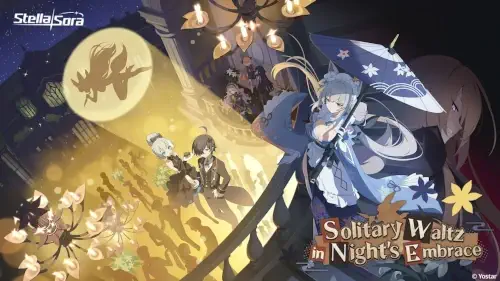
Stella Sora won`t give you one long campaign. You start at level one. You finish at max level. Then you move on to something else.
Stella Sora does not work that way. You run short dungeons called Monoliths. Each run is different. Perks change. Enemies shift. Bosses demand new strategies. Then you reset and run again. The question is whether that roguelike loop keeps you coming back or leaves you wanting more structure.
What is Stella Sora ?
You are looking at a top down light action RPG from Yostar Limited, the publisher behind games like Arknights and Azur Lane.
Stella Sora puts you in the role of the Tyrant, a leader who teams up with characters called Trekkers to climb mysterious structures known as Monoliths. The game mixes real time combat, gacha collection, and roguelike run progression. Each Monolith run is different. Randomized perks, buffs, and artifacts mean no two runs feel exactly the same.
On Google Play, Stella Sora holds a 4.3 star rating from more than 10,000 reviews. The app size comes in at roughly 1.9 GB. The age rating is 12 and up, with mentions of violence, gacha mechanics, and online interactions.
A top down light action RPG with roguelike runs
The genre label tells you what to expect. This is not a turn based game. Combat happens in real time from a top down perspective. You move your character with one thumb and attack with the other. Dodging enemy attacks is as important as dealing damage. The roguelike structure means you start each run fresh, collecting power as you go. Death sends you back to the beginning. Progress comes from learning enemy patterns and making better perk choices.
Who this game was built for
Not every mobile player will enjoy Stella Sora. Here is who will.
Roguelike and roguelite fans
Do you enjoy games where each run is different? Where your power comes from random perks instead of fixed levels? That is the core of Stella Sora. Players who love Hades or Dead Cells will feel at home. Players who prefer linear progression may find the loop frustrating.
Action RPG players who enjoy dodging and timing
Combat requires attention. Enemies telegraph attacks. Dodging at the right moment avoids damage. Attacking at the wrong moment leaves you open. This is not a game where you can stand still and spam attacks. Good timing separates successful runs from early deaths.
Gacha collection enthusiasts
You collect Trekkers through gacha summons. Each Trekker has unique skills, elemental affinities, and support abilities. Building a strong roster takes time and luck. Gacha fans who enjoy pulling for new characters will find familiar systems here.
Anime visual novel style story lovers
Story scenes play out like a visual novel. Character portraits on illustrated backgrounds. Dialogue boxes with voice acting. The writing aims for a lighthearted tone with occasional serious moments. Fans of anime storytelling will appreciate the presentation.
Stella Sora Main Features you will use
The game offers several interconnected systems. Here are the ones that matter most.
Top down light action combat
Combat is real time. You control one Trekker directly. The other two Trekkers in your party act as support, providing passive bonuses and occasional assist attacks. You move with a virtual joystick. Attack and skill buttons sit on the right side of the screen. Dodging has its own button with a short cooldown. Combat feels responsive but requires practice.
Roguelike Monolith exploration with randomized perks
Monoliths are the game’s dungeons. Each Monolith has multiple floors. Clear a floor to choose a perk from a selection of three. Perks range from stat boosts to new abilities to enemy debuffs. The order of perks changes each run. You cannot force the same build every time. Adapting to what the game gives you is part of the skill.
Three person party structure
One main character controlled directly
You choose which Trekker to control at the start of each run. That character does all the attacking, dodging, and skill activation. Your skill with that character determines most of your success.
Two support Trekkers assisting off field
The other two Trekkers stay off the battlefield but still contribute. They provide passive stat bonuses. They trigger support skills when conditions are met. Some support Trekkers heal the party when health drops low. Others boost damage after dodging. Choosing the right support Trekkers for your main character is essential.
Gacha character collection
Trekkers are obtained through gacha summons. Premium currency buys summons. Free currency from daily missions and events accumulates slower. Rate up banners feature new Trekkers at higher drop rates. A pity system guarantees a rare character after a set number of summons without one.
Trekker bonding and team building systems
You can bond with Trekkers outside of combat. Raise bond levels by giving gifts, having conversations, and completing character specific missions. Higher bond levels unlock story scenes and combat bonuses. Bonding is optional but rewards dedicated players.
Disc and gear progression like artifacts
Discs are equippable items that boost stats and add special effects. Similar to artifacts in other gacha games. You earn Discs from Monolith runs and boss battles. Higher rarity Discs have better stats. Discs can be upgraded and rerolled for optimal bonuses. Gear farming is a long term activity.
Boss raids, survival challenges, and duel modes
Beyond standard Monolith runs, Stella Sora offers additional modes. Boss raids have you fighting single powerful enemies with unique mechanics. Survival challenges throw waves of enemies at you until you fall. Duel modes pit your team against another player’s team in asynchronous combat. These modes provide variety and extra rewards.
Anime visual novel style storytelling
Story chapters progress through visual novel scenes. Character portraits, illustrated backgrounds, and voice acting bring the narrative to life. The story follows the Tyrant and their Trekkers as they uncover the secrets of the Monoliths.
Fully voiced cutscenes
Major story scenes feature full voice acting in Japanese and English. Character dialogue is voiced. Narration is not. The voice work adds personality to the cast.
Stella Sora Graphics and Design
H3: Bright, colorful anime art style
The game looks cheerful. Character designs are colorful and expressive. Environments range from green forests to mechanical ruins to crystalline caves. The art direction is consistent and appealing.
Polished character design and vibrant UI
Trekkers have distinct silhouettes and color schemes. The UI uses bright colors without being overwhelming. Menus are animated but not slow. Everything feels polished.
Visual novel scenes mixed with action combat
Story scenes look like a visual novel. Combat looks like an action game. The transition between modes is smooth, but the contrast in presentation is noticeable. Some players enjoy the variety. Others find it jarring.
Where the design works well
Combat readability is strong. Enemy attacks have clear tells. Health bars, cooldown timers, and perk selections are easy to read. The game does a good job of keeping information visible during fast fights.
Where story scenes are unvoiced
Not every story scene is fully voiced. Side conversations and optional dialogue often have no voice acting. Players who expect full voice coverage may be disappointed.
What players say about the Stella Sora game
The parts people enjoy
Positive reviews often mention the combat feel. Dodging and attacking are responsive. Perk variety keeps runs fresh. Character art and animations are praised. The roguelike structure gets positive mentions from fans of the genre.
One player wrote: “Combat is smooth and satisfying. Each run feels different. Best roguelike on mobile right now.”
The parts people complain about
No gacha game escapes criticism. Here is what comes up most often.
Monetization concerns
The game offers battle passes, monthly subscriptions, and currency packs. Free players can complete all content but slower. Paying players progress faster and have more summon chances. That gap bothers some players more than others.
Repetition in run structure
Even with randomized perks, Monolith runs follow the same pattern. Enter floor. Kill enemies. Choose perk. Repeat. Some players find the loop addictive. Others find it tedious after the tenth run.
Unvoiced story scenes
Major scenes are voiced. Side content is not. Players who enjoy story may feel the unvoiced sections lack impact compared to fully voiced gacha competitors.
Gacha drop rates
Rare Trekkers have low drop rates. The pity system guarantees one after enough summons, but reaching pity takes time or money. Some players report pulling dozens of times without seeing a featured Trekker.
Stella Sora Game Mechanics work
Choose a Trekker team and enter Monoliths
You select one main Trekker and two support Trekkers. Then you enter a Monolith. Each Monolith has a theme, enemy set, and boss. Higher difficulty Monoliths offer better rewards.
Real time combat with dodging and skill timing
Combat requires attention. Enemy attacks have wind up animations. Dodge at the right moment to avoid damage. Use skills when enemies are vulnerable. Mashing buttons without timing leads to quick deaths.
Randomized perks, buffs, and artifacts each run
After each floor, choose one perk from three options. Perks can increase damage, reduce cooldowns, add elemental effects, or change how skills work. Some perks synergize with each other. Building a cohesive set of perks is more effective than picking the strongest option each time.
Support Trekkers and team composition
Support Trekkers provide passive bonuses. A support Trekker might increase the main character’s critical rate. Another might heal after every floor. Choosing supports that complement your main character’s playstyle matters more than picking the highest rarity supports.
Disc and gear systems for progression
Discs are equipped to Trekkers. Each Disc has a main stat and substats. Upgrading Discs increases those stats. Disc farming is a long term activity. Players spend weeks optimizing their gear.
Boss patterns and roguelike punishment
Bosses have distinct attack patterns. Learning those patterns is required for higher difficulties. One mistake can end a run. That punishing design appeals to roguelike fans. Casuals may find it frustrating.
Run based progression and replayability
Each run takes 15 to 30 minutes. Death means starting over. Permanent progression comes from account level, Trekker upgrades, and Disc collection. The loop is clear. Run, die, upgrade, run again. Players who enjoy that cycle will play for months. Players who prefer permanent checkpoints may bounce off.
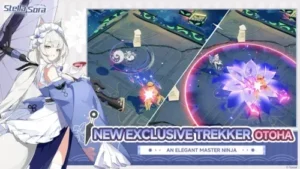
Stella Sora Tips
You can learn the basics of Stella Sora game in an afternoon. Figuring out how to build consistent winning runs takes weeks. These tips separate Captains who clear high difficulty Monoliths from Captains who die on floor three.
Build a balanced three Trekker team
New players love putting their three strongest Trekkers together. Highest rarity. Highest level. Highest damage. Then they die.
Why? Because raw power does not create synergy. A balanced team has a main damage dealer, a support that boosts damage, and a support that provides survivability. For example, a fire main dealer paired with a water support that increases critical rate and a grass support that heals after each floor. Stella Sora characters work best when their skills complement each other. Read each Trekker’s support skill before building a team. Do not just sort by rarity.
Use dodges carefully for survival
Here is a question. Why do new players die on easy floors while veterans clear hard floors with the same gear? Dodge timing.
Stella Sora tips from experienced players all say the same thing. Dodging is not a movement tool. It is a defensive ability with invincibility frames. Dodge through enemy attacks, not away from them. Dodging away keeps you in the danger zone longer. Dodging through puts you behind the enemy with invincibility active. Practice dodge timing in low difficulty Monoliths. Master it before moving to harder content.
Pick perks that fit your team strengths
The game offers three random perks after each floor. New players pick the perk with the biggest number. Highest attack boost. Highest critical damage. Highest health.
That is a mistake. Pick perks that amplify what your team already does well. If your main Trekker deals fire damage, pick fire damage perks over generic attack perks. If your support Trekkers heal, pick healing boost perks over damage perks. A focused build beats a scattered build every time. Think about perk synergy, not perk size.
Prioritize support synergy over raw damage
Your main Trekker deals damage. Your support Trekkers do not. Their job is to make the main Trekker stronger or keep them alive.
A support Trekker that increases attack by 20 percent is better than a support Trekker that deals 5,000 damage once per run. A support Trekker that reduces skill cooldowns is better than a support Trekker that throws a weak projectile. Stella Sora game rewards supports that amplify. It punishes supports that try to be damage dealers. Choose supports based on their support skills, not their attack stats.
Upgrade your main Trekker regularly
Resources for upgrading Trekkers are limited. Spending them evenly across your whole roster is a trap.
Pick one main Trekker. Upgrade their level, skills, and Discs first. Put every resource into that character until they are maxed or close to it. A fully upgraded main Trekker with mediocre supports clears harder content than a team of three half upgraded Trekkers. Once your main is strong, then upgrade supports. Focus beats spreading.
Learn boss patterns early
Bosses in Stella Sora are not stat checks. They are pattern checks. Each boss has a set of attacks. Each attack has a tell. Learn the tells.
The first boss raises its arm before slamming. Dodge sideways. The second boss glows before charging. Dodge through. The third boss summons adds before a big AoE. Kill the adds first. Players who memorize boss patterns clear floors with low level gear. Players who ignore patterns die even with high level gear. Watch boss attack animations. Learn the rhythm. Then execute.
Use Discs for team wide performance
Discs are equippable items that boost stats. New players put Discs on their main Trekker and ignore supports.
That is inefficient. Discs that boost team wide stats are more valuable than Discs that boost only the main Trekker. A Disc that increases all party members’ critical rate by 10 percent helps more than a Disc that increases only the main Trekker’s attack by 15 percent. The main Trekker deals damage. Supports keep them alive. Both benefit from team wide buffs. Read Disc descriptions carefully. Choose team effects over selfish ones.
Treat Monolith runs as build practice
Stella Sora characters and gear matter. But player skill matters more.
Each failed run teaches something. You learn which perks work together. You learn which support combinations fail. You learn boss timings. Treat early runs as practice, not as wasted time. Players who analyze their losses improve quickly. Players who blame bad luck or bad RNG stay stuck. Ask yourself after each death: what could I have done differently? The answer is almost always something.
Games similar to Stella Sora
If you like Stella Sora, here are five other games worth your time. Each offers something similar with a different twist.
Hades
Hades is the gold standard for roguelike action games. Top down combat. Randomized perks. Boss patterns to learn. Death sends you back to start. Permanent progression between runs. The difference is that Hades is a premium game with no gacha. Good choice for Stella Sora similar games if you want a one time purchase instead of a live service.
Archero
Archero is a top down roguelike shooter. You control one character. You dodge projectiles. You collect perks after each room. Very similar run structure to Stella Sora. The difference is that Archero has simpler graphics and no party system. Good for players who want the roguelike loop without gacha or team building.
Nikke
Nikke is a shooter from the same publisher, Yostar. Character collection. Gacha summoning. Bonding systems. Anime presentation. The difference is that Nikke is a cover based shooter, not a top down action game. Good for players who enjoy Yostar’s style but want ranged combat instead of melee.
Punishing: Gray Raven
Punishing Gray Raven is a fast paced action RPG with gacha characters. Real time combat. Dodging and timing matter. Stylish animations. Similar combat feel to Stella Sora. The difference is that Punishing Gray Raven has longer missions and no roguelike run structure. Good for players who want action combat without randomized perks.
Honkai Impact 3rd
Honkai Impact 3rd is an action RPG with character collection and fast combat. Three person teams. Real time dodging. Elemental matchups. Similar to Stella Sora in combat feel. The difference is that Honkai Impact has a traditional campaign structure instead of roguelike runs. Good for players who want action combat with linear progression.
Stella Sora Community
Stella Sora is mostly a single player game, but the community adds value.
Team building and character ranking discussions
The game has many Trekkers. Some are strong. Some are weak. The community maintains tier lists ranking each Trekker by usefulness. These lists change with every new character release. Following tier lists helps you avoid investing in weak Trekkers. Ignoring tier lists leads to wasted resources and weaker teams.
Route optimization for Monolith runs
Not all Monolith paths are equal. Some routes offer better perk selections. Some routes have easier boss patterns. The community maps out optimal paths for each Monolith. Players who follow those paths clear faster. Players who wander randomly spend longer.
Banner and build strategy sharing
Gacha games live by their banner schedules. The community tracks which banners offer the best value. They calculate drop rates. They test new Trekkers for viability. Following those discussions saves you from wasting premium currency on bad banners. Players who ignore the community summon blindly and often regret it.
External community through Reddit and video guides
The game has active communities on Reddit and Discord. Players share team builds. They post clear guides for hard bosses. They explain perk synergy. New players should join these communities early. The game does not explain every system well. Community guides fill in the gaps. Solo players can figure things out through trial and error. Community players get the answers handed to them.
Conclusion
Who this game is for
Stella Sora works for three types of people. First, roguelike fans who enjoy randomized runs and perk synergy. Second, action RPG players who like dodging, timing, and real time combat. Third, gacha collectors who want high quality character art and animations.
If you fit any of those, the download is worth it.
What holds it back
Monetization pressure exists. Run structure can feel repetitive after many hours. Some story scenes are unvoiced. Gacha drop rates are low. The roguelike loop punishes mistakes harshly.
None of these are deal breakers for the right player. But they are honest warnings.
Do you enjoy replaying the same content with different perks and builds? Or do you prefer linear campaigns with clear checkpoints?
If the first one, Stella Sora offers deep roguelike systems and satisfying action combat. If the second one, look for traditional action RPGs instead. Both answers are fine. Just know what you are signing up for.
Frequently asked questions about Stella Sora
How do I get Stella Sora download on my phone?
Download Stella Sora from the Official Google Play Store. You can also play on you desktop with Google Play Games on PC.
Is Stella Sora free to play, or do I need to spend money?
The game is free. You can run Monoliths, collect Trekkers, upgrade gear, and progress through the story without spending anything. The app makes money from optional purchases like gacha summons, battle passes, and currency packs. You can progress without paying. It just takes longer. Free players can complete all content.
Where can I find the official website ?
The official website has news, Trekker profiles, event schedules, and developer updates: Official Stella Sora Website.
I have a problem with the app. Who do I contact?
Send an email to the developer support team. They handle bug reports, account recovery, purchase issues, and feature requests. Here is the address: StellaSora.cs[at]yo-star.com. For Stella Sora download problems specifically, that same email applies. Include your device model and operating system version for faster help.
How does the roguelike system work compared to other mobile games?
Unlike most mobile RPGs with linear campaigns, Stella Sora uses a roguelike run structure. You enter a Monolith, clear floors, and choose random perks after each floor. Perks change every run. Death sends you back to the start. Permanent progression comes from account level, Trekker upgrades, and Disc collection. Each run takes 15 to 30 minutes. That structure rewards replayability. Players who enjoy short, repeatable sessions with variable outcomes will love it. Players who prefer long, linear campaigns may find it repetitive.